Endocrine Unit, 2nd Propaedeutic Department of Internal Medicine, Research Institute and Diabetes Center, Attikon University Hospital, School of Medicine, National and Kapodistrian University of Athens, 12641 Athens, Greece.
Endocrine Unit and Diabetes Center, Department of Clinical Therapeutics, Alexandra Hospital, School of Medicine, National and Kapodistrian University of Athens, 11528 Athens, Greece.
Nutrients. 2023 Aug 7;15(15):3483. doi: 10.3390/nu15153483.
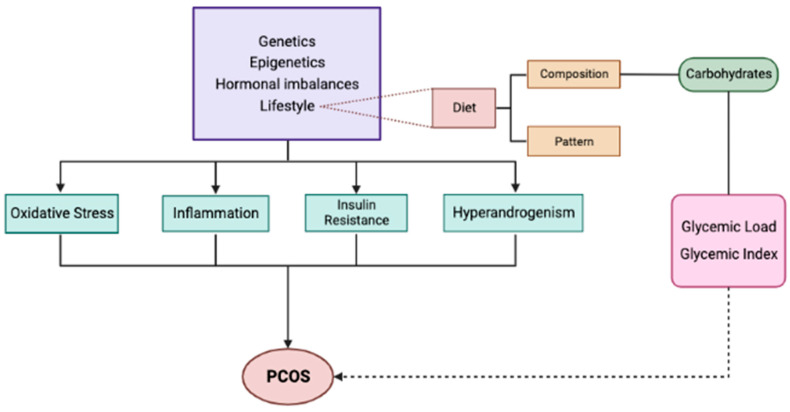
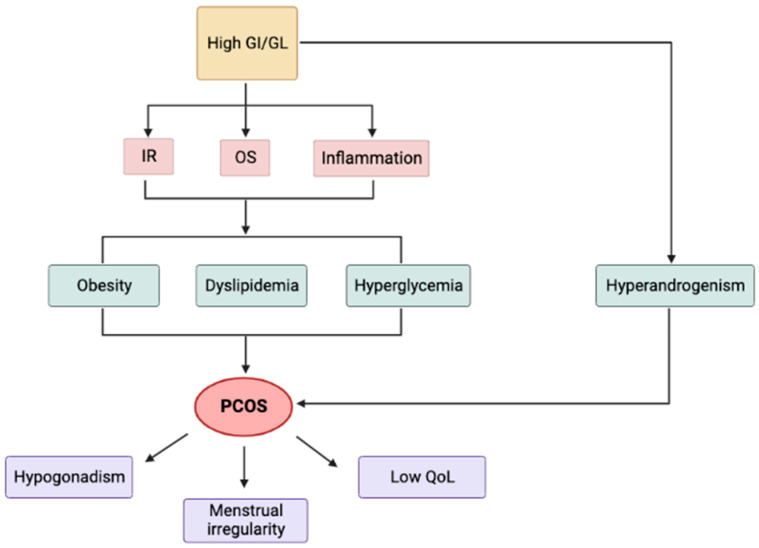
Polycystic ovary syndrome is a common endocrine disorder characterized by hormonal imbalances and various metabolic abnormalities linked to insulin resistance via a vicious cycle. Genetic and environmental factors underlie its pathogenesis and evolution. Nutrition, in terms of nutrient composition, dietary patterns, endocrine-disrupting chemicals, and food processing and preparation, has gained significant attention in the pathogenesis and the therapeutic approach of polycystic ovary syndrome. Carbohydrate intake seems to be a critical point in the diet assignment. Glycemic index and glycemic load constitute indexes of the impacts of dietary carbohydrates on postprandial glucose levels. Numerous studies have indicated that a high glycemic index and glycemic load diet may exacerbate insulin resistance, a key feature of the syndrome, and offer a risk for its development and its complications. Conversely, low-glycemic index and low-glycemic load diets seem to improve insulin sensitivity, regulate menstrual cycles, and mitigate the risk of comorbidities associated with polycystic ovary syndrome, such as obesity, alterations in body composition, type 2 diabetes, cardiovascular disease, and quality of life. This comprehensive review aims to explore the relevance of nutrition and more specifically, the association of glycemic index and glycemic load with the various aspects of polycystic ovary syndrome, as well as to assess the potential benefits of manipulating those indexes in the dietary approach for the syndrome.
多囊卵巢综合征是一种常见的内分泌紊乱疾病,其特征为激素失衡和各种代谢异常,这些异常通过一个恶性循环与胰岛素抵抗有关。其发病机制和演变涉及遗传和环境因素。营养在营养素组成、饮食模式、内分泌干扰化学物质、食物加工和准备方面,在多囊卵巢综合征的发病机制和治疗方法中受到了极大关注。碳水化合物的摄入似乎是饮食分配中的一个关键点。血糖指数和血糖负荷构成了饮食碳水化合物对餐后血糖水平影响的指标。许多研究表明,高血糖指数和高血糖负荷饮食可能会加重胰岛素抵抗,这是该综合征的一个关键特征,并增加其发展和并发症的风险。相反,低血糖指数和低血糖负荷饮食似乎可以改善胰岛素敏感性、调节月经周期,并减轻与多囊卵巢综合征相关的合并症的风险,如肥胖、身体成分改变、2 型糖尿病、心血管疾病和生活质量。本综述旨在探讨营养的相关性,更具体地说,探讨血糖指数和血糖负荷与多囊卵巢综合征各个方面的关联,以及评估在该综合征的饮食方法中操纵这些指标的潜在益处。