Ren Airong, Wu Tingbiao, Wang Yarong, Fan Qing, Yang Zhenhao, Zhang Shixun, Cao Yongjun, Cui Guozhen
Department of Bioengineering, Zhuhai Campus of Zunyi Medical University, Zhuhai, 519000, Guangdong, China.
Basic Medical Science Department, Zhuhai Campus of Zunyi Medical University, Zhuhai, 519000, Guangdong, China.
Chin Med. 2023 Aug 12;18(1):99. doi: 10.1186/s13020-023-00814-9.
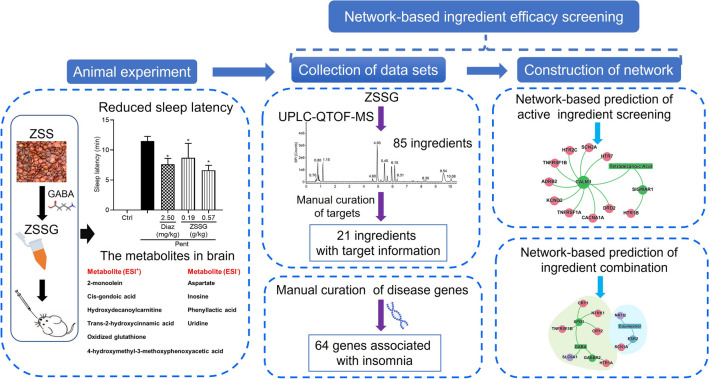
Ziziphi Spinosae Semen (ZSS) is a plant widely used as medicine and food in Asian countries due to its numerous health benefits. γ-aminobutyric acid (GABA), a non-proteinaceous amino acid, is one of the major inhibitory neurotransmitters with a relaxant function. In this study, a system pharmacology approach was employed to assess the effects of a mixture composed of ZSS and GABA (ZSSG) on sleep improvement.
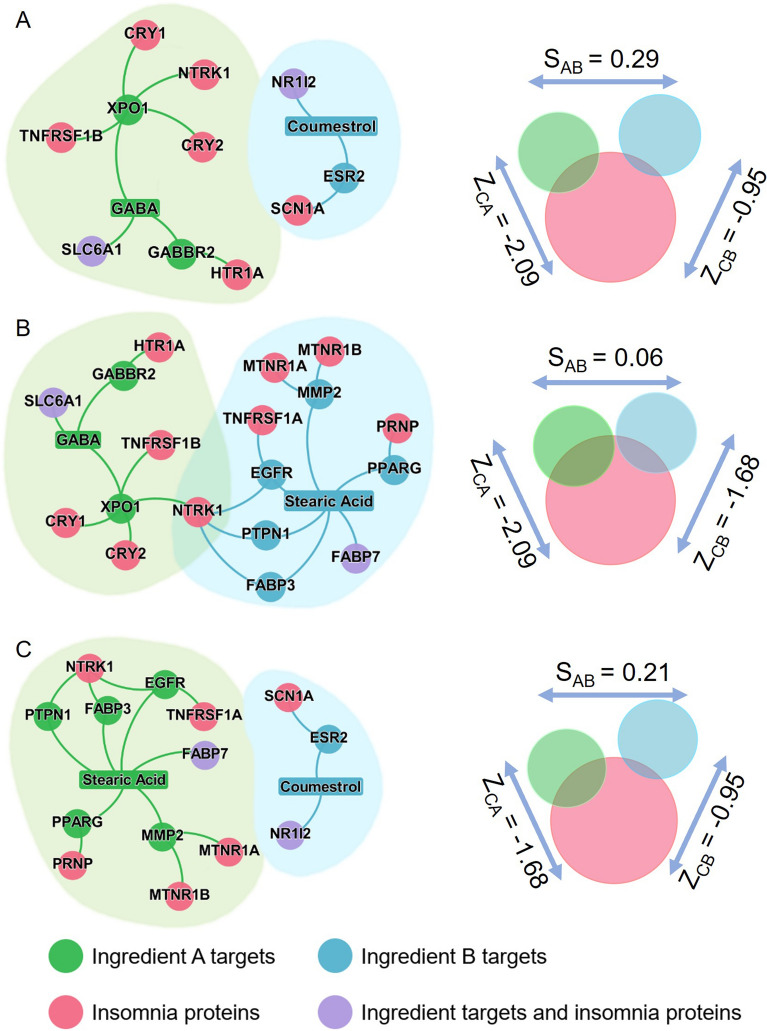
Mice were divided into five groups (n = 10) and received either no treatment, sodium pentobarbital, or sodium barbital with diazepam or ZSSG. The effects of ZSSG on sleep quality were evaluated in mice, and differential metabolites associated with sleep were identified among the control, ZSS, GABA, and ZSSG groups. Additionally, network-based ingredient-insomnia proximity analysis was applied to explore the major ingredients.
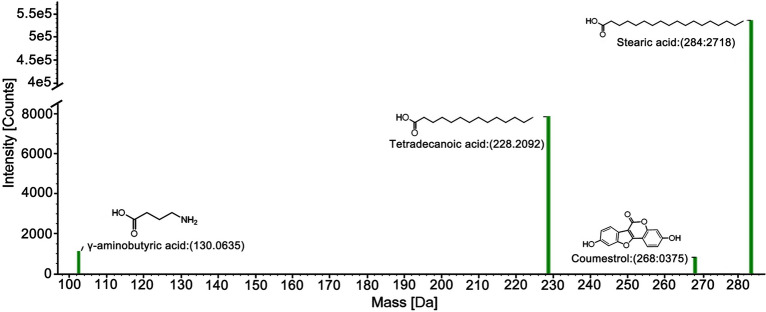
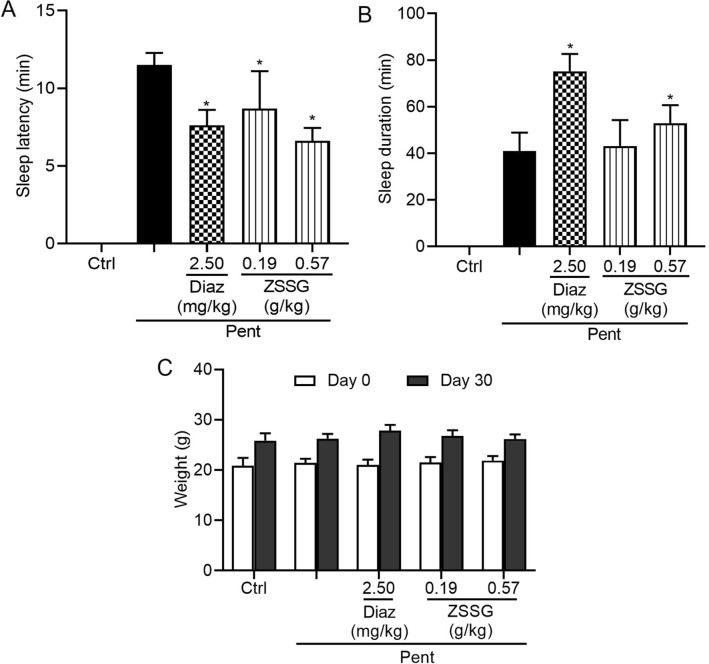
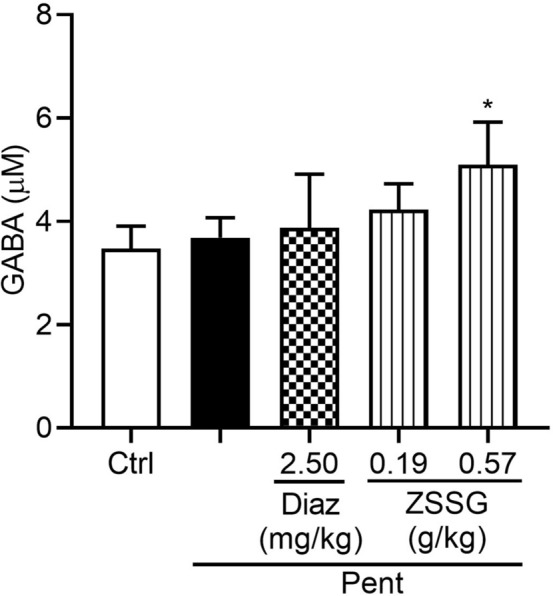
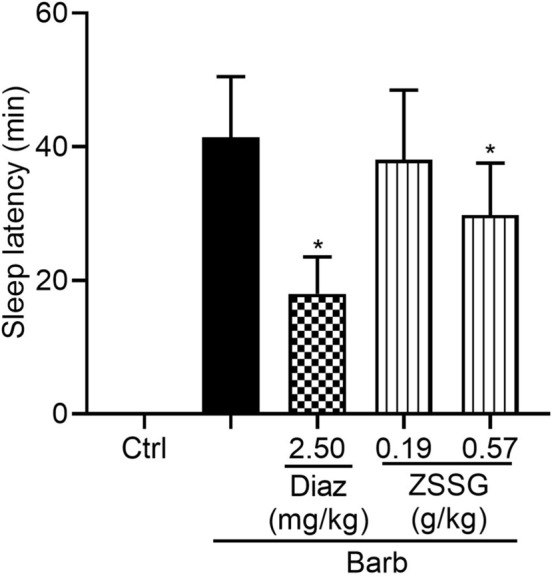
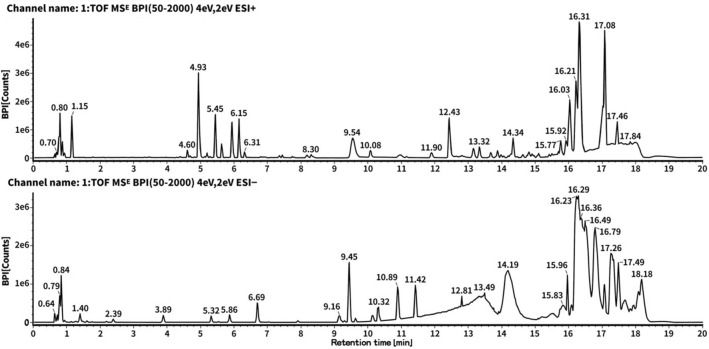
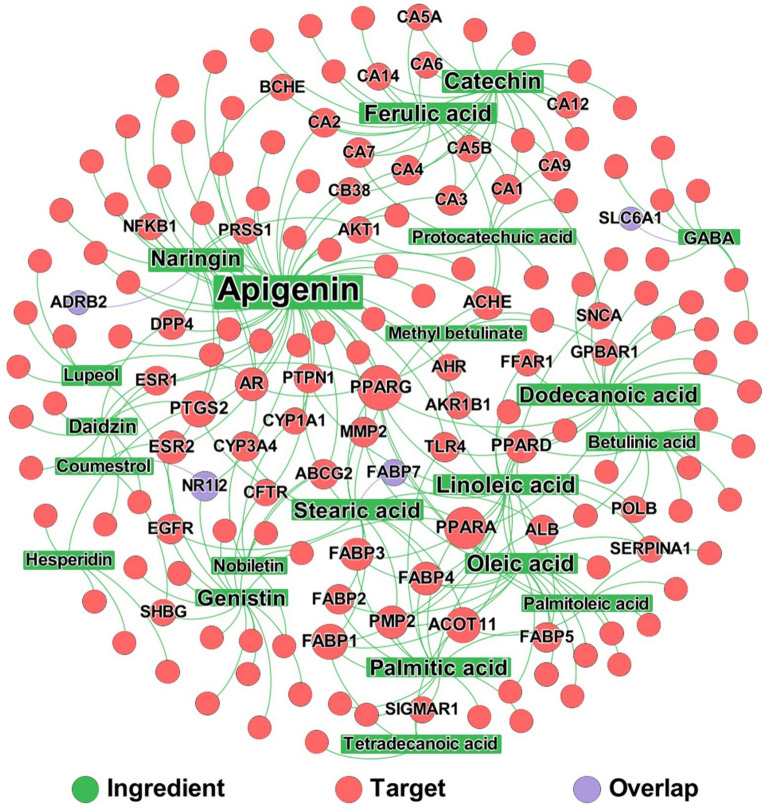
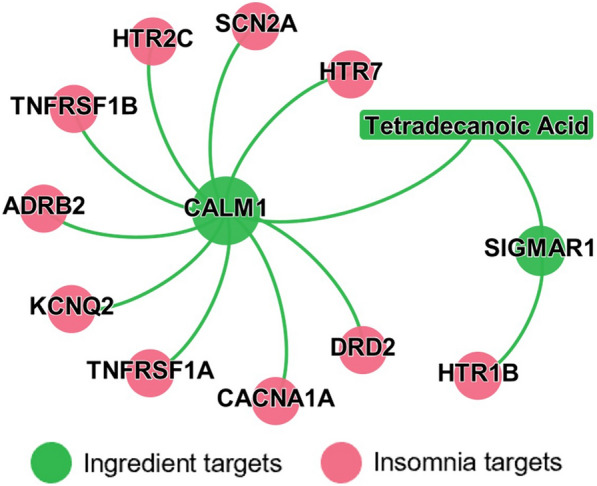
ZSSG significantly improved sleep quality by decreasing sleep latency and prolonging sleep duration in sodium pentobarbital-induced sleeping mouse model (P < 0.05). ZSSG significantly enhanced the brain content of GABA in mice. Furthermore, ZSSG also significantly decreased sleep latency-induced by sodium barbital in mice (P < 0.05). Metabolic analysis revealed significant differences in 10 metabolites between ZSSG group and the groups administering ZSS or GABA. Lastly, using the network-based ingredient screening model, we discovered potential four active ingredients and three pairwise ingredient combinations with synergistic effect on insomnia from ZSSG among 85 ingredients identified by UPLC-Q/TOF-MS. Also, we have constructed an online computation platform.
Our data demonstrated that ZSSG improved the sleeping quality of mice and helped to balance metabolic disorders-associated with sleep disorders. Moreover, based on the network-based prediction method, the four potential active ingredients in ZSSG could serve as quality markers-associated with insomnia. The network-based framework may open up a new avenue for the discovery of active ingredients of herbal medicine for treating complex chronic diseases or symptoms, such as insomnia.
酸枣仁在亚洲国家是一种广泛用作药物和食品的植物,因其具有众多健康益处。γ-氨基丁酸(GABA)是一种非蛋白质氨基酸,是具有放松功能的主要抑制性神经递质之一。在本研究中,采用系统药理学方法评估酸枣仁与γ-氨基丁酸的混合物(ZSSG)对改善睡眠的作用。
将小鼠分为五组(n = 10),分别不进行处理、给予戊巴比妥钠、或给予巴比妥钠与地西泮或ZSSG。评估ZSSG对小鼠睡眠质量的影响,并在对照组、酸枣仁组、GABA组和ZSSG组中鉴定与睡眠相关的差异代谢物。此外,应用基于网络的成分-失眠接近度分析来探索主要成分。
在戊巴比妥钠诱导的睡眠小鼠模型中,ZSSG通过缩短睡眠潜伏期和延长睡眠时间显著改善睡眠质量(P < 0.05)。ZSSG显著提高了小鼠大脑中GABA的含量。此外,ZSSG还显著缩短了巴比妥钠诱导的小鼠睡眠潜伏期(P < 0.05)。代谢分析显示,ZSSG组与给予酸枣仁或GABA的组之间有10种代谢物存在显著差异。最后,使用基于网络的成分筛选模型,我们从ZSSG中发现了潜在的4种活性成分和3种对失眠有协同作用的成对成分组合,这些成分是通过超高效液相色谱-四极杆/飞行时间质谱鉴定出的85种成分中的。此外,我们还构建了一个在线计算平台。
我们的数据表明,ZSSG改善了小鼠的睡眠质量,并有助于平衡与睡眠障碍相关的代谢紊乱。此外,基于基于网络的预测方法,ZSSG中的4种潜在活性成分可作为与失眠相关的质量标志物。基于网络的框架可能为发现用于治疗复杂慢性疾病或症状(如失眠)的草药活性成分开辟一条新途径。