Wei Jing, Wang Sihua, Huang Junze, Zhou Xinhua, Qian Zhengming, Wu Tingbiao, Fan Qing, Liang Yongyin, Cui Guozhen
School of Bioengineering Zhuhai Campus of Zunyi Medical University Zhuhai China.
Guangzhou Eighth People's Hospital Guangzhou Medical University Guangzhou China.
Food Sci Nutr. 2024 Feb 22;12(5):3759-3773. doi: 10.1002/fsn3.4046. eCollection 2024 May.
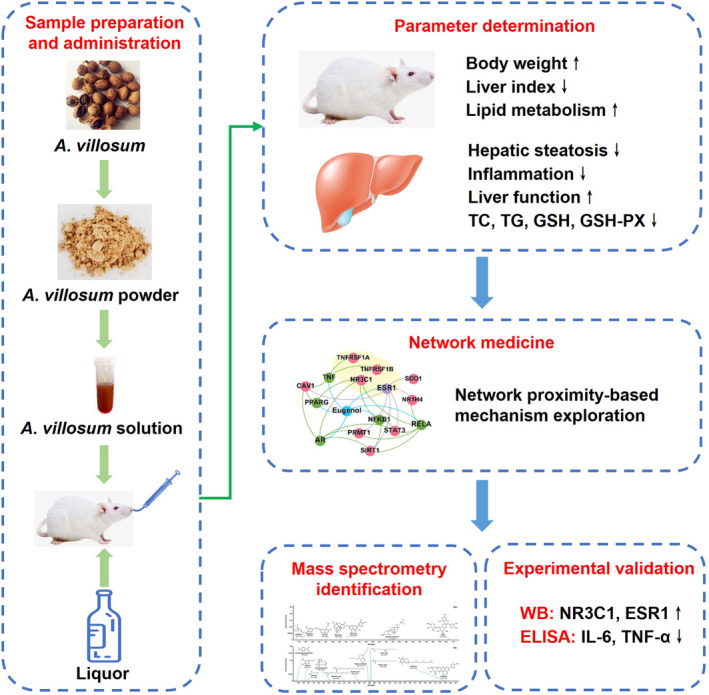
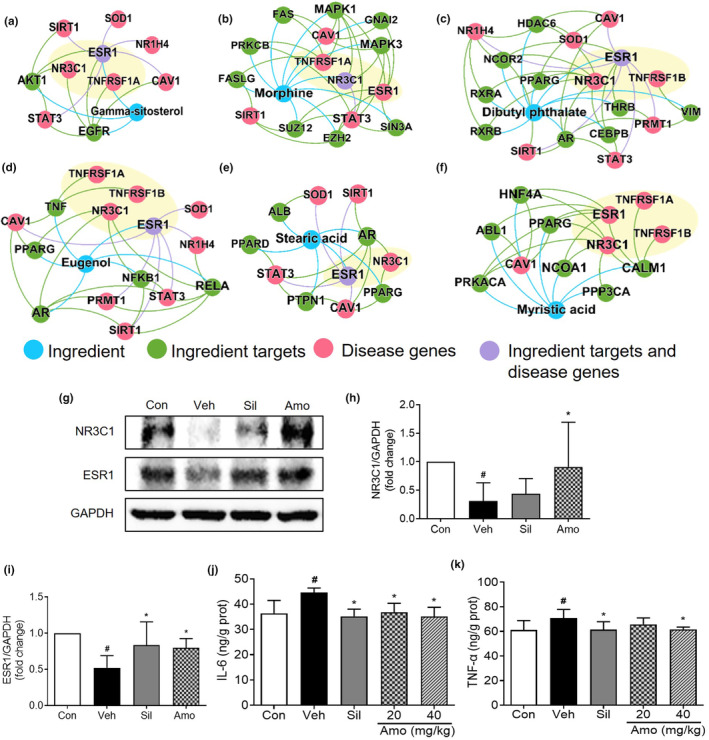
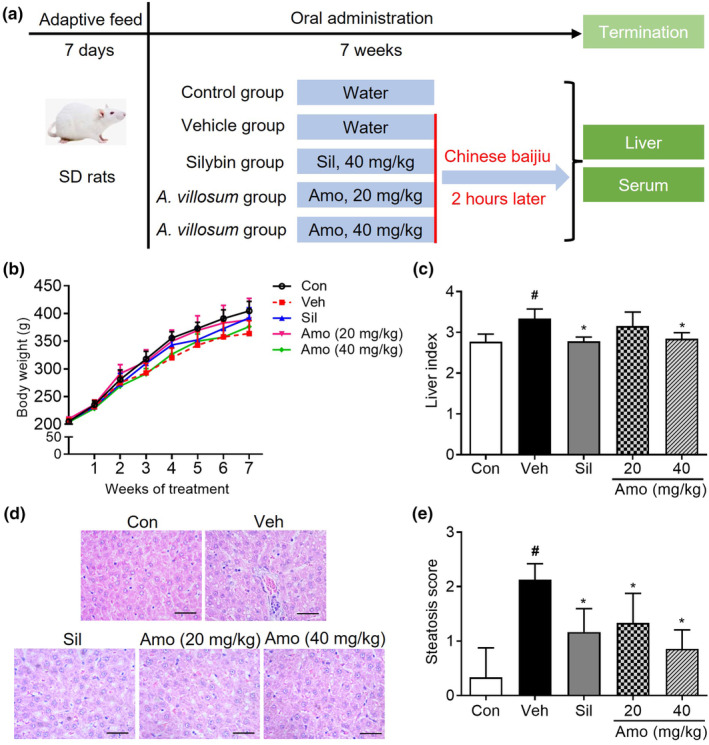
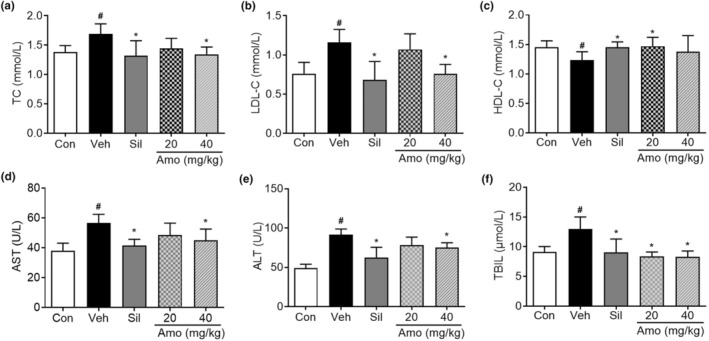
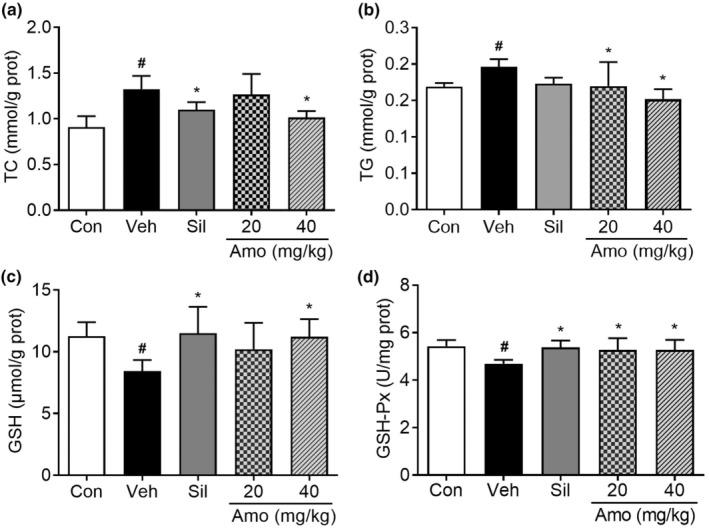
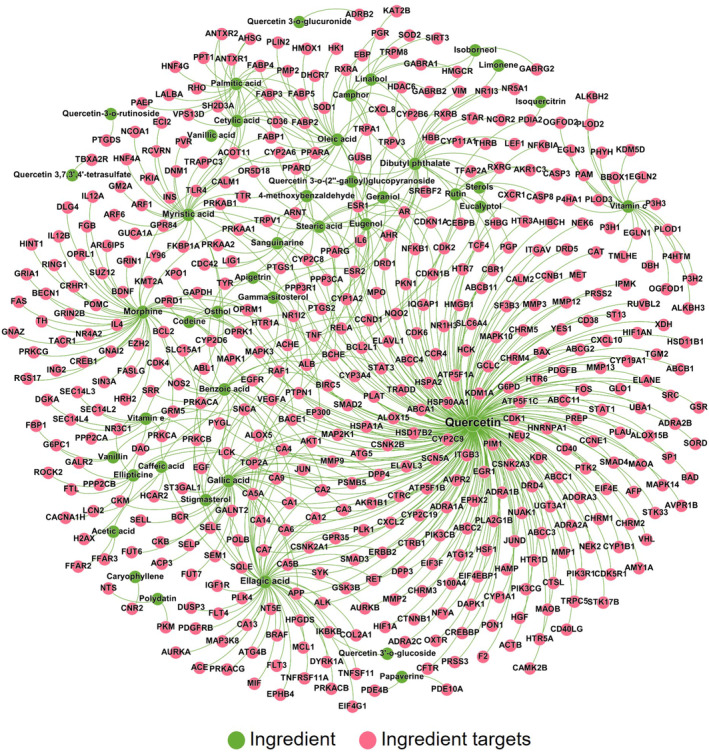
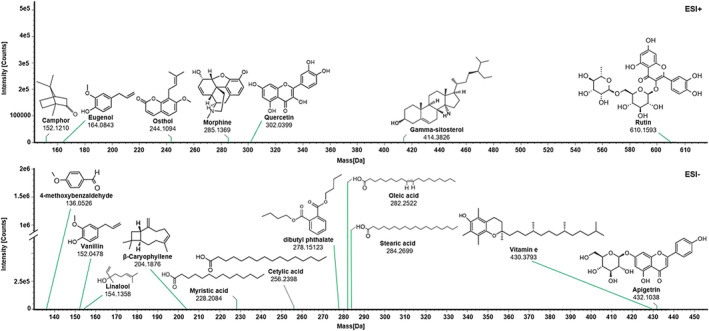
Alcoholic liver disease (ALD) is characterized by high morbidity and mortality, and mainly results from prolonged and excessive alcohol use. Lour. (. ), a well-known traditional Chinese medicine (TCM), has hepatoprotective properties. However, its ability to combat alcohol-induced liver injury has not been fully explored. The objective of this study was to investigate the hepatoprotective effects of . in a rat model of alcohol-induced liver disease, thereby establishing a scientific foundation for the potential preventive use of . in ALD. We established a Chinese liquor (Baijiu)-induced liver injury model in rats. Hematoxylin and eosin (HE) staining, in combination with biochemical tests, was used to evaluate the protective effects of . on the liver. The integration of network medicine analysis with experimental validation was used to explore the hepatoprotective effects and potential mechanisms of . in rats. Our findings showed that . ameliorated alcohol-induced changes in body weight, liver index, hepatic steatosis, inflammation, blood lipid metabolism, and liver function in rats. Network proximity analysis was employed to identify 18 potentially active ingredients of . for ALD treatment. These potentially active ingredients in the blood were further identified using mass spectrometry (MS). Our results showed that . plays a hepatoprotective role by modulating the protein levels of estrogen receptor 1 (ESR1), anti-nuclear receptor subfamily 3 group C member 1 (NR3C1), interleukin 6 (IL-6), and tumor necrosis factor-α (TNF-α). In conclusion, the results of the current study suggested that . potentially exerts hepatoprotective effects on ALD in rats, possibly through regulating the protein levels of ESR1, NR3C1, IL-6, and TNF-α.
酒精性肝病(ALD)具有高发病率和高死亡率的特点,主要由长期过量饮酒所致。芦根,一种著名的传统中药,具有肝脏保护特性。然而,其对抗酒精性肝损伤的能力尚未得到充分研究。本研究的目的是调查芦根在酒精性肝病大鼠模型中的肝脏保护作用,从而为芦根在ALD预防中的潜在应用建立科学依据。我们在大鼠中建立了白酒诱导的肝损伤模型。采用苏木精-伊红(HE)染色结合生化检测来评估芦根对肝脏的保护作用。运用网络医学分析与实验验证相结合的方法来探索芦根在大鼠中的肝脏保护作用及潜在机制。我们的研究结果表明,芦根改善了酒精诱导的大鼠体重、肝脏指数、肝脂肪变性、炎症、血脂代谢和肝功能的变化。采用网络接近度分析来确定芦根用于治疗ALD的18种潜在活性成分。这些血液中的潜在活性成分通过质谱(MS)进一步鉴定。我们的结果表明,芦根通过调节雌激素受体1(ESR1)、抗核受体亚家族3组C成员1(NR3C1)、白细胞介素6(IL-6)和肿瘤坏死因子-α(TNF-α)的蛋白水平发挥肝脏保护作用。总之,本研究结果表明,芦根可能通过调节ESR1、NR3C1、IL-6和TNF-α的蛋白水平对大鼠ALD发挥潜在的肝脏保护作用。