Salali Gul Deniz, Uysal Mete Sefa, Bozyel Gizem, Akpinar Ege, Aksu Ayca
Department of Anthropology, University College london, 14 Taviton Street, WC1H 0BW, UK.
Department of Social Psychology, Friedrich Schiller University Jena, Jena, Germany.
Evol Hum Sci. 2022 Jul 11;4:e32. doi: 10.1017/ehs.2022.29. eCollection 2022.
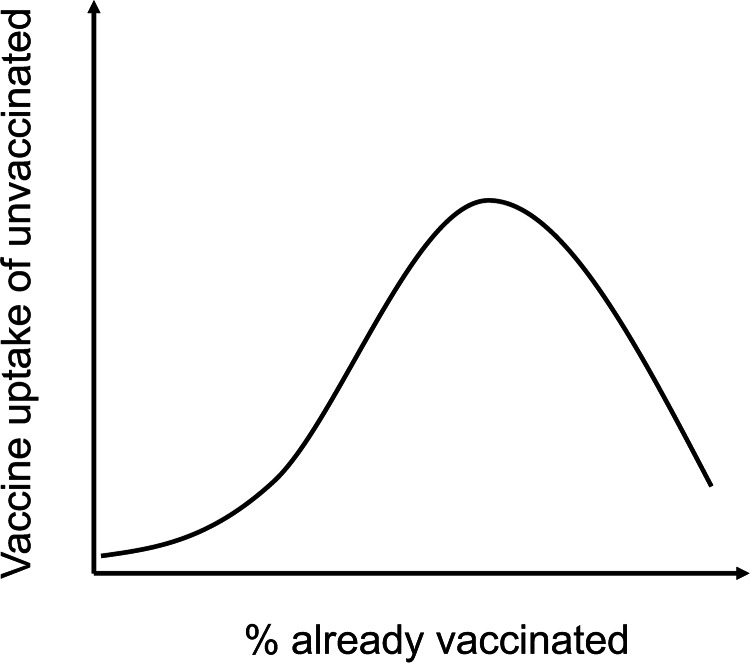
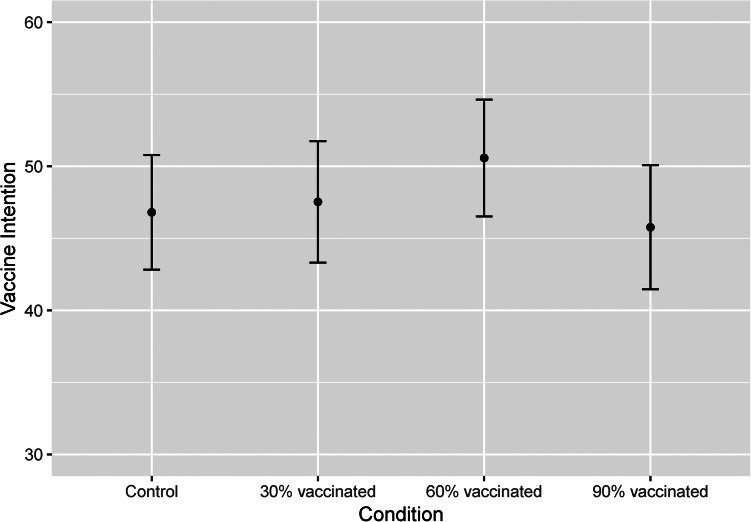
Conformist social influence is a double-edged sword when it comes to vaccine promotion. On the one hand, social influence may increase vaccine uptake by reassuring the hesitant about the safety and effectiveness of the vaccine; on the other hand, people may forgo the cost of vaccination when the majority is already vaccinated - giving rise to a public goods dilemma. Here, we examine whether available information on the percentage of double-vaccinated people affects COVID-19 vaccination intention among unvaccinated people in Turkey. In an online experiment, we divided participants ( 1013) into low, intermediate and high social influence conditions, reflecting the government's vaccine promotion messages. We found that social influence did not predict COVID-19 vaccination intention, but psychological reactance and collectivism did. People with higher reactance (intolerance of others telling one what to do and being sceptical of consensus views) had lower vaccination intention, whilst people with higher collectivism (how much a person considers group benefits over individual success) had higher vaccination intention. Our findings suggest that advertising the percentage of double-vaccinated people is not sufficient to trigger a cascade of others getting themselves vaccinated. Diverse promotion strategies reflecting the heterogeneity of individual attitudes could be more effective.
在疫苗推广方面,从众性社会影响是一把双刃剑。一方面,社会影响可能会通过让犹豫不决者放心疫苗的安全性和有效性来提高疫苗接种率;另一方面,当大多数人已经接种疫苗时,人们可能会放弃接种疫苗的成本——从而引发公共物品困境。在此,我们研究已接种两剂疫苗人群的百分比信息是否会影响土耳其未接种疫苗人群的新冠疫苗接种意愿。在一项在线实验中,我们将参与者(1013人)分为低、中、高社会影响条件组,以反映政府的疫苗推广信息。我们发现,社会影响并不能预测新冠疫苗接种意愿,但心理抗拒和集体主义可以。心理抗拒较强的人(不能容忍他人告诉自己该做什么且对共识观点持怀疑态度)接种意愿较低,而集体主义较强的人(一个人在多大程度上认为集体利益高于个人成就)接种意愿较高。我们的研究结果表明,公布已接种两剂疫苗人群的百分比不足以引发其他人纷纷接种疫苗。反映个体态度异质性的多样化推广策略可能会更有效。