Health and Social Research Center, University of Castilla-La Mancha, Cuenca, Spain.
Universidad Autónoma de Chile, Facultad de Ciencias de la Salud, Talca, Chile.
Cardiovasc Diabetol. 2023 Aug 17;22(1):209. doi: 10.1186/s12933-023-01947-9.
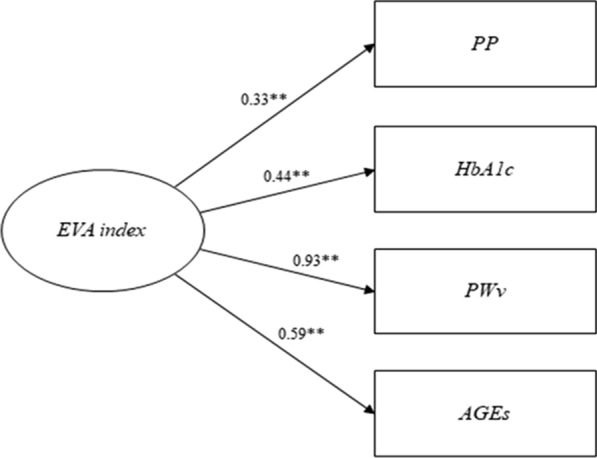
The concept of early vascular aging (EVA) represents a potentially beneficial model for future research into the pathophysiological mechanisms underlying the early manifestations of cardiovascular disease. For this reason, the aims of this study were to verify by confirmatory factor analysis the concept of EVA on a single factor based on vascular, clinical and biochemical parameters in a healthy adult population and to develop a statistical model to estimate the EVA index from variables collected in a dataset to classify patients into different cardiovascular risk groups: healthy vascular aging (HVA) and EVA.
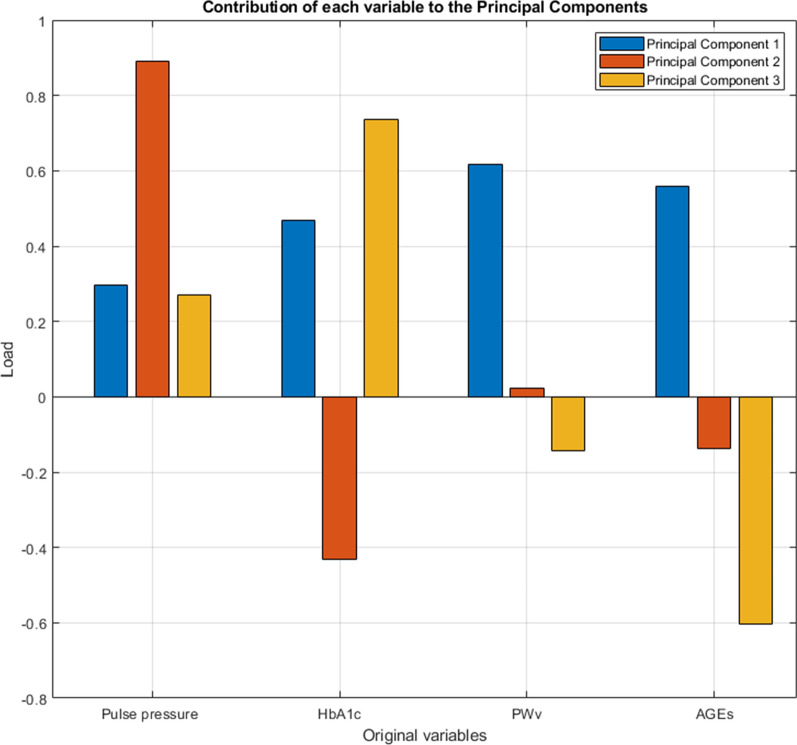
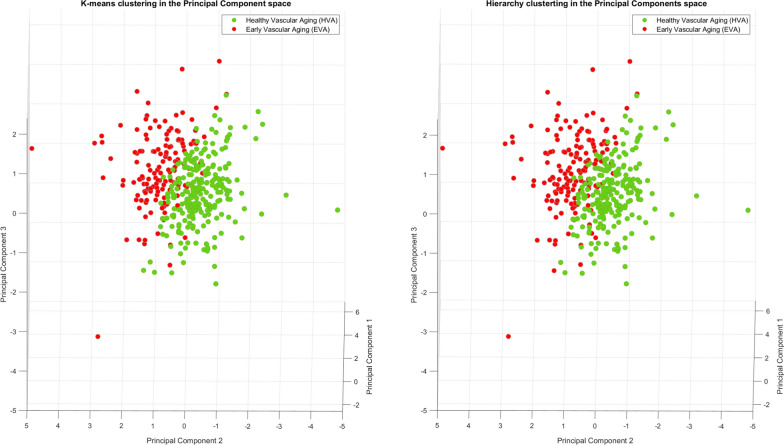
The EVasCu study, a cross-sectional study, was based on data obtained from 390 healthy adults. To examine the construct validity of a single-factor model to measure accelerated vascular aging, different models including vascular, clinical and biochemical parameters were examined. In addition, unsupervised clustering techniques (using both K-means and hierarchical methods) were used to identify groups of patients sharing similar characteristics in terms of the analysed variables to classify patients into different cardiovascular risk groups: HVA and EVA.
Our data show that a single-factor model including pulse pressure, glycated hemoglobin A1c, pulse wave velocity and advanced glycation end products shows the best construct validity for the EVA index. The optimal value of the risk groups to separate patients is K = 2 (HVA and EVA).
The EVA index proved to be an adequate model to classify patients into different cardiovascular risk groups, which could be valuable in guiding future preventive and therapeutic interventions.
早期血管衰老(EVA)的概念代表了一种有前途的研究模型,可用于研究心血管疾病早期表现的病理生理机制。基于这一原因,本研究的目的是通过对血管、临床和生化参数的单因素进行验证性因子分析,来验证健康成年人中 EVA 概念的合理性,并建立一个统计模型,从数据集收集的变量中估计 EVA 指数,将患者分为不同的心血管风险组:健康血管衰老(HVA)和 EVA。
EVasCu 研究是一项横断面研究,基于 390 名健康成年人的数据。为了检验测量加速血管衰老的单因素模型的结构效度,研究考察了包含血管、临床和生化参数的不同模型。此外,还使用无监督聚类技术(包括 K-均值和层次方法)来识别具有相似分析变量特征的患者组,将患者分为不同的心血管风险组:HVA 和 EVA。
我们的数据表明,包括脉压、糖化血红蛋白 A1c、脉搏波速度和晚期糖基化终产物的单因素模型显示出 EVA 指数最佳的结构效度。将患者分为不同风险组的最佳 K 值为 2(HVA 和 EVA)。
EVA 指数被证明是一种将患者分为不同心血管风险组的合适模型,这对于指导未来的预防和治疗干预可能具有重要价值。