Hu Jingyi, Ding Jin, Li Xia, Li Jun, Zheng Tingting, Xie Lingxiang, Li Chenyu, Tang Yingxin, Guo Keyu, Huang Juan, Liu Shanshan, Yan Jianru, Peng Weijun, Hou Can, Wen Li, Xu Aimin, Zhou Zhiguang, Xiao Yang
National Clinical Research Centre for Metabolic Diseases, Key Laboratory of Diabetes Immunology, Ministry of Education, and Department of Metabolism and Endocrinology, The Second Xiangya Hospital of Central South University, Changsha, China.
Department of Infectious Diseases and Public Health, Jockey Club College of Veterinary Medicine and Life Sciences, City University of Hong Kong, Hong Kong, China.
EClinicalMedicine. 2023 Aug 3;62:102132. doi: 10.1016/j.eclinm.2023.102132. eCollection 2023 Aug.
Patients with type 1 diabetes (T1D) and type 2 diabetes (T2D) present intestinal disturbances. Recent epidemiological data have showed that, worldwide, over half of newly diagnosed T1D patients were adults. However, the gut microbial alterations in adult-onset T1D are unclear. We aimed to identify the signatures of gut microbiota and metabolites in patients with adult-onset T1D systematically, comparing with T2D patients and healthy controls (HCs).
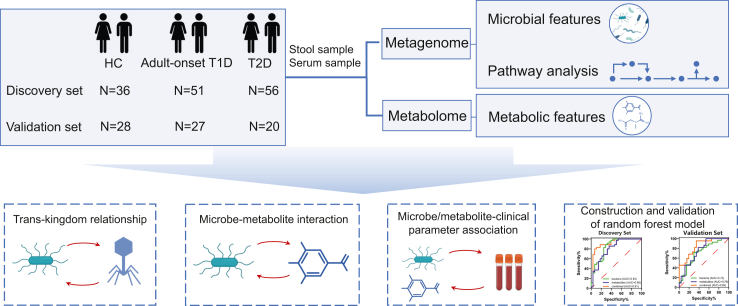
This study enrolled 218 subjects from February 2019 to April 2022 (discovery cohort: 36 HCs, 51 patients with adult-onset T1D and 56 patients with T2D; validation cohort: 28 HCs, 27 patients with adult-onset T1D and 20 patients with T2D). Gut microbial profiles of the study subjects were investigated by metagenomic sequencing, and their faecal and serum metabolites were measured with targeted metabolomics. The study was registered on ClinicalTrials.gov (NCT05252728).
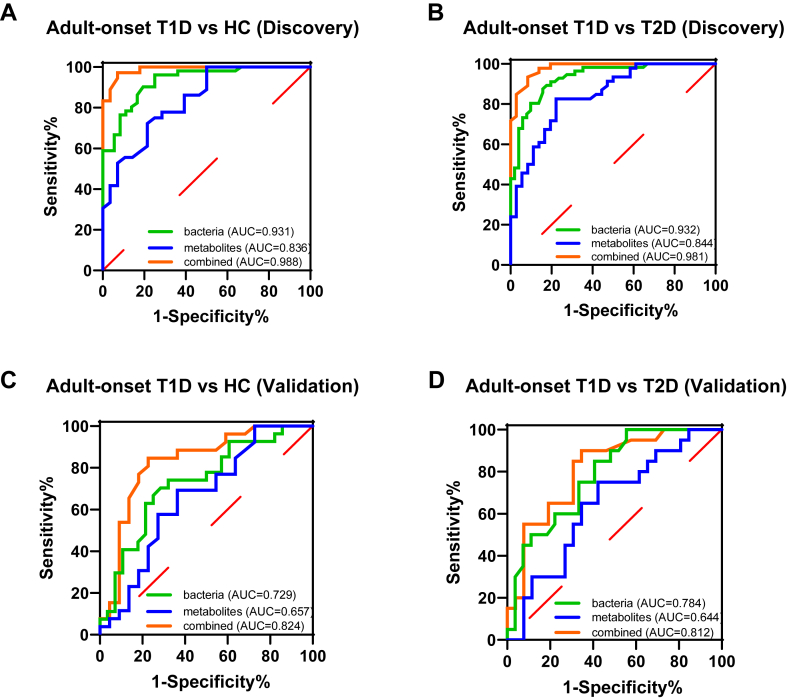
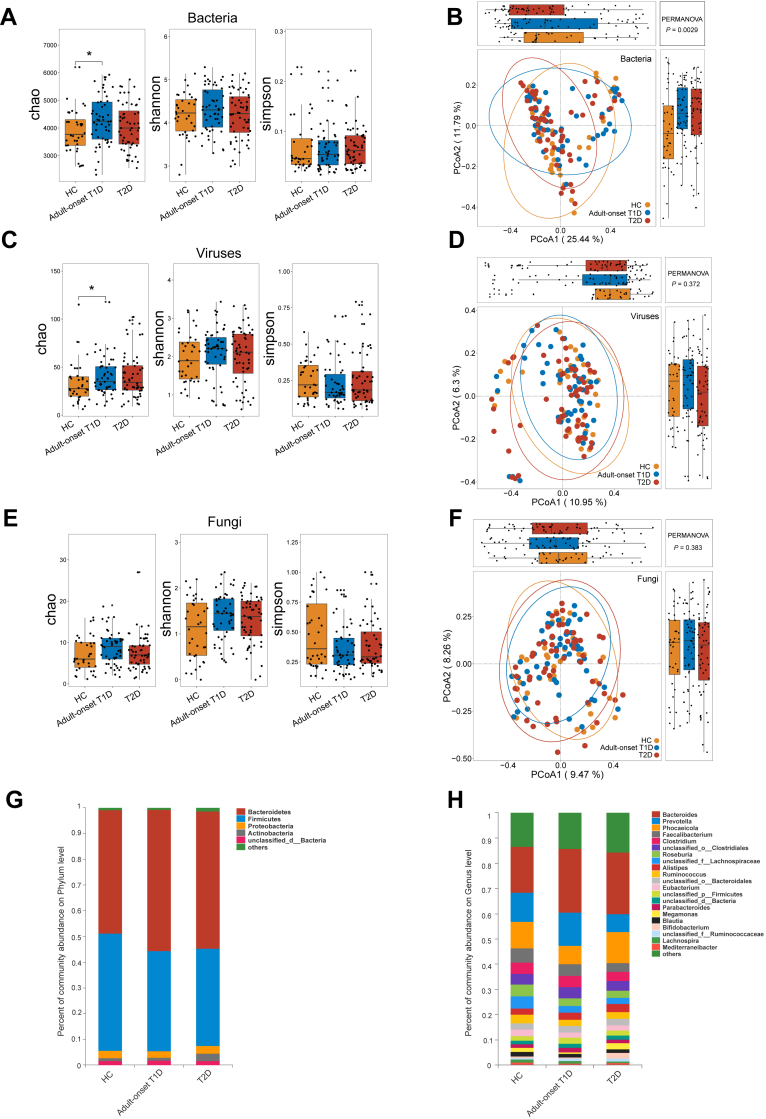
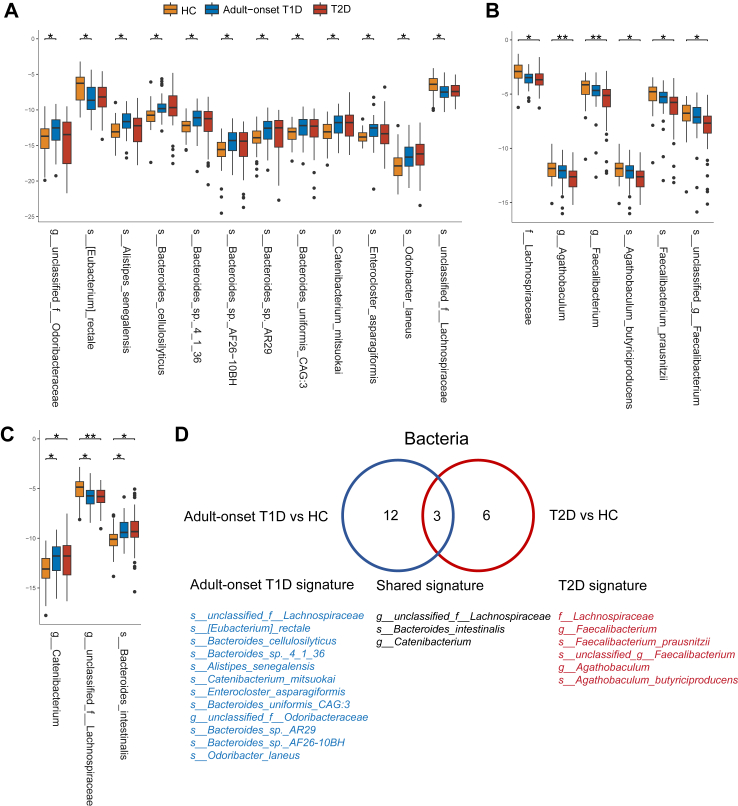
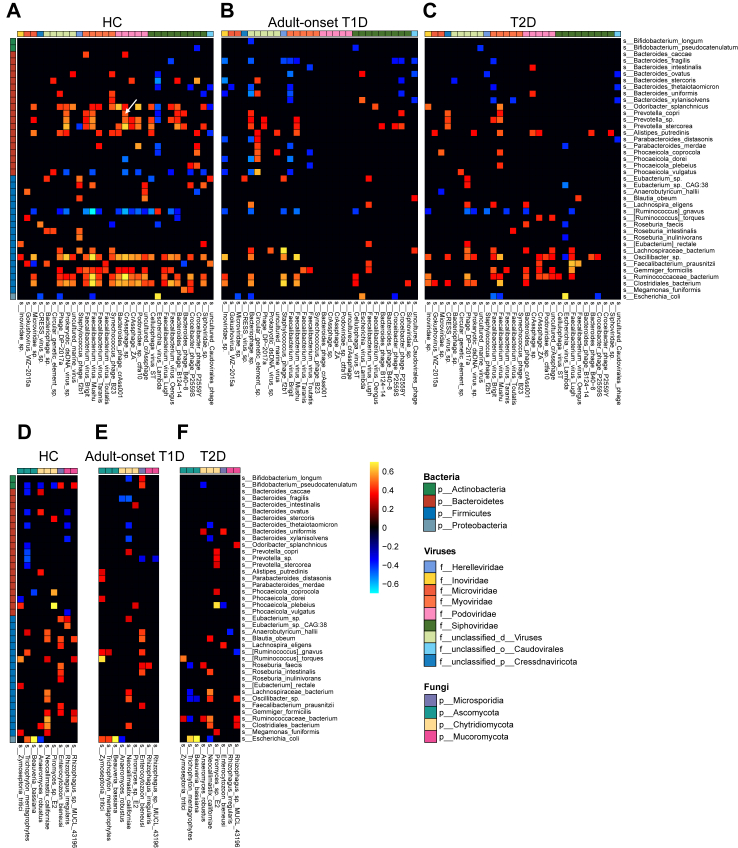
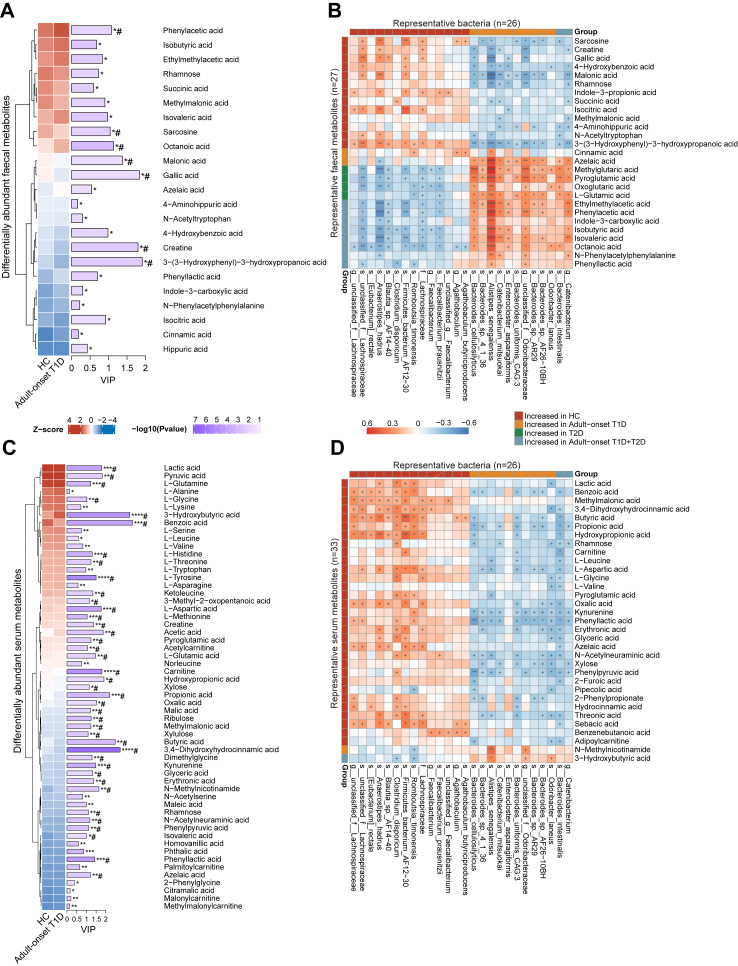
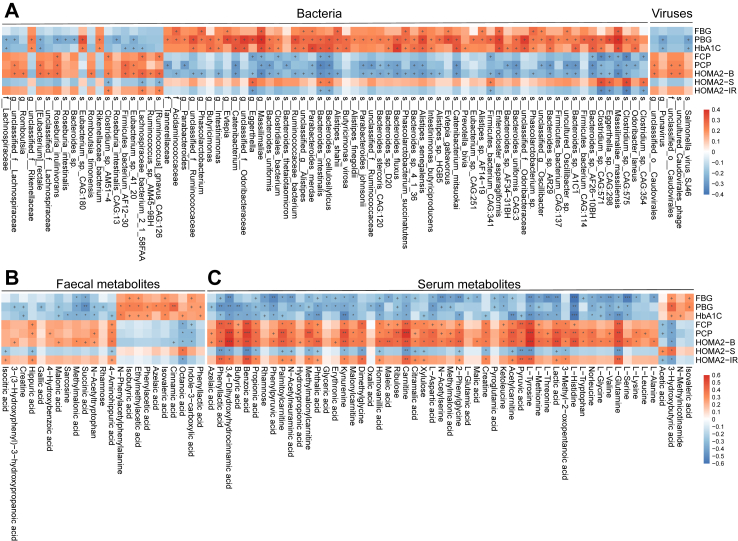
Patients with adult-onset T1D had significant differences in the composition of bacteria and their metabolites, characterized by notable depletion of short-chain fatty acid-producing bacteria, especially . This was associated with a severe loss of phenolic acids and their derivatives, including gallic acid (associated with glucose metabolism) and 3,4-dihydroxyhydrocinnamic acid (linked with glucose metabolism and pancreatic beta cell autoimmunity). A predictive model based on six bacteria and six metabolites simultaneously discriminated adult-onset T1D from T2D and HCs with high accuracy. Interestingly, bacterial-viral or bacterial-fungal trans-kingdom relationships, especially positive correlations between bacteriophages and beneficial bacteria, were significantly reduced in adult-onset T1D compared to HCs.
Adult-onset T1D patients exhibit unique changes in host-microbiota-metabolite interactions. Gut microbiota and metabolite-based algorithms could be used as additional tools for differential diagnosis of different types of diabetes and beyond.
National Key Research and Development Program of China, the National Natural Science Foundation of China.
1型糖尿病(T1D)和2型糖尿病(T2D)患者存在肠道功能紊乱。最近的流行病学数据显示,在全球范围内,新诊断的T1D患者中有超过一半是成年人。然而,成人发病型T1D患者的肠道微生物改变尚不清楚。我们旨在系统地识别成人发病型T1D患者肠道微生物群和代谢物的特征,并与T2D患者和健康对照(HCs)进行比较。
本研究于2019年2月至2022年4月招募了218名受试者(发现队列:36名HCs、51名成人发病型T1D患者和56名T2D患者;验证队列:28名HCs、27名成人发病型T1D患者和20名T2D患者)。通过宏基因组测序研究受试者的肠道微生物谱,并用靶向代谢组学方法测量其粪便和血清代谢物。该研究已在ClinicalTrials.gov上注册(NCT05252728)。
成人发病型T1D患者在细菌组成及其代谢物方面存在显著差异,其特征是产生短链脂肪酸的细菌显著减少,尤其是 。这与酚酸及其衍生物的严重损失有关,包括没食子酸(与葡萄糖代谢有关)和3,4-二羟基肉桂酸(与葡萄糖代谢和胰腺β细胞自身免疫有关)。基于六种细菌和六种代谢物的预测模型能够以高精度同时区分成人发病型T1D与T2D和HCs。有趣的是,与HCs相比,成人发病型T1D患者中细菌-病毒或细菌-真菌跨界关系,尤其是噬菌体与有益细菌之间的正相关关系显著减少。
成人发病型T1D患者在宿主-微生物群-代谢物相互作用方面表现出独特变化。基于肠道微生物群和代谢物的算法可作为鉴别不同类型糖尿病及其他疾病的辅助工具。
中国国家重点研发计划、中国国家自然科学基金。