Faculty of Health Sciences, International PhD School, Rey Juan Carlos University, 28008, Madrid, Spain.
Department of Physical Therapy, Occupational Therapy, Physical Medicine and Rehabilitation, Faculty of Health Sciences, Rey Juan Carlos University, 28922, Alcorcón, Madrid, Spain.
J Neuroeng Rehabil. 2023 Aug 19;20(1):110. doi: 10.1186/s12984-023-01233-5.
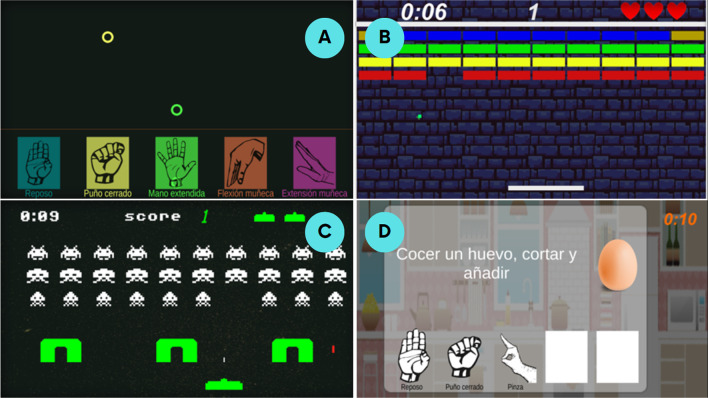
Muscle strength and dexterity impairments are common among patients with multiple sclerosis (MS) producing limitations in activities of daily living related to the upper limb (UL). This study aimed to evaluate the effectiveness of serious games specifically developed for the MYO Armband® capture sensor in improving forearm and wrist mobility, UL muscle strength, dexterity, fatigue, functionality, quality of life, satisfaction, adverse effects and compliance.
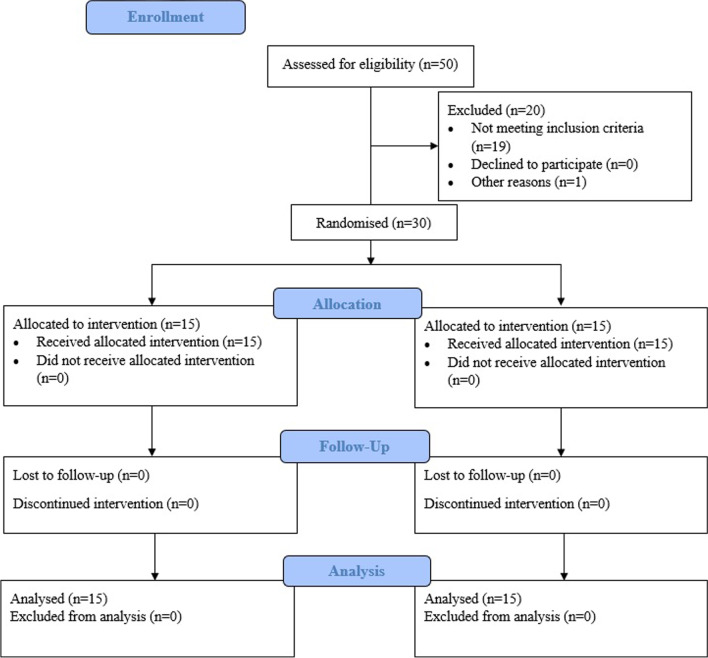
A double-blinded (allocation concealment was performed by a blinded investigator and by blinding for assessors) randomised controlled trial was conducted. The sample was randomised into two groups: an experimental group that received treatment based on UL serious games designed by the research team and controlled by the MYO Armband® gesture capture sensor, along with conventional rehabilitation and a control group that received the same conventional rehabilitation for the UL. Both groups received two 60-min sessions per week over an eight-week period. Wrist range of motion (goniometry), grip muscle strength (Jamar® dynamometer), coordination and gross UL dexterity (Box and Block Test), fatigue (Fatigue Severity Scale), functionality (ABILHAND), quality of life (Multiple Sclerosis Impact Scale-29), adverse effects (Simulator Sickness Questionnaire, SSQ), perceived workload (NASA-Task load index), satisfaction (Client Satisfaction Questionnaire-8 (CSQ-8), Satisfaction with Technology Scale, System Usability Scale (SUS) and QUEST 2.0) and compliance (attendance) were assessed in both groups pre-treatment, post-treatment and during a follow-up period of 2 weeks without receiving any treatment.
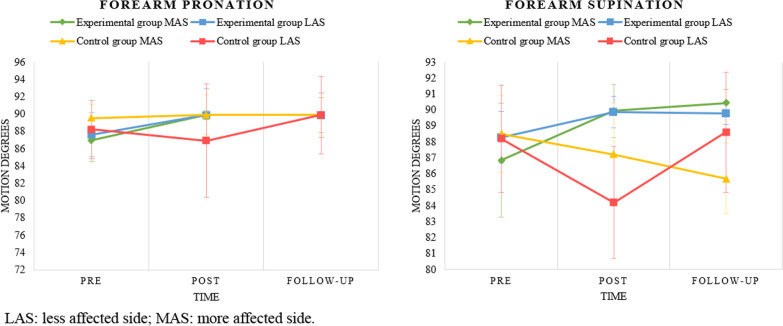
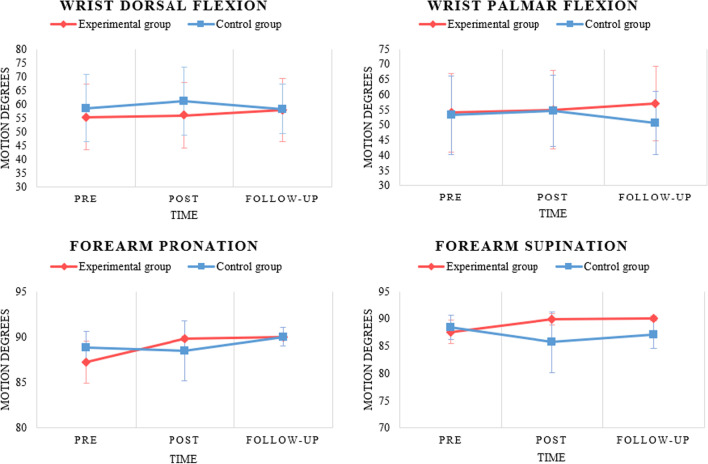
Significant differences were observed in the experimental group compared to the control group in the assessment of forearm supination (p = .004) and grip strength (p = .004). Adverse effects were minimal (SSQ: 7/100 points) and perceived workload was low (NASA-Task Load Index: 25/100 points) in the experimental group. The MYO Armband® technology proved to be useful for the participants (SUS: 80.66/100) and the satisfaction scales received high scores (QUEST 2.0: 59.4/70 points; Satisfaction with Technology: 84.36/100 points). There were significant differences between the groups in terms of attendance percentage (p = .029).
An experimental protocol using MYO Armband®-based serious games designed for UL rehabilitation showed improvements in active wrist range of motion and handgrip strength in patients with MS, with high satisfaction, minimal adverse effects and workload and excellent compliance.
This randomised controlled trial has been registered at ClinicalTrials.gov Identifier: NCT04171908.
多发性硬化症(MS)患者常出现肌肉力量和灵活性受损,导致与上肢(UL)相关的日常生活活动受限。本研究旨在评估专门为 MYO 臂带®捕获传感器开发的严肃游戏在改善前臂和手腕活动度、UL 肌肉力量、灵活性、疲劳、功能、生活质量、满意度、不良反应和依从性方面的有效性。
进行了一项双盲(分配隐藏由盲法研究者和评估者进行)随机对照试验。该样本被随机分为两组:实验组接受由研究团队设计并由 MYO 臂带®手势捕捉传感器控制的 UL 严肃游戏治疗,以及常规康复治疗,对照组仅接受 UL 常规康复治疗。两组均在八周内每周接受两次 60 分钟的治疗。手腕活动度(测角器)、握力(Jamar®测力计)、协调性和大体 UL 灵活性(盒子和块测试)、疲劳(疲劳严重程度量表)、功能(ABILHAND)、生活质量(多发性硬化症影响量表-29)、不良反应(模拟器疾病问卷,SSQ)、感知工作量(NASA 任务负荷指数)、满意度(客户满意度问卷-8(CSQ-8)、技术满意度量表、系统可用性量表(SUS)和 QUEST 2.0)和依从性(出勤率)在治疗前、治疗后和两周的随访期间均进行评估,在此期间两组均未接受任何治疗。
与对照组相比,实验组在前臂旋后(p = .004)和握力(p = .004)评估方面有显著差异。实验组不良反应轻微(SSQ:7/100 分),感知工作量低(NASA 任务负荷指数:25/100 分)。MYO 臂带®技术对参与者很有用(SUS:80.66/100),满意度量表得分较高(QUEST 2.0:59.4/70 分;技术满意度:84.36/100 分)。两组出勤率有显著差异(p = .029)。
使用基于 MYO 臂带®的严肃游戏设计的 UL 康复实验方案显示,多发性硬化症患者的主动手腕活动度和手握力均有改善,满意度高,不良反应和工作量小,依从性好。
这项随机对照试验已在 ClinicalTrials.gov 注册,标识符为 NCT04171908。