Yang Fujie, Gao Rongmao, Luo Xiaoxiu, Liu Rongan, Xiong Daqian
Department of Laboratory Medicine, Hospital of Chengdu University of Traditional Chinese Medicine, Chengdu, China.
College of Medical Technology, Chengdu University of Traditional Chinese Medicine, Chengdu, China.
Front Nutr. 2023 Aug 3;10:1187718. doi: 10.3389/fnut.2023.1187718. eCollection 2023.
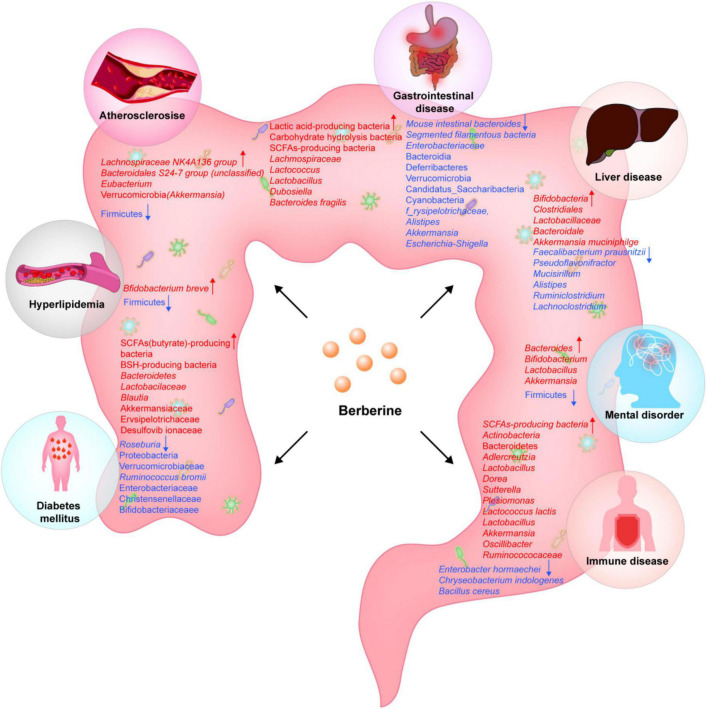
Berberine (BBR) is an isoquinoline alkaloid that is widely distributed in the plant kingdom and is commonly found in Franch. It has low bioavailability, but it can interact with gut microbiota and affect a variety of diseases. The effects of BBR in diabetes, hyperlipidemia, atherosclerosis, liver diseases, intestinal diseases, mental disorders, autoimmune diseases, and other diseases are all thought to be related to gut microbiota. This review systematically and comprehensively summarize these interactions and their effects, and describes the changes of gut microbiota after the intervention of different doses of berberine and its potential clinical consequences, in order to provide a basis for the rational application of BBR in the future clinical treatment.
黄连素(BBR)是一种异喹啉生物碱,广泛分布于植物界,常见于黄连属植物中。它的生物利用度较低,但可与肠道微生物群相互作用并影响多种疾病。BBR在糖尿病、高脂血症、动脉粥样硬化、肝脏疾病、肠道疾病、精神障碍、自身免疫性疾病等疾病中的作用都被认为与肠道微生物群有关。本综述系统全面地总结了这些相互作用及其影响,并描述了不同剂量黄连素干预后肠道微生物群的变化及其潜在的临床后果,以便为BBR在未来临床治疗中的合理应用提供依据。