Department of Head and Neck Surgery, The University of Texas MD Anderson Cancer Center, Houston, Texas, USA.
Department of Otorhinolaryngology-Head and Neck Surgery, The Second Affiliated Hospital of Xi'an Jiaotong University, Xi'an, China.
J Immunother Cancer. 2023 Aug;11(8). doi: 10.1136/jitc-2023-006666.
, the most mutated gene in solid cancers, has a profound impact on most hallmarks of cancer. Somatic mutations occur in high frequencies in head and neck cancers, including oral squamous cell carcinoma (OSCC). Our study aims to understand the role of gain-of-function mutation in modulating the tumor immune microenvironment (TIME) in OSCC.
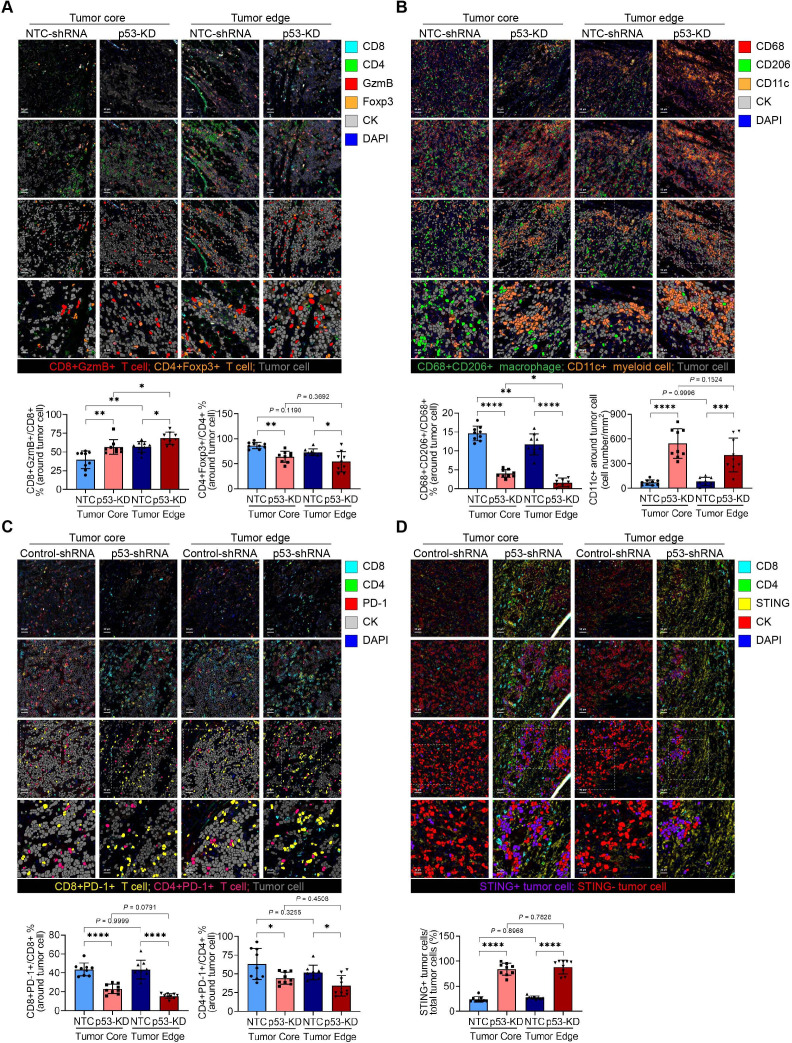
Short hairpin RNA knockdown of mutant in syngeneic oral tumors demonstrated changes in tumor growth between immunocompetent and immunodeficient mice. HTG EdgeSeq targeted messenger RNA sequencing was used to analyze cytokine and immune cell markers in tumors with inactivated mutant . Flow cytometry and multiplex immunofluorescence (mIF) confirmed the role of mutant in the TIME. The gene expression of patients with OSCC was analyzed by CIBERSORT and mIF was used to validate the immune landscape at the protein level.
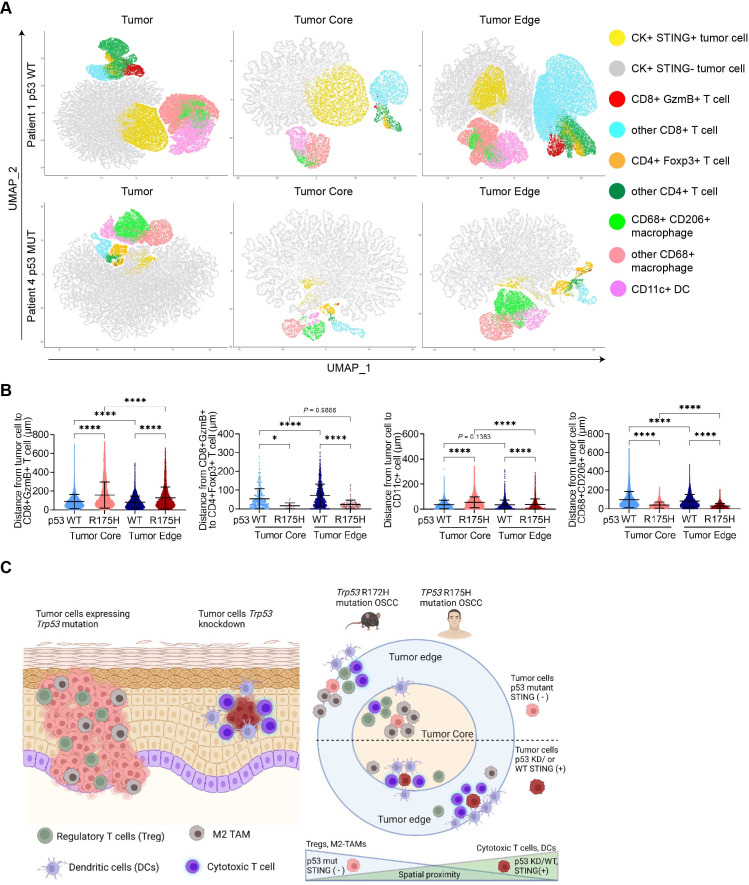
Mutant contributes to a cytokine transcriptome network that inhibits the infiltration of cytotoxic CD8 T cells and promotes intratumoral recruitment of regulatory T cells and M2 macrophages. Moreover, also regulates the spatial distribution of immunocyte populations, and their distribution between central and peripheral intratumoral locations. Interestingly, -mutated tumors are infiltrated with CD8 and CD4 T cells expressing programmed cell death protein 1, and these tumors responded to immune checkpoint inhibitor and stimulator of interferon gene 1 agonist therapy. CIBERSORT analysis of human OSCC samples revealed associations between immune cell populations and the mutation, which paralleled the findings from our syngeneic mouse tumor model.
These findings demonstrate that syngeneic tumors bearing the gain-of-function mutation modulate the TIME to evade tumor immunity, leading to tumor progression and decreased survival.
在实体瘤中, 是突变最频繁的基因,对大多数癌症的标志性特征都有深远影响。体细胞突变在头颈部癌症中高频发生,包括口腔鳞状细胞癌(OSCC)。我们的研究旨在了解 功能获得性突变在调节 OSCC 肿瘤免疫微环境(TIME)中的作用。
在同源口腔肿瘤中,通过短发夹 RNA 敲低突变 ,证明了在免疫功能正常和免疫缺陷小鼠之间肿瘤生长的变化。使用 HTG EdgeSeq 靶向信使 RNA 测序分析了失活突变 的肿瘤中的细胞因子和免疫细胞标志物。流式细胞术和多重免疫荧光(mIF)证实了突变 在 TIME 中的作用。通过 CIBERSORT 分析 OSCC 患者的基因表达,并使用 mIF 验证蛋白水平的免疫景观。
突变 有助于抑制细胞毒性 CD8 T 细胞浸润并促进调节性 T 细胞和 M2 巨噬细胞在肿瘤内募集的细胞因子转录组网络。此外, 还调节免疫细胞群体的空间分布及其在肿瘤中央和周围位置的分布。有趣的是,-突变肿瘤浸润了表达程序性细胞死亡蛋白 1 的 CD8 和 CD4 T 细胞,这些肿瘤对免疫检查点抑制剂和干扰素基因 1 激动剂治疗有反应。对人类 OSCC 样本的 CIBERSORT 分析显示,免疫细胞群体与 突变之间存在关联,这与我们的同源小鼠肿瘤模型的发现一致。
这些发现表明,携带 功能获得性突变的同源肿瘤调节 TIME 以逃避肿瘤免疫,导致肿瘤进展和生存率降低。