Permatasanti Ayu, Hidayat Wahyu
Oral Medicine Residency Program, Faculty of Dentistry, Padjadjaran University, Bandung, Indonesia.
Department of Oral Medicine, Faculty of Dentistry, Padjadjaran University, Bandung, Indonesia.
Cancer Manag Res. 2023 Aug 17;15:837-850. doi: 10.2147/CMAR.S414457. eCollection 2023.
In the world, the second most common cause of mortality is cancer, and its prevalence is increasing in both developing and developed states. Cancer therapy has severe side effects for people with cancer. The selection of natural ingredients in the form of herbal plants is expected to provide therapeutic effectiveness with low side effects. A total of 6000 plant species are utilized as herbal medicines in Indonesia by the local population for various ailments.
To describe the potential of Indonesian herbal plant products as a cancer therapy in vitro.
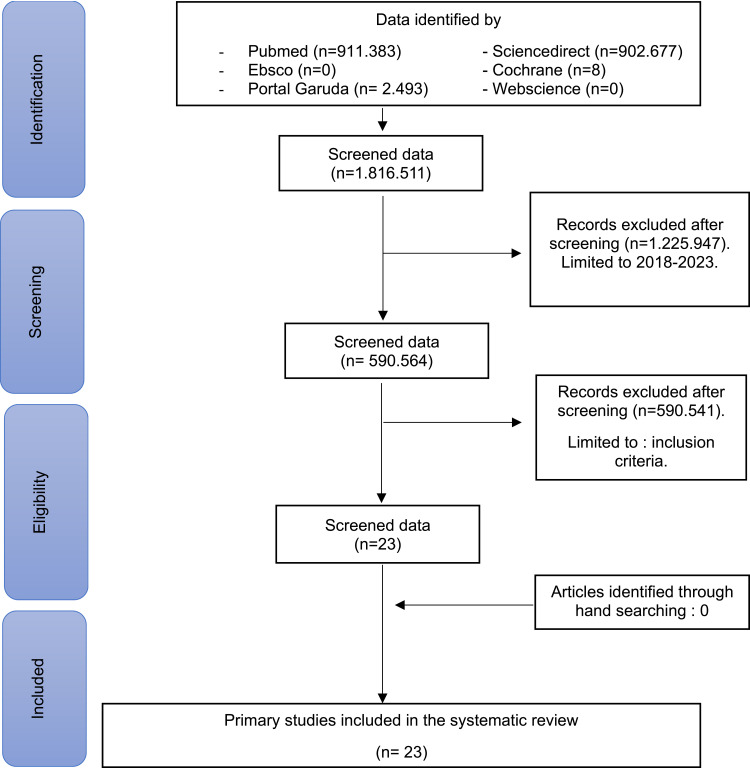
This systematic review is based on Preferred Reporting Items for Systematic Reviews and Meta-Analyses (PRISMA-SR) guidelines. The selection of articles published in the last 5 years (2018-2023) from Pubmed, Ebsco, Garuda portal, ScienceDirect, Cochrane, and Webscience was carried out in January 2023 with the keyword "Indonesian herbal" AND/OR "Anti-cancer" AND/OR "In Vitro". Risk of bias assessment using OHAT tools.
A total of 1,816,511 articles then through inclusion, exclusion criteria screening, and the risk of bias were obtained 23 (twenty-three) low risk of bias articles. Some herbal plant products such as Soursop (.), Nyamplung (.), Benalu Cengkeh/Clove Benalu (), Rumput Mutiara/Pearl Grass (.), Rasamala (), Sarang Semut/Anthill plant (), Basil (.), and Tepus () showed different potentials for activity as an in vitro anti-cancer therapy. The three Indonesian herbal plants that are most studied in vitro as anti-cancer are Soursop, Rasamala, and Benalu Cengkeh/Clove Benalu.
The most widely studied Indonesian herbal plant in vitro as an anti-cancer is Soursop, while the anti-cancer activity that is widely reported is by inhibiting cell proliferation through intrinsic pathways.
在全球范围内,癌症是第二大常见死因,其在发展中国家和发达国家的发病率都在上升。癌症治疗对癌症患者有严重的副作用。人们期望选择以草药植物形式存在的天然成分,能在副作用较低的情况下提供治疗效果。在印度尼西亚,当地居民将总共6000种植物物种用作治疗各种疾病的草药。
描述印度尼西亚草药产品作为体外癌症治疗方法的潜力。
本系统评价基于系统评价和Meta分析的首选报告项目(PRISMA-SR)指南。2023年1月,从PubMed、Ebsco、Garuda门户、ScienceDirect、Cochrane和Webscience中筛选过去5年(2018 - 2023年)发表的文章,关键词为“印度尼西亚草药”和/或“抗癌”和/或“体外”。使用OHAT工具进行偏倚风险评估。
总共1,816,511篇文章,然后通过纳入、排除标准筛选以及偏倚风险评估,获得了23篇低偏倚风险文章。一些草药产品,如刺果番荔枝(.)、油楠(.)、丁香罗勒()、珍珠草(.)、红厚壳()、蚁巢木()、罗勒(.)和地锦(),显示出作为体外抗癌治疗的不同活性潜力。在体外作为抗癌研究最多的三种印度尼西亚草药是刺果番荔枝、红厚壳和丁香罗勒。
在体外作为抗癌研究最广泛的印度尼西亚草药是刺果番荔枝,而广泛报道的抗癌活性是通过内在途径抑制细胞增殖。