Andrews Matthew J, Carpentier Ambre, Slawin Alexandra M Z, Cordes David B, Macgregor Stuart A, Watson Allan J B
EaStCHEM, School of Chemistry, University of St Andrews, Purdie Building, St Andrews KY16 9ST, U.K.
Institute of Chemical Sciences, Heriot-Watt University, Edinburgh EH14 4AS, U.K.
ACS Catal. 2023 Aug 7;13(16):11117-11126. doi: 10.1021/acscatal.3c02839. eCollection 2023 Aug 18.
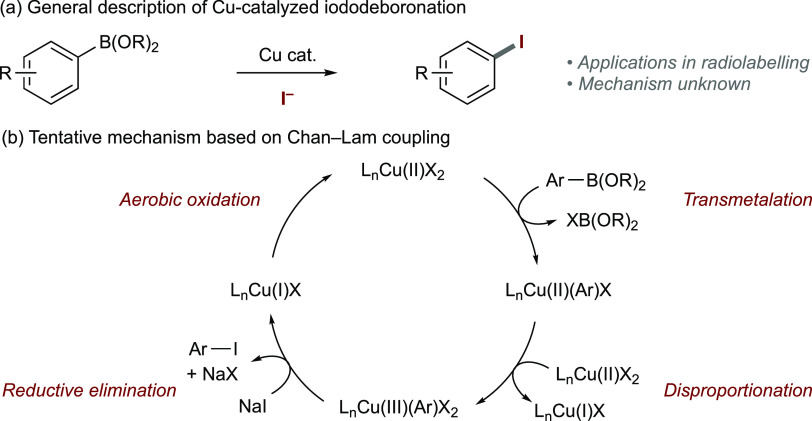
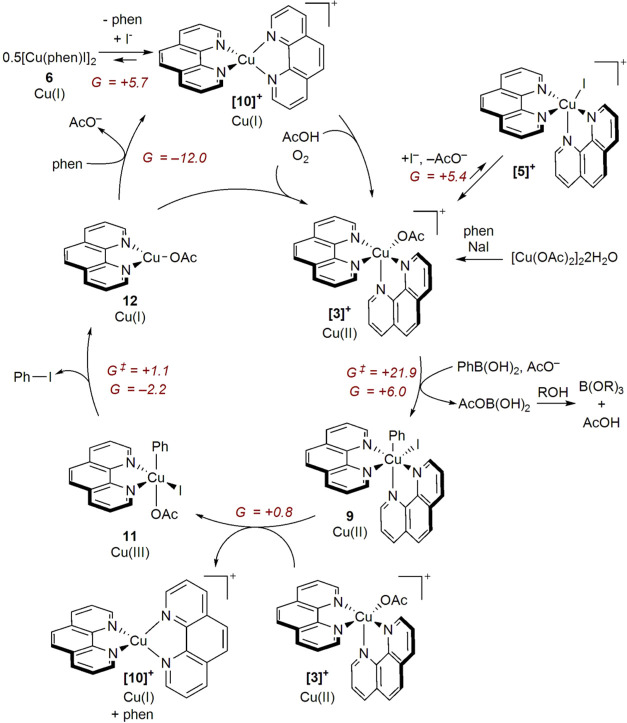
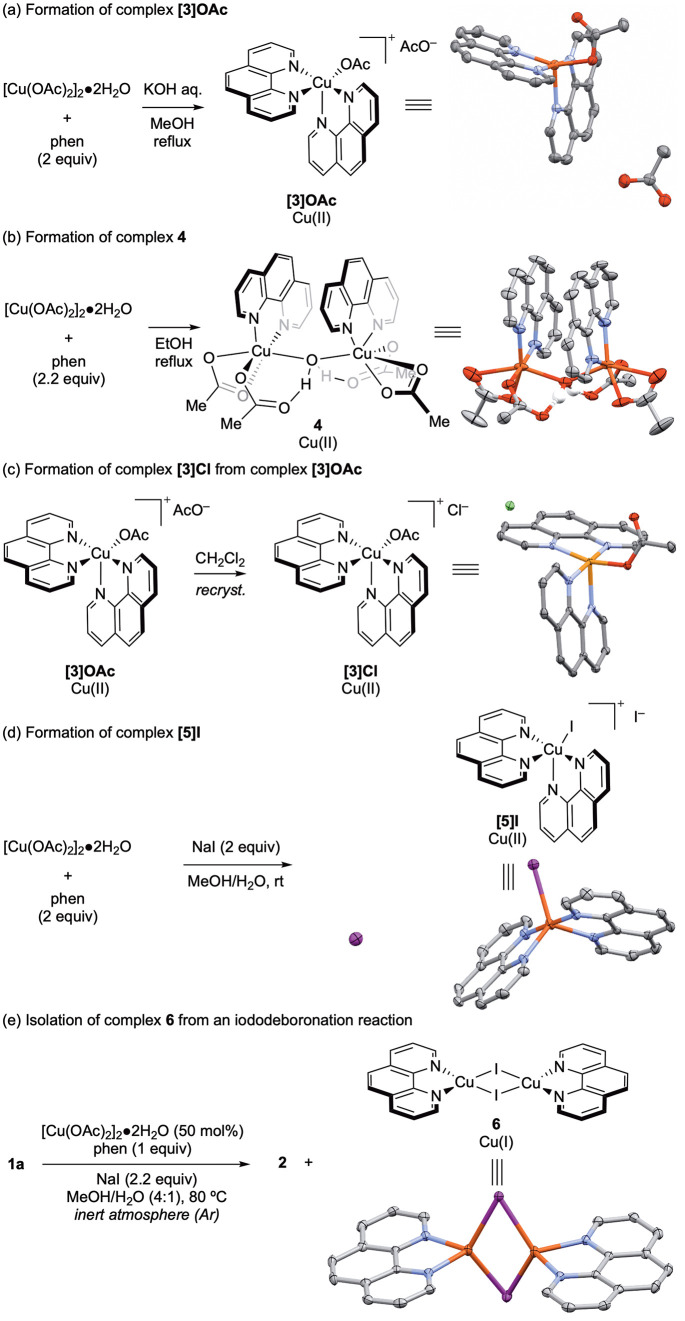
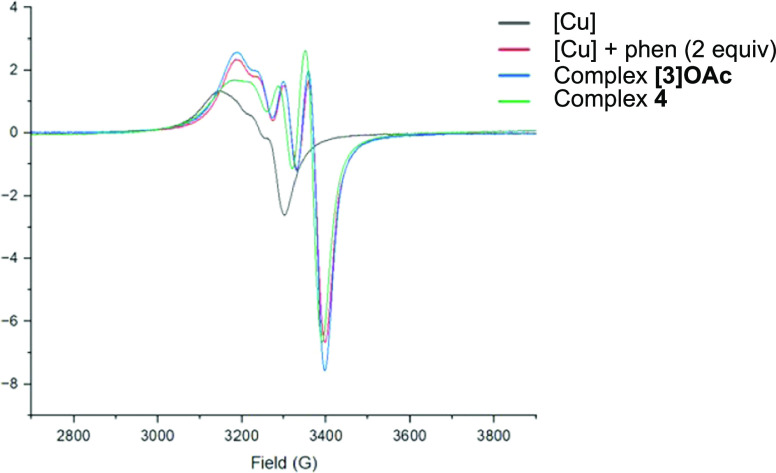
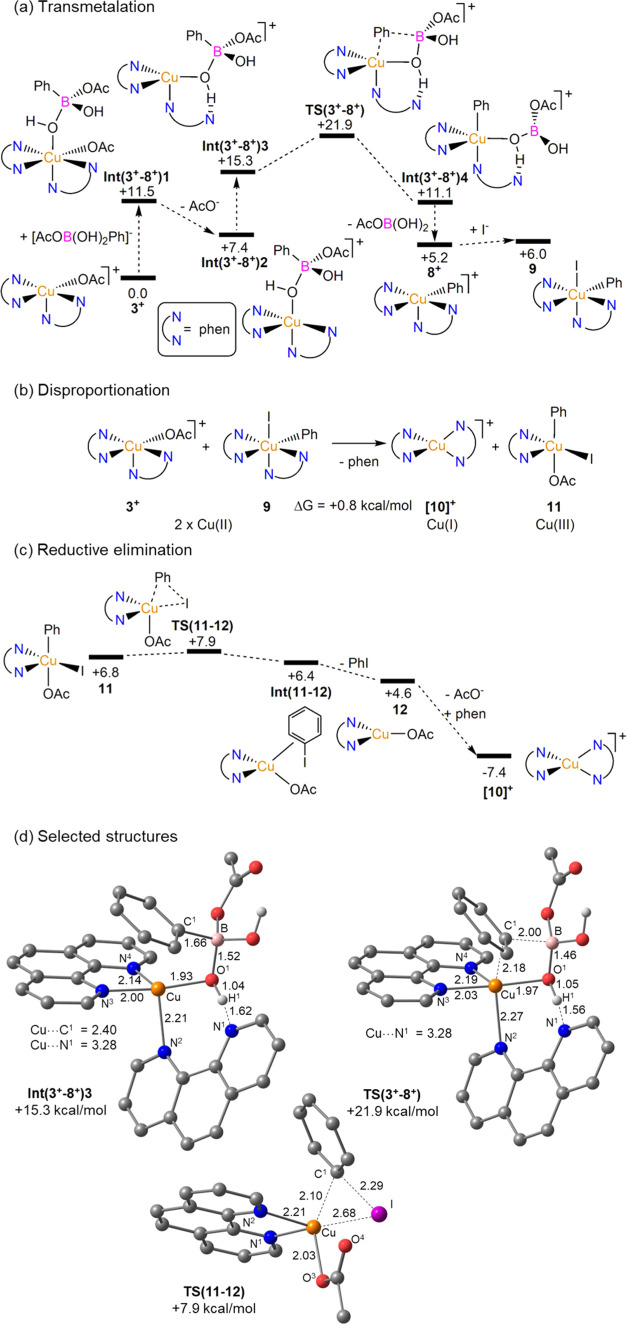
We report a combined experimental and computational study of the mechanism of the Cu-catalyzed arylboronic acid iododeboronation reaction. A combination of structural and density functional theory (DFT) analyses has allowed determination of the identity of the reaction precatalyst with insight into each step of the catalytic cycle. Key findings include a rationale for ligand (phen) stoichiometry related to key turnover events-the ligand facilitates transmetalation via H-bonding to an organoboron boronate generated in situ and phen loss/gain is integral to the key oxidative events. These data provide a framework for understanding ligand effects on these key mechanistic processes, which underpin several classes of Cu-mediated oxidative coupling reactions.
我们报道了一项关于铜催化芳基硼酸碘代脱硼反应机理的实验与计算相结合的研究。结构分析与密度泛函理论(DFT)分析相结合,使得我们能够确定反应前催化剂的身份,并深入了解催化循环的每一步。主要发现包括与关键周转事件相关的配体(phen)化学计量比的基本原理——该配体通过与原位生成的有机硼硼酸酯形成氢键促进金属转移,并且配体的得失对于关键的氧化事件至关重要。这些数据为理解配体对这些关键机理过程的影响提供了一个框架,这些机理过程是几类铜介导的氧化偶联反应的基础。