Ganeshkumar Arumugam, Gonçale Juliana Caparroz, Rajaram Rajendran, Junqueira Juliana Campos
Department of Biosciences and Oral Diagnosis, Institute of Science and Technology, Sao Paulo State University (UNESP), Sao Jose dos Campos 12245-000, Brazil.
Department of Materials Physics, Saveetha School of Engineering, Saveetha Nagar, Thandalam, Chennai 602105, India.
J Fungi (Basel). 2023 Jul 28;9(8):800. doi: 10.3390/jof9080800.
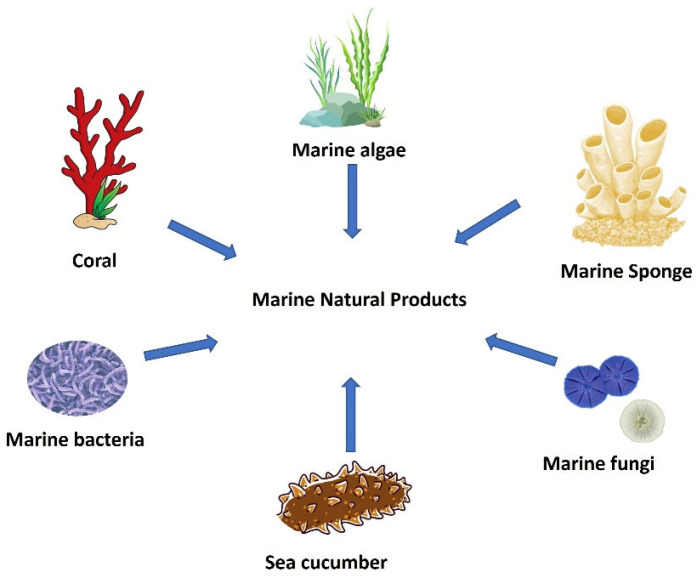
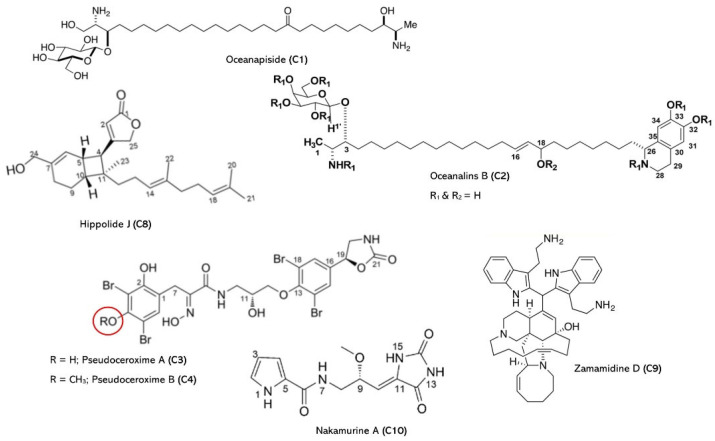
spp. are common opportunistic microorganisms in the human body and can cause mucosal, cutaneous, and systemic infections, mainly in individuals with weakened immune systems. is the most isolated and pathogenic species; however, multi-drug-resistant yeasts like have recently been found in many different regions of the world. The increasing development of resistance to common antifungals by species limits the therapeutic options. In light of this, the present review attempts to discuss the significance of marine natural products in controlling the proliferation and metabolism of and non- species. Natural compounds produced by sponges, algae, sea cucumber, bacteria, fungi, and other marine organisms have been the subject of numerous studies since the 1980s, with the discovery of several products with different chemical frameworks that can inhibit spp., including antifungal drug-resistant strains. Sponges fall under the topmost category when compared to all other organisms investigated. Terpenoids, sterols, and alkaloids from this group exhibit a wide array of inhibitory activity against different species. Especially, hippolide J, a pair of enantiomeric sesterterpenoids isolated from the marine sponge , exhibited strong activity against , , and . In addition, a comprehensive analysis was performed to unveil the mechanisms of action and synergistic activity of marine products with conventional antifungals. In general, the results of this review show that the majority of chemicals derived from the marine environment are able to control particular functions of microorganisms belonging to the genus, which can provide insights into designing new anti-candidal therapies.
念珠菌属是人体常见的机会性微生物,可引起黏膜、皮肤和全身感染,主要发生在免疫系统较弱的个体中。白色念珠菌是最常分离到的致病菌种;然而,近年来在世界许多不同地区都发现了像光滑念珠菌这样的多重耐药酵母。念珠菌属对常见抗真菌药物耐药性的不断增加限制了治疗选择。有鉴于此,本综述试图探讨海洋天然产物在控制白色念珠菌及非白色念珠菌属的增殖和代谢方面的意义。自20世纪80年代以来,海绵、藻类、海参、细菌、真菌和其他海洋生物产生的天然化合物一直是众多研究的主题,已发现几种具有不同化学结构的产物可抑制念珠菌属,包括抗真菌耐药菌株。与所有其他被研究的生物相比,海绵处于最主要的类别。该类生物中的萜类、甾醇和生物碱对不同的念珠菌属表现出广泛的抑制活性。特别是,从海洋海绵Haliclona sp.中分离出的一对对映体倍半萜内酯hippolide J,对白色念珠菌、光滑念珠菌和热带念珠菌表现出强大的活性。此外,还进行了全面分析以揭示海洋产物与传统抗真菌药物的作用机制和协同活性。总体而言,本综述结果表明,大多数源自海洋环境的化学物质能够控制念珠菌属微生物的特定功能,这可为设计新的抗念珠菌治疗方法提供思路。