Alarifi Abdullah M, Alshahrani Najim Z, Sah Ranjit
Department of Public Health, College of Health Sciences, Saudi Electronic University, Riyadh 13323, Saudi Arabia.
Department of Family and Community Medicine, Faculty of Medicine, University of Jeddah, Jeddah 21589, Saudi Arabia.
Trop Med Infect Dis. 2023 Aug 2;8(8):396. doi: 10.3390/tropicalmed8080396.
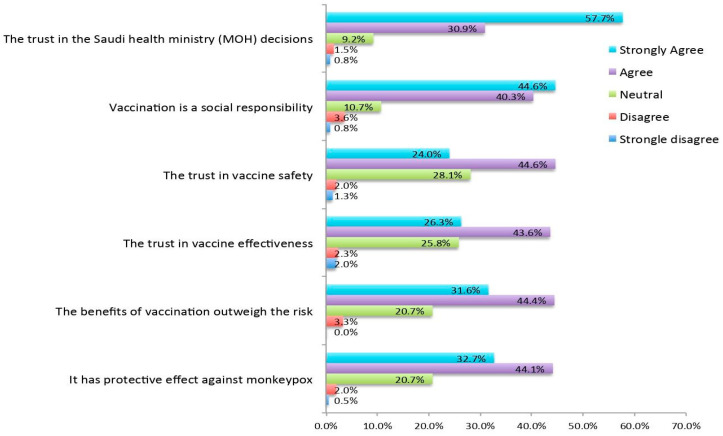
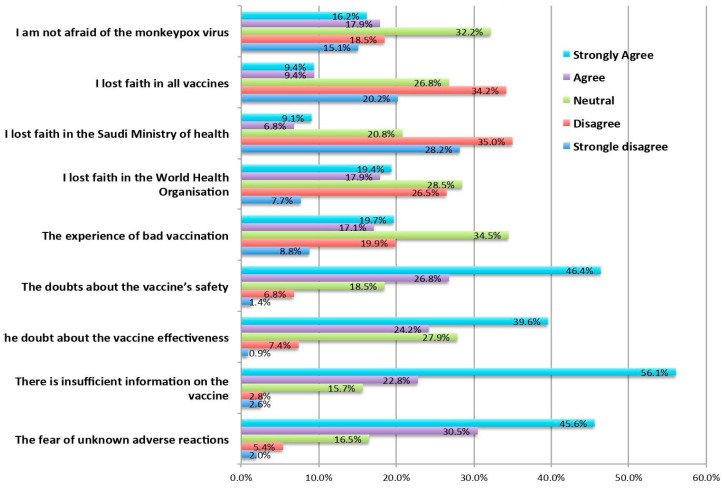
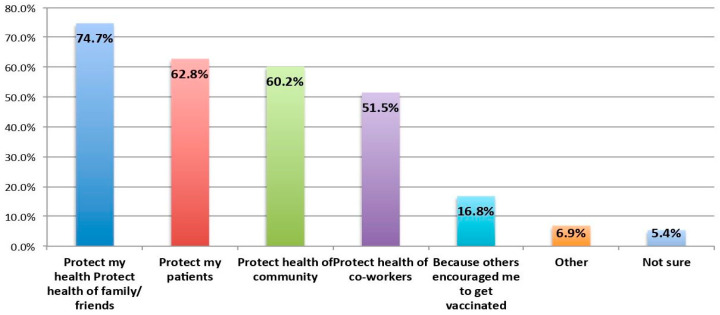
Since Saudi Arabia has already confirmed multiple monkeypox (Mpox) cases, it is essential to initiate timely preventive measures, including the implementation of vaccines. In this cross-sectional study, an online survey was conducted among healthcare workers (HCWs) in Saudi Arabia to understand their willingness to receive the Mpox vaccine. A structured questionnaire was used to gather the data. The study comprised 734 samples. Our study found that among study participants, 52.7% were willing to receive the Mpox vaccine and showed that sociodemographic factors were not significantly associated with vaccine willingness. Previous vaccination history (such as influenza and COVID-19) was significantly associated with Mpox vaccine willingness. The respondents reported that the main reasons for receiving the Mpox vaccine were their trust in the Saudi Health Ministry (57.7%) and their understanding that the vaccine was a social responsibility (44.6%). Furthermore, the majority of the respondents (74.7%) reported that they were motivated by the need to protect themselves, their family and their friends. Insufficient vaccine information and fear of unknown adverse reactions were the most reported reasons for an unwillingness to receive the Mpox vaccine. In conclusion, increasing Mpox vaccine-related awareness and focusing on greater information dissemination to reduce fear and increase vaccine uptake is highly recommended.
由于沙特阿拉伯已确诊多例猴痘病例,采取及时的预防措施至关重要,包括实施疫苗接种。在这项横断面研究中,对沙特阿拉伯的医护人员进行了一项在线调查,以了解他们接种猴痘疫苗的意愿。使用结构化问卷收集数据。该研究包括734个样本。我们的研究发现,在研究参与者中,52.7%愿意接种猴痘疫苗,且社会人口统计学因素与疫苗接种意愿无显著关联。既往疫苗接种史(如流感和新冠疫苗)与猴痘疫苗接种意愿显著相关。受访者表示,接种猴痘疫苗的主要原因是他们对沙特卫生部的信任(57.7%)以及他们认为接种疫苗是一种社会责任(44.6%)。此外,大多数受访者(74.7%)表示,他们是出于保护自己、家人和朋友的需要而接种。疫苗信息不足和对未知不良反应的恐惧是最常被提及的不愿接种猴痘疫苗的原因。总之,强烈建议提高与猴痘疫苗相关的认识,并注重加强信息传播,以减少恐惧并提高疫苗接种率。