Facultad de Medicina Humana, Universidad de San Martín de Porres, Chiclayo, 15011, Peru.
Unidad de Revisiones Sistemáticas y Meta-análisis, Universidad San Ignacio de Loyola, Lima, 15046, Peru.
BMC Public Health. 2024 Jan 2;24(1):35. doi: 10.1186/s12889-023-17473-y.
Immunization, as a preventive strategy against infectious diseases, has consolidated its position as a fundamental pillar in the field of public health. Therefore, the present study aimed to determine the prevalence of the intention to receive the monkeypox (Mpox) vaccine.
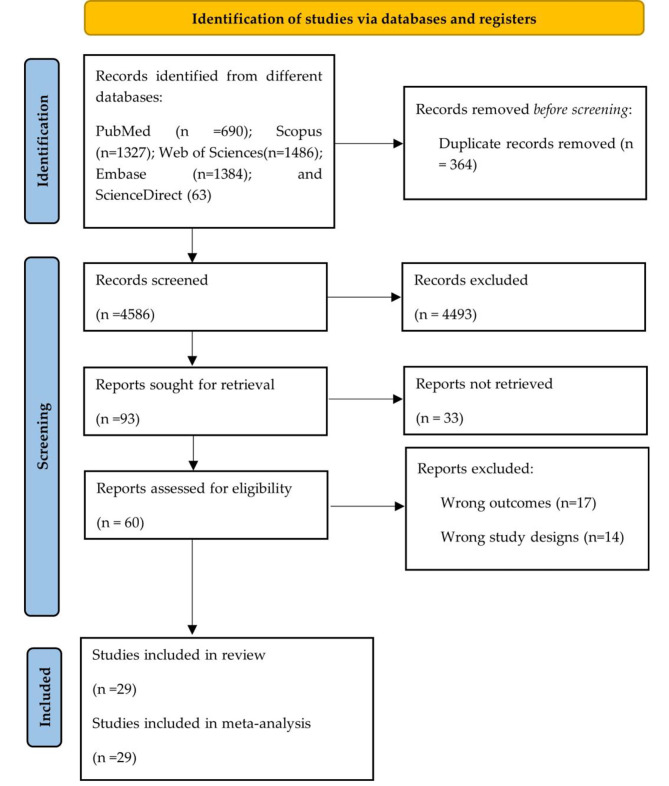
A systematic review and meta-analysis of the available evidence was performed using five databases (PubMed, Scopus, Web of Science, Embase, and ScienceDirect) with a search strategy until July 24, 2023. Data analysis was performed in R software version 4.2.3. The quality of the included cross-sectional studies was assessed using the "JBI-MAStARI". In addition, a subgroup analysis by population and continent was developed.
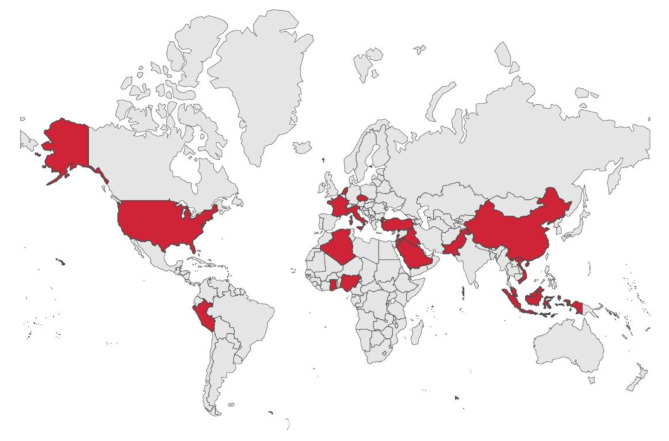
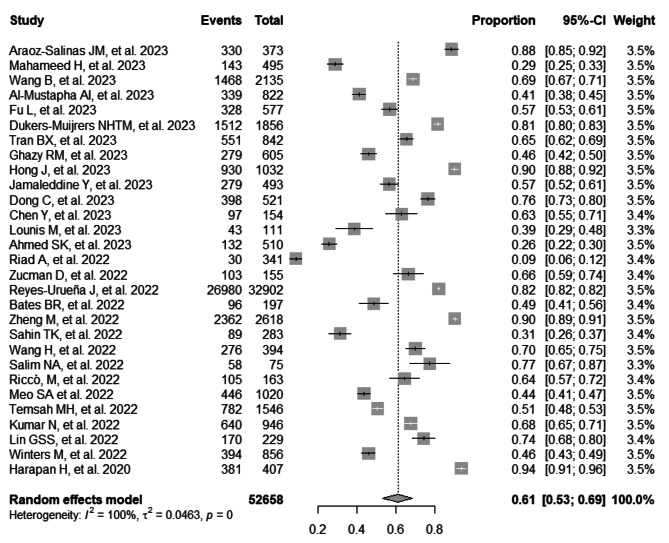
Twenty-nine cross-sectional articles with a total sample of 52 658 participants were included. The pooled prevalence of intention to vaccinate against Mpox was 61% (95% CI: 53-69%; 52,658 participants; 29 studies; I = 100%). In the subgroup analysis, the intention to be vaccinated against Mpox according to continents was 64% (95% CI: 53-74%; 13,883 participants; 17 studies; I = 99%) in Asian countries, 43% (95% CI: 39-47%; 1538 participants; 3 studies; I = 53%) in African countries, 62% (95% CI: 45-78%; 35,811 participants; 6 studies; I = 99%) in European countries, and 63% (95% CI: 32-89%; 1426 participants; 3 studies; I = 99%) in American countries. In the subgroup analysis on the intention to be vaccinated against Mpox, according to study subjects, it was 54% (95% CI: 45-62%; 10,296 participants; 11 studies; I = 99%) in the general population, 57% (95% CI: 33-79%; 3333 participants; 10 studies; I = 99%) in health care workers, and 76% (95% CI: 70-82%; 39,029 participants; 8 studies; I = 98%) in the lesbian, gay, bisexual, transgender, and intersex (LGBTI) community. In addition, as a secondary outcome, a prevalence of refusal of Mpox vaccination was found to be 22% (95% CI: 16-30%; 45,577 participants; 21 studies; I = 99%).
The study highlights the importance of recognizing regional and subgroup disparities in Mpox vaccine willingness and refusal. It emphasizes the importance of employing strategies to achieve widespread vaccination coverage and safeguard public health worldwide.
Joanna Briggs Institute Meta-Analysis of Statistics Assessment and Review Instrument (JBI-MAStARI), Prospective International Registry of Systematic Reviews (PROSPERO), and Preferred Reporting Items for Systematic Reviews and Meta-Analyses (PRISMA).
免疫接种作为预防传染病的策略,已成为公共卫生领域的一个重要支柱。因此,本研究旨在确定接种猴痘(Mpox)疫苗的意愿的流行率。
使用五个数据库(PubMed、Scopus、Web of Science、Embase 和 ScienceDirect)进行了系统评价和荟萃分析,搜索策略截止到 2023 年 7 月 24 日。数据分析在 R 软件版本 4.2.3 中进行。使用“JBI-MAStARI”评估纳入的横断面研究的质量。此外,还进行了按人群和大陆的亚组分析。
共纳入 29 篇横断面研究,总样本量为 52658 名参与者。接种猴痘疫苗意愿的汇总流行率为 61%(95%CI:53-69%;52658 名参与者;29 项研究;I=100%)。在亚组分析中,根据大陆,接种猴痘疫苗的意愿在亚洲国家为 64%(95%CI:53-74%;13883 名参与者;17 项研究;I=99%),在非洲国家为 43%(95%CI:39-47%;1538 名参与者;3 项研究;I=53%),在欧洲国家为 62%(95%CI:45-78%;35811 名参与者;6 项研究;I=99%),在美洲国家为 63%(95%CI:32-89%;1426 名参与者;3 项研究;I=99%)。在接种猴痘疫苗意愿的亚组分析中,根据研究对象,普通人群中的接种意愿为 54%(95%CI:45-62%;10296 名参与者;11 项研究;I=99%),卫生保健工作者中的接种意愿为 57%(95%CI:33-79%;3333 名参与者;10 项研究;I=99%),女同性恋、男同性恋、双性恋、跨性别和间性(LGBTI)群体中的接种意愿为 76%(95%CI:70-82%;39029 名参与者;8 项研究;I=98%)。此外,作为次要结果,发现拒绝接种猴痘疫苗的流行率为 22%(95%CI:16-30%;45577 名参与者;21 项研究;I=99%)。
该研究强调了认识猴痘疫苗接种意愿和拒绝接种的区域和亚组差异的重要性。它强调了采用策略来实现广泛的疫苗接种覆盖率并保护全球公共卫生的重要性。
Joanna Briggs 研究所统计评估和审查工具(JBI-MAStARI)、前瞻性国际系统评价登记处(PROSPERO)和系统评价和荟萃分析的首选报告项目(PRISMA)。