Federal Research Center for Virology and Microbiology, Branch in Nizhny Novgorod, 603950, Nizhny Novgorod, Russia.
Sci Rep. 2023 Aug 25;13(1):13949. doi: 10.1038/s41598-023-41223-0.
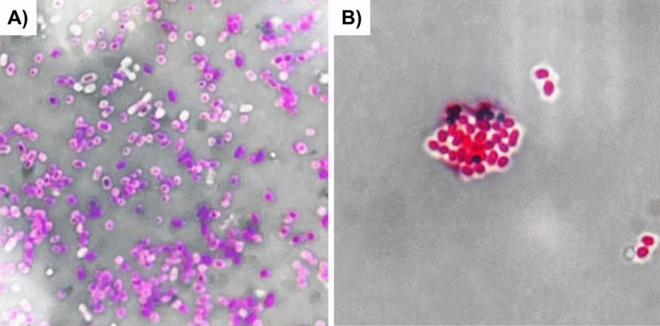
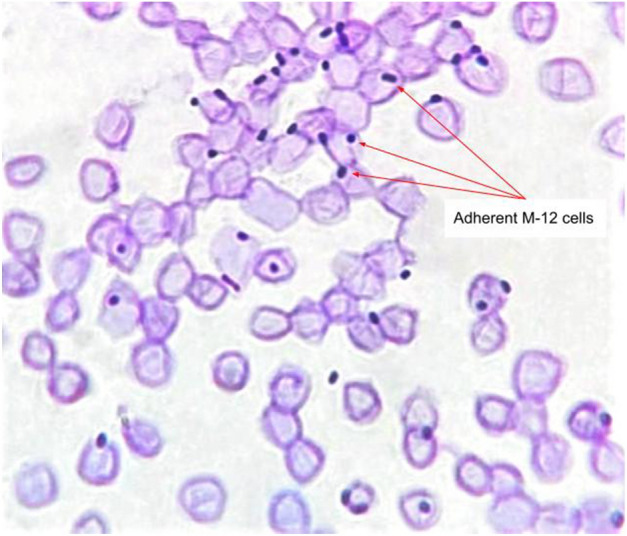
The Escherichia marmotae is a bacterium of the Enterobacterales order, which was first isolated from the Himalayan marmot (Marmota himalayana). Recently E. marmotae has been shown to cause severe infections in humans. Wild animals were suggested to be a natural reservoir of this bacterium. The present study describes the first case of E. marmotae isolation from an apparently healthy wild bank vole (Myodes glareolus). Phenotype, as well as genotype-based techniques, were applied to characterize E. marmotae M-12 isolate. E. marmotae M-12 had the capsule-positive phenotype, high adhesion to human erythrocytes and HEp-2 cells as well as a low invasion into HEp-2 cells. E. marmotae M-12 was avirulent in mice. The phylogenomic analyses of E. marmotae showed dispersed phylogenetic structure among isolates of different origins. Virulome analysis of M-12 isolate revealed the presence of the following factors: siderophores, heme uptake systems, capsule synthesis, curli and type I fimbriae, flagella proteins, OmpA porin, etc. Comparative virulome analysis among available E. marmotae genomes revealed the presence of capsule K1 genes mostly in pathogenic isolates and OmpA porin presence among all strains. We assume that the K1 capsule and OmpA porin play a key role in the virulence of E. marmotae. Pathogenesis of the latter might be similar to extraintestinal pathogenic E. coli.
喜马拉雅旱獭埃希氏菌是肠杆菌目下的一种细菌,最初从喜马拉雅旱獭(Marmota himalayana)中分离出来。最近,埃希氏菌已被证明会导致人类严重感染。野生动物被认为是这种细菌的天然宿主。本研究描述了首例从健康的野生田鼠(Myodes glareolus)中分离出埃希氏菌的病例。采用表型和基于基因型的技术来表征埃希氏菌 M-12 分离株。埃希氏菌 M-12 具有阳性荚膜表型,对人红细胞和 HEp-2 细胞具有高粘附性,对 HEp-2 细胞的侵袭性较低。埃希氏菌 M-12 在小鼠中无毒性。埃希氏菌的系统发育基因组分析显示,不同来源的分离株之间存在分散的系统发育结构。M-12 分离株的毒力组分析显示存在以下因素:铁载体、血红素摄取系统、荚膜合成、卷曲和 I 型菌毛、鞭毛蛋白、OmpA 孔蛋白等。对现有埃希氏菌基因组的比较毒力组分析显示,K1 荚膜基因主要存在于致病性分离株中,而 OmpA 孔蛋白存在于所有菌株中。我们假设 K1 荚膜和 OmpA 孔蛋白在埃希氏菌的毒力中起关键作用。后者的发病机制可能与肠外致病性大肠杆菌相似。