Bajdechi Mircea, Gurghean Adriana, Bataila Vlad, Scafa-Udriște Alexandru, Bajdechi Georgiana-Elena, Radoi Roxana, Oprea Anca Cristiana, Chioncel Valentin, Mateescu Iuliana, Zekra Lucia, Cernat Roxana, Dumitru Irina Magdalena, Rugina Sorin
Faculty of Medicine, University of Medicine and Pharmacy "Carol Davila" of Bucharest, 050474 Bucharest, Romania.
Doctoral School of Medicine, "Ovidius" University of Constanta, 900470 Constanta, Romania.
Diagnostics (Basel). 2023 Aug 15;13(16):2682. doi: 10.3390/diagnostics13162682.
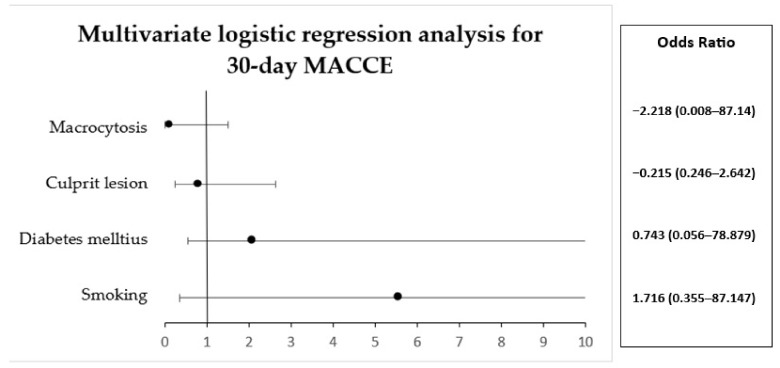
People living with HIV infection are at high risk for cardiovascular events due to inflammation and atherosclerosis. Also, some antiretroviral therapies may contribute to the risk of cardiovascular complications. Immune status is highly dependent on the level of lymphocyte T helper CD4+. There are data suggesting that immune status and CD4+ cell count may be involved in the development of cardiovascular complications in these patients. Our study is longitudinal and retrospective and included a total number of 50 patients with HIV infection associated with acute coronary syndrome, divided into two subgroups based on the nadir of CD4+ cells. This study analyzes the relationship between the immune status of HIV patients, assessed by the nadir of the CD4+ T-cell count, and the outcome of these patients. Also, secondary endpoints were the assessment of the magnitude of coronary lesions and of thrombotic and bleeding risk assessed by specific scores. Clinical and biological parameters and also the extension and complexity of coronary lesions were assessed. Although patients with poor immune status had more complex coronary lesions and increased operative risk and bleeding risk at one year, this was not associated with significant differences in major adverse cardiac and cerebrovascular events at the 30-day and 1-year outcomes.
由于炎症和动脉粥样硬化,感染艾滋病毒的人发生心血管事件的风险很高。此外,一些抗逆转录病毒疗法可能会增加心血管并发症的风险。免疫状态高度依赖于淋巴细胞辅助性T细胞CD4+的水平。有数据表明,免疫状态和CD4+细胞计数可能与这些患者心血管并发症的发生有关。我们的研究是纵向和回顾性的,共纳入了50例与急性冠状动脉综合征相关的艾滋病毒感染患者,根据CD4+细胞最低点分为两个亚组。本研究分析了通过CD4+T细胞计数最低点评估的艾滋病毒患者免疫状态与这些患者的预后之间的关系。此外,次要终点是通过特定评分评估冠状动脉病变的严重程度以及血栓形成和出血风险。评估了临床和生物学参数以及冠状动脉病变的范围和复杂性。尽管免疫状态较差的患者在一年时冠状动脉病变更复杂,手术风险和出血风险增加,但这与30天和1年结局时主要不良心脑血管事件的显著差异无关。