Department of Anaesthesia, Intensive Care Medicine and Pain Medicine, Division of Cardiac, Thoracic, Vascular Anaesthesia and Intensive Care, Medical University of Vienna, 1090 Vienna, Austria.
Center for Medical Data Science (CeDAS), Medical University of Vienna, 1090 Vienna, Austria.
Nutrients. 2023 Aug 11;15(16):3545. doi: 10.3390/nu15163545.
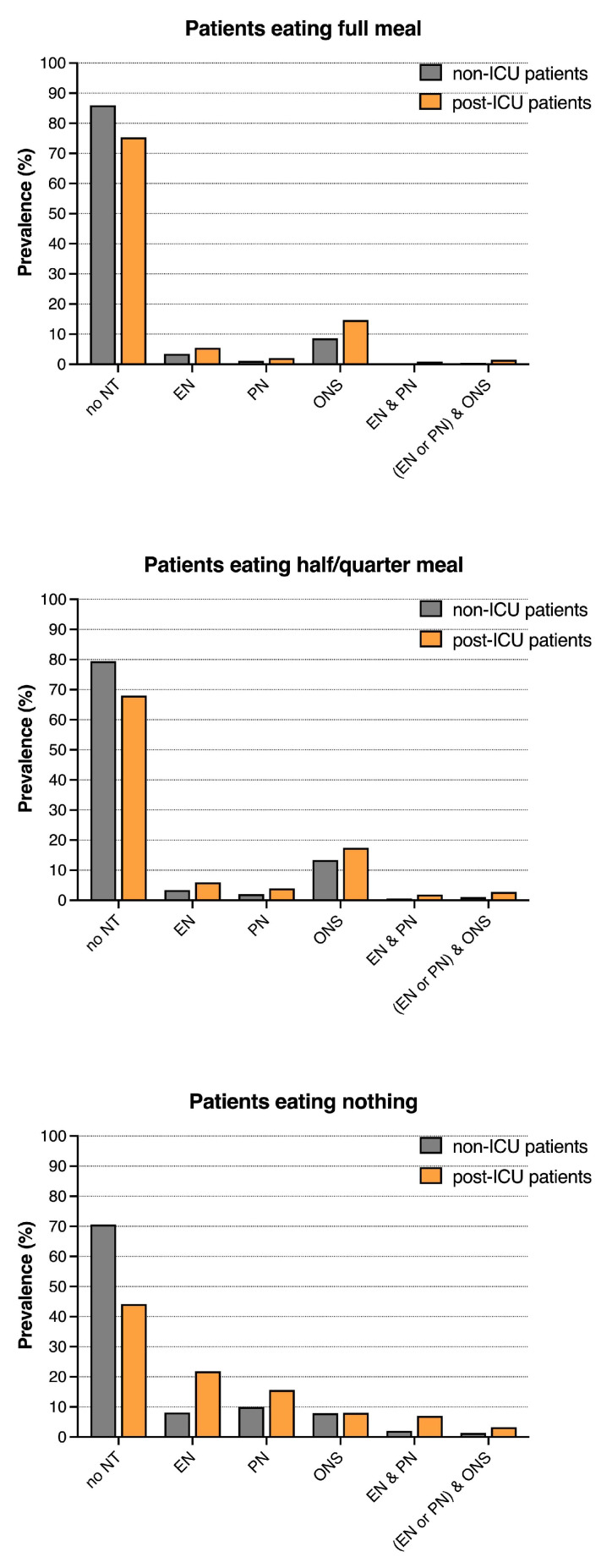
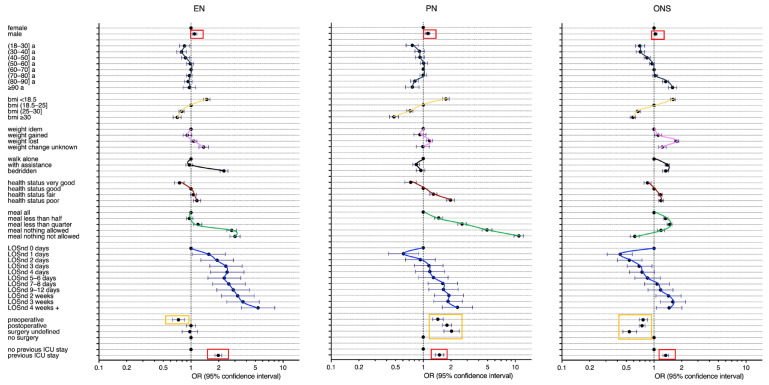
ICU (intensive care unit) patients are exposed to nutritional risks such as swallowing problems and delayed gastric emptying. A previous ICU stay may affect nutritional support upon transfer to the ward. The aim was to study the use of enteral (EN), parenteral nutrition (PN), and oral nutritional supplements (ONS) in ward patients with and without a previous ICU stay, also referred to as post- and non-ICU patients. In total, 136,667 adult patients from the nutritionDay audit 2010-2019 were included. A previous ICU stay was defined as an ICU stay during the current hospitalisation before nutritionDay. About 10% of all patients were post-ICU patients. Post-ICU patients were more frequently exposed to risk factors such as a BMI < 18.5 kg/m, weight loss, decreased mobility, fair or poor health status, less eating and a longer hospital length of stay before nDay. Two main results were shown. First, both post- and non-ICU patients were inadequately fed: About two thirds of patients eating less than half a meal did not receive EN, PN, or ONS. Second, post-ICU patients had a 1.3 to 2.0 higher chance to receive EN, PN, or ONS compared to non-ICU patients in multivariable models, accounting for sex, age, BMI, weight change, mobility, health status, amount eaten on nutritionDay, hospital length of stay, and surgical status. Based on these results, two future goals are suggested to improve nutritional support on the ward: first, insufficient eating should trigger nutritional therapy in both post- and non-ICU patients; second, medical caregivers should not neglect nutritional support in non-ICU patients.
重症监护病房(ICU)患者面临吞咽问题和胃排空延迟等营养风险。先前的 ICU 住院可能会影响转入病房后的营养支持。本研究旨在调查有和无先前 ICU 住院史(即 ICU 后和非 ICU 患者)的病房患者中肠内(EN)、肠外营养(PN)和口服营养补充(ONS)的使用情况。共纳入了营养日调查 2010-2019 年期间的 136667 例成年患者。当前住院期间的 ICU 住院史定义为 ICU 住院。约 10%的患者为 ICU 后患者。ICU 后患者更常暴露于 BMI<18.5kg/m2、体重减轻、活动能力下降、健康状况一般或较差、进食量减少和住院时间延长等风险因素。主要有两个结果。首先,ICU 后和非 ICU 患者都存在喂养不足的情况:约三分之二的进食量不足半餐的患者未接受 EN、PN 或 ONS。其次,多变量模型显示,与非 ICU 患者相比,ICU 后患者接受 EN、PN 或 ONS 的几率高 1.3-2.0 倍,这与性别、年龄、BMI、体重变化、活动能力、健康状况、营养日进食量、住院时间和手术状态有关。基于这些结果,建议未来实现两个目标以改善病房的营养支持:首先,无论是 ICU 后还是非 ICU 患者,若进食量不足都应触发营养治疗;其次,医护人员不应忽视非 ICU 患者的营养支持。