Hiesmayr Michael, Fischer Arabella, Veraar Cecilia, Mora Bruno, Tarantino Silvia, Weimann Arved, Volkert Dorothee
Zentrum für Medical Data Science, Medizinische Universität Wien, Wien, Österreich.
Klinische Abteilung Herz-Thorax-Gefäßchirurgische Anästhesie und Intensivmedizin, Medizinische Universität Wien, Spitalgasse 23, 1090, Wien, Österreich.
Med Klin Intensivmed Notfmed. 2023 Mar;118(2):89-98. doi: 10.1007/s00063-023-00996-y. Epub 2023 Feb 28.
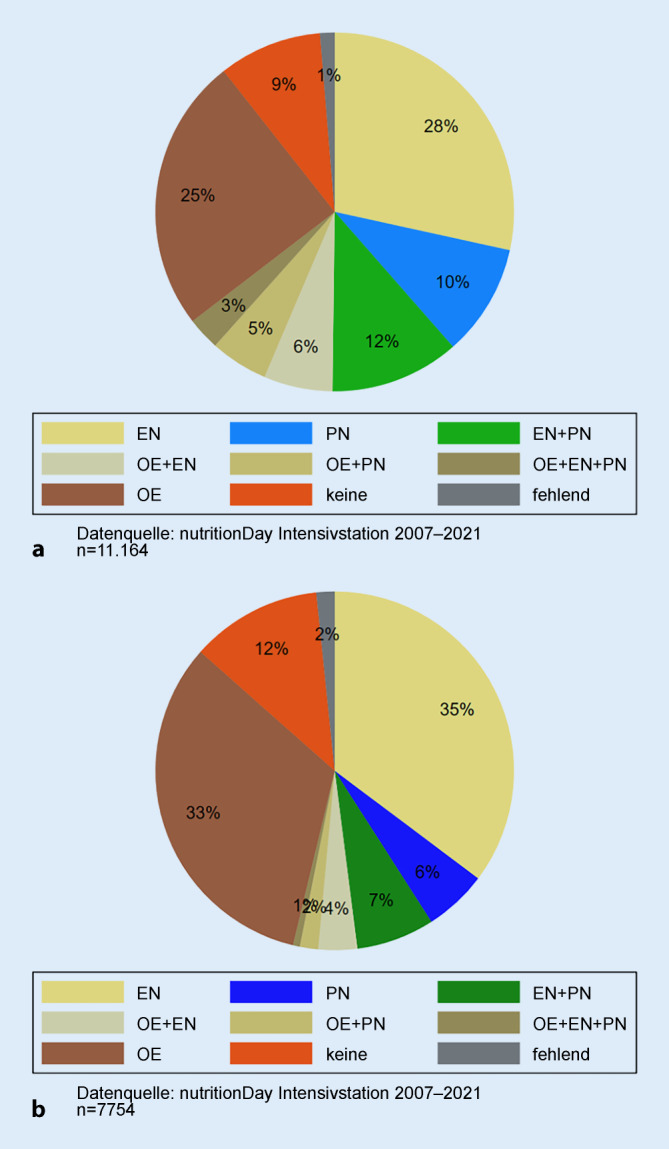
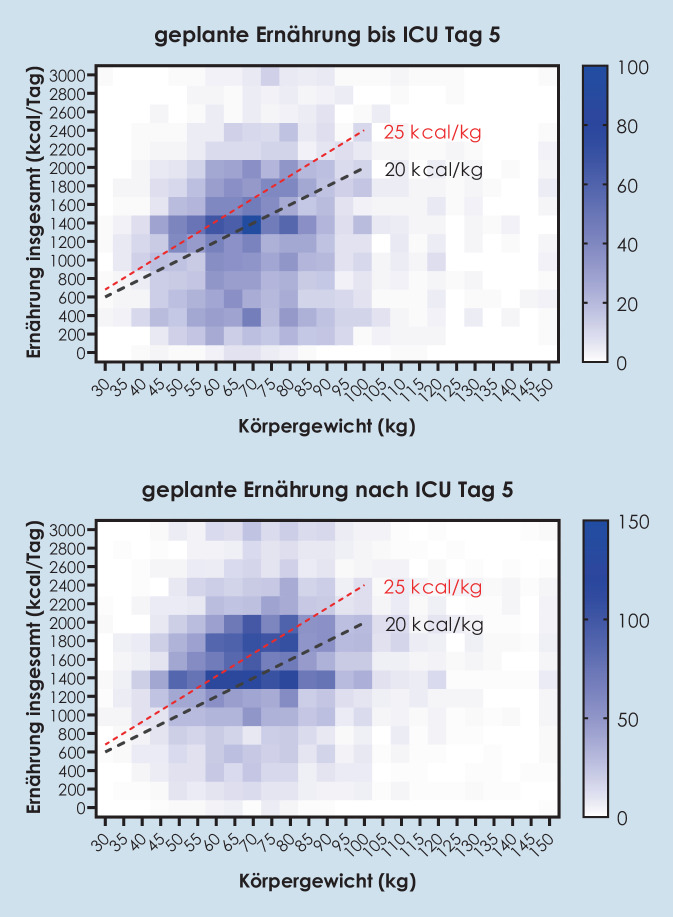
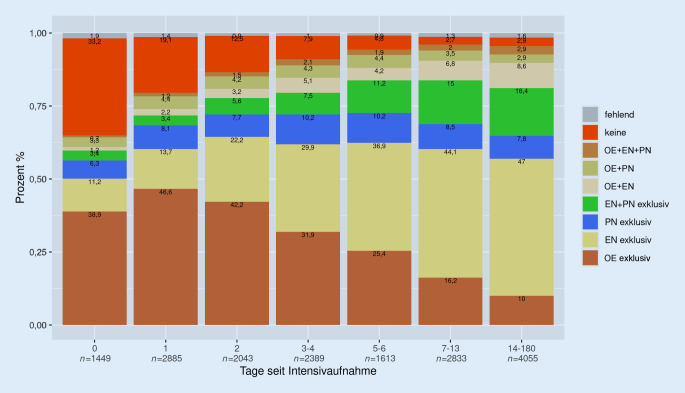
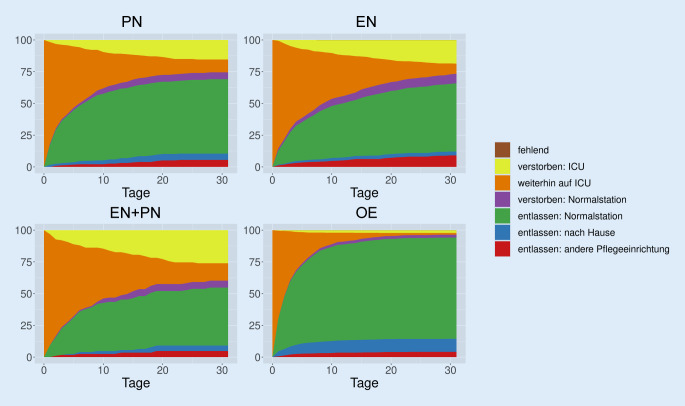
In intensive care units (ICU), patients who are not able to eat or are considered at nutritional risk typically receive medical nutrition therapy based on partially contradictory guidelines as well as the strategies used in large randomized trials. The aim of this study is to analyze patient data from the nutritionDay project in intensive care to describe current clinical approaches to nutrition support worldwide, in Europe and in the group of German-speaking countries, the DACH (i.e., Germany, Austria, Switzerland) region. From 2007-2021, data of 18,918 adult patients in 1595 ICUs from 63 different countries were included in this cross-sectional study. The aim was to recruit all patients present in ICUs. Median stay in the ICU was 4 days on nutritionDay. Little difference in patient characteristics were observed between worldwide, Europe, and the DACH region. Patient were 64 years old, 40% female, 50% ventilated, 29% sedated, and 10% needed renal replacement therapy. A quarter of the patients died in hospital within 60 days and about half of the patients had been discharged home. Enteral nutrition was given twice as frequently as parenteral nutrition (48% versus 24%). Many patients received oral nutrition (39%) and a substantial number received no nutrition support (10%). Parenteral nutrition was used more frequently in Europe than in other world regions, the lowest use being observed in North America. The amount of nutrition given is very similar in all regions regardless of the nutrition route with about 1500 kcal and 60 g of protein per day. A clear association with body weight was not observed and the variation around the median was very large with half of patients receiving amounts 25% below or above the median. Upon completion of data entry, the nutritionDay project allows each ICU to download a unit report summarizing data that allows comparison with worldwide data in numeric and graphical form to permit easy benchmarking of medical nutrition therapy.
在重症监护病房(ICU)中,无法进食或被认为存在营养风险的患者通常会根据部分相互矛盾的指南以及大型随机试验中使用的策略接受医学营养治疗。本研究的目的是分析重症监护营养日项目中的患者数据,以描述全球、欧洲以及德语国家组(即德国、奥地利、瑞士)DACH地区当前的营养支持临床方法。在这项横断面研究中,纳入了2007年至2021年期间来自63个不同国家1595个ICU的18918名成年患者的数据。目的是招募ICU中的所有患者。营养日当天,患者在ICU的中位住院时间为4天。全球、欧洲和DACH地区之间观察到的患者特征差异不大。患者年龄为64岁,40%为女性,50%接受机械通气,29%接受镇静,10%需要肾脏替代治疗。四分之一的患者在60天内死于医院,约一半的患者已出院回家。肠内营养的使用频率是肠外营养的两倍(48%对24%)。许多患者接受口服营养(39%),相当数量的患者未接受营养支持(10%)。欧洲使用肠外营养的频率高于世界其他地区,北美使用频率最低。无论营养途径如何,所有地区给予的营养量非常相似,每天约1500千卡热量和60克蛋白质。未观察到与体重有明显关联,中位数周围的变化非常大,一半的患者接受的量比中位数低25%或高25%。数据录入完成后,营养日项目允许每个ICU下载一份单位报告,汇总数据,以便以数字和图形形式与全球数据进行比较,从而便于对医学营养治疗进行基准对比。