Cardenas Paul A, Cox Michael J, Willis-Owen Saffron A, Moffatt Miriam F, Cookson William O, Cooper Philip J
National Heart and Lung Institute, Imperial College London, London, United Kingdom.
Instituto de Microbiología, COCIBA, Universidad San Francisco de Quito, Quito, Ecuador.
Front Allergy. 2023 Aug 10;4:1214951. doi: 10.3389/falgy.2023.1214951. eCollection 2023.
The hygiene hypothesis identified a relationship between living in rural areas and acquiring protective environmental factors against the development of asthma and atopy. In our previous study, we found a correlation between particular bacterial species and early-onset wheezing in infants from the rural tropics of Ecuador who were corticosteroid-naïve and had limited antibiotic exposure. We now describe a longitudinal study of infants conducted to determine the age-related changes of the microbiome and its relationship with wheezing.
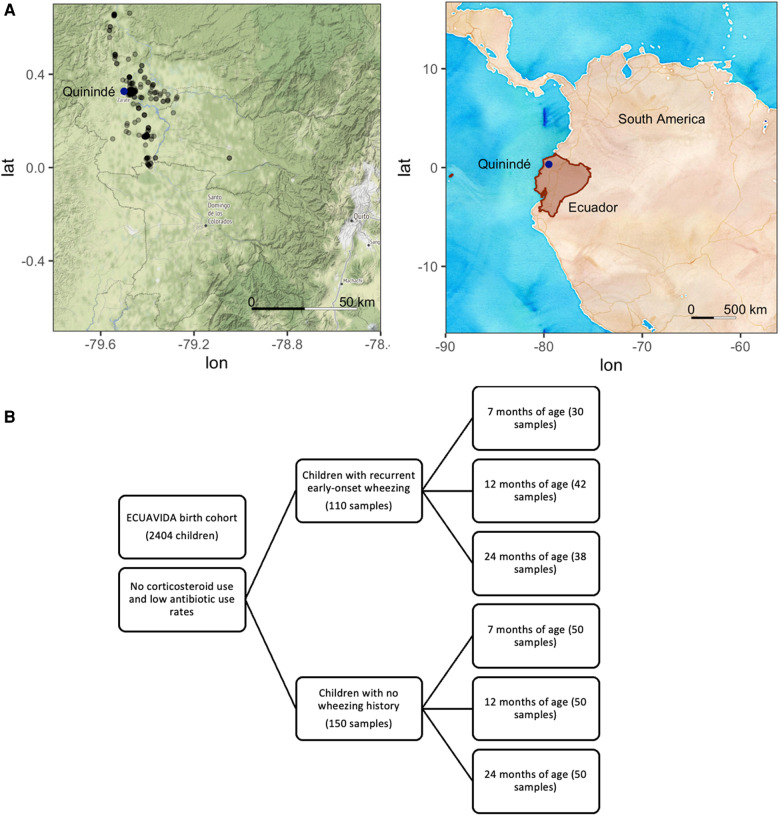
We performed an amplicon sequencing of the 16S rRNA bacterial gene from the oropharyngeal samples obtained from 110 infants who had a history of recurrent episodic wheezing sampled at different ages (7, 12, and 24 months) and compared it to the sequencing of the oropharyngeal samples from 150 healthy infants sampled at the same time points. Bioinformatic analyses were conducted using QIIME and R.
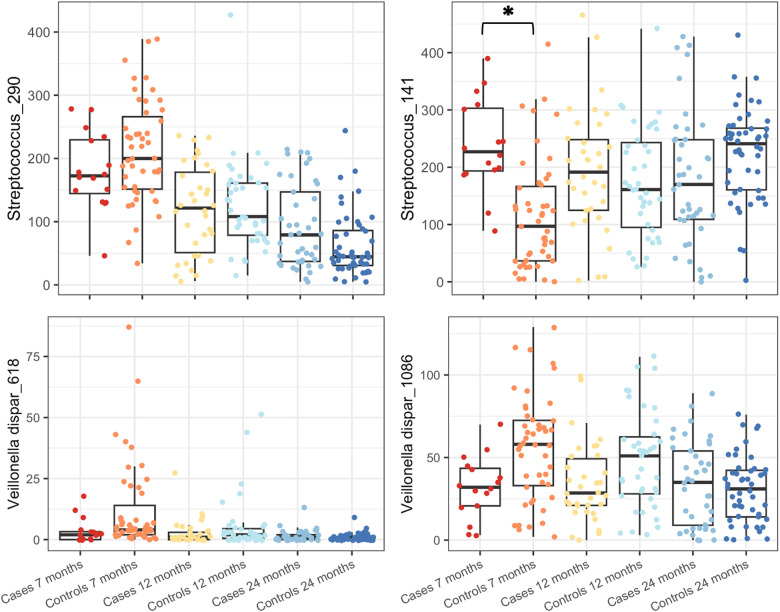
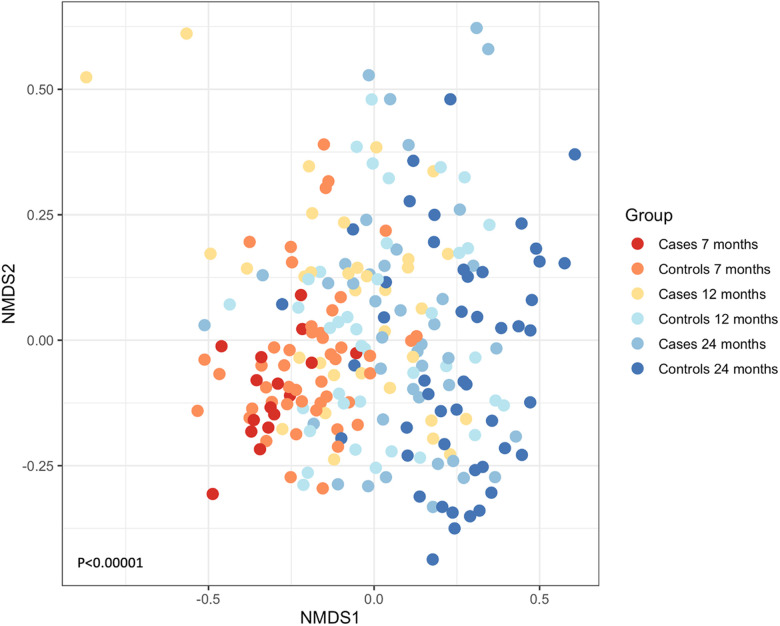
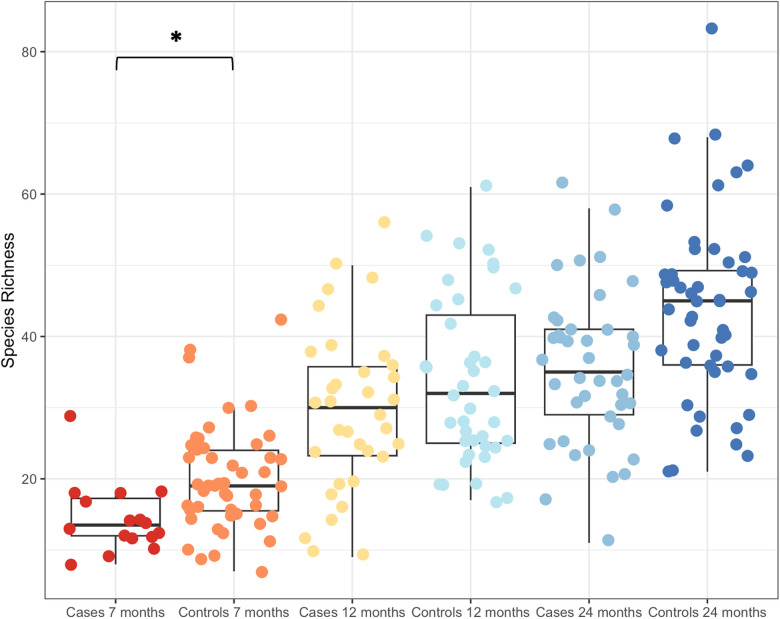
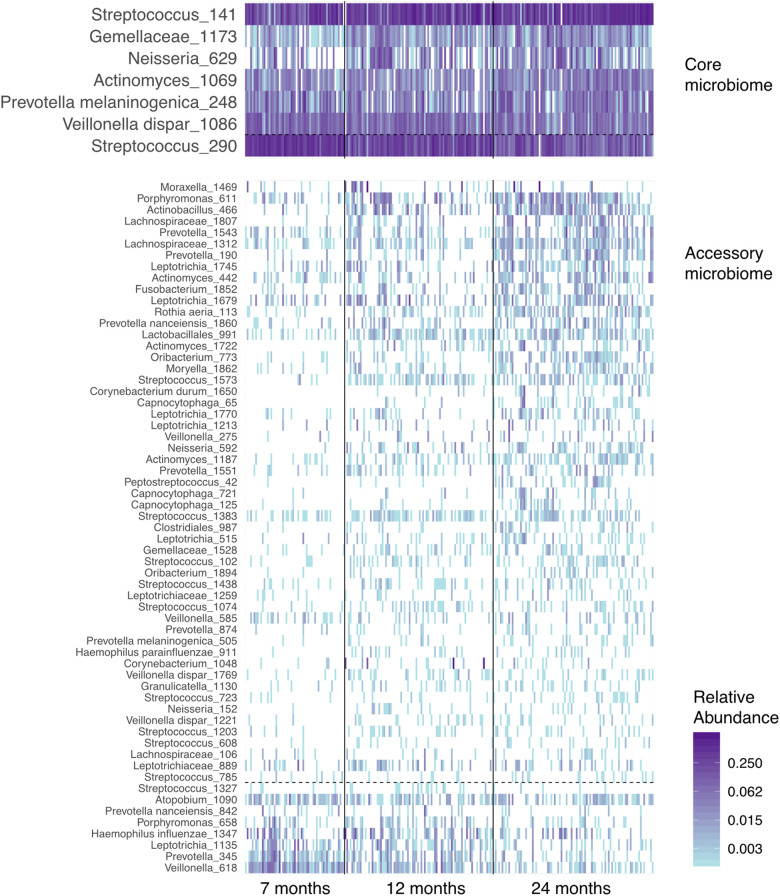
As expected, the microbiota diversity consistently increased as the infants grew older. Considering age-based microbiota changes, we found that infants with wheeze had significantly lower species richness than the healthy infants at 7 months, but not at 12 or 24 months. Most of the core and accessory organisms increased in abundance and prevalence with age, except for a few which decreased. At 7 months of age, infants with wheeze had notably higher levels of a single operational taxonomic unit and core microbiota member than controls.
In a cohort with limited antibiotic and corticosteroid use, a progressively more complex and diverse respiratory microbial community develops with age. The respiratory microbiota in early life is altered in infants with wheeze, but this does not hold true in older infants.
卫生假说确定了生活在农村地区与获得预防哮喘和特应性疾病发展的保护性环境因素之间的关系。在我们之前的研究中,我们发现厄瓜多尔农村热带地区未使用过皮质类固醇且抗生素暴露有限的婴儿中,特定细菌种类与早发性喘息之间存在相关性。我们现在描述一项针对婴儿的纵向研究,以确定微生物组与年龄相关的变化及其与喘息的关系。
我们对110名有反复喘息发作史的婴儿在不同年龄(7、12和24个月)采集的口咽样本中的16S rRNA细菌基因进行了扩增子测序,并将其与同时采集的150名健康婴儿的口咽样本测序结果进行比较。使用QIIME和R进行生物信息学分析。
正如预期的那样,随着婴儿年龄的增长,微生物群多样性持续增加。考虑到基于年龄的微生物群变化,我们发现喘息婴儿在7个月时的物种丰富度明显低于健康婴儿,但在12个月或24个月时并非如此。除了少数种类减少外,大多数核心和附属微生物的丰度和流行率随年龄增加。在7个月大时,喘息婴儿的一个单一操作分类单元和核心微生物群成员的水平明显高于对照组。
在抗生素和皮质类固醇使用有限的队列中,呼吸道微生物群落随着年龄的增长逐渐变得更加复杂和多样。喘息婴儿早期生命中的呼吸道微生物群会发生改变,但在年龄较大的婴儿中并非如此。