Allan Katherine S, Mammarella Bianca, Visanji Mika'il, Moglica Erinda, Sadeghlo Negin, O'Neil Emma, Chan Tiffany T, Kishibe Teruko, Aves Theresa
Division of Cardiology, Unity Health Toronto - St. Michael's Hospital, Toronto, Ontario, Canada.
School of Interdisciplinary Science, McMaster University, Hamilton, Ontario, Canada.
Resusc Plus. 2023 Aug 10;15:100439. doi: 10.1016/j.resplu.2023.100439. eCollection 2023 Sep.
Worldwide, bystander CPR rates are low; one effective way to increase these rates is to train schoolchildren; however, the most effective way to train them is currently unknown.
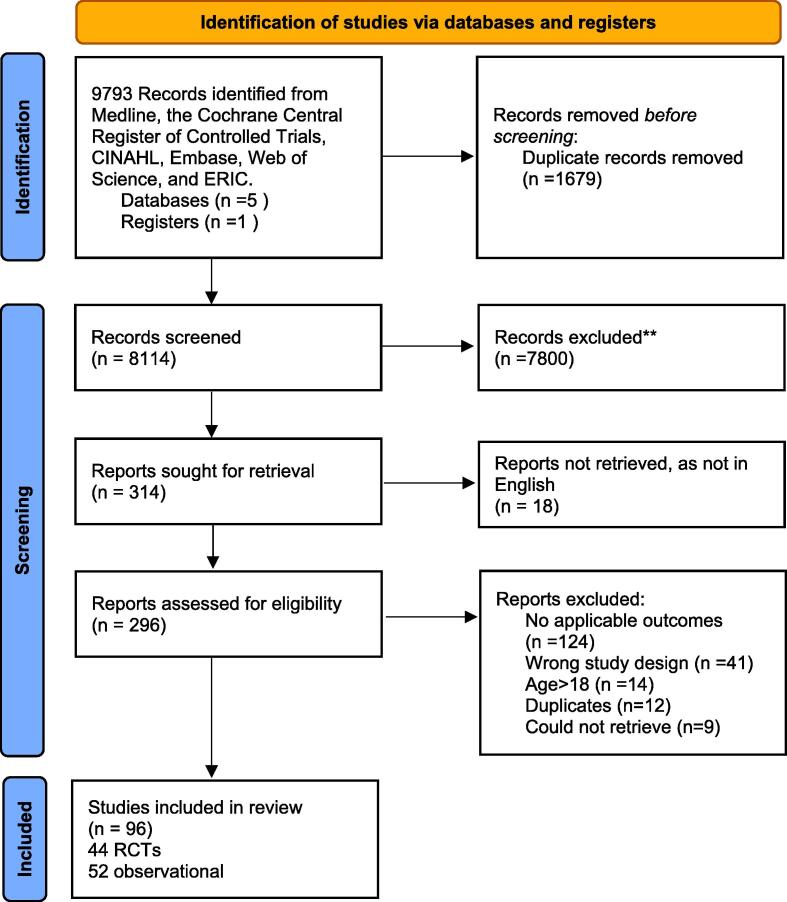
This systematic review and meta-analysis of randomized controlled trials (RCTs) and observational studies, evaluated whether CPR training for schoolchildren, using innovative teaching modalities (nonpractical, self, or peer-training) versus standard instructor-led training, resulted in higher quality CPR, self-confidence and short-term (≤3 months post-training) or long-term (>3 months post-training) retention of CPR skills.
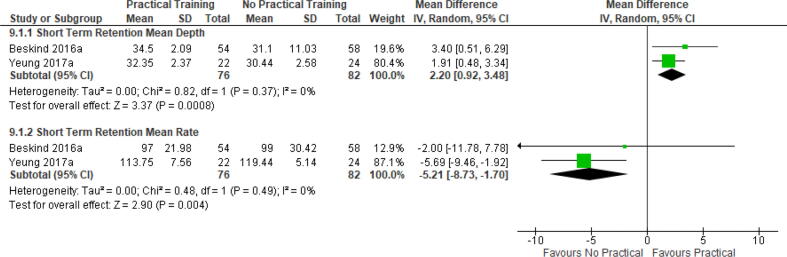
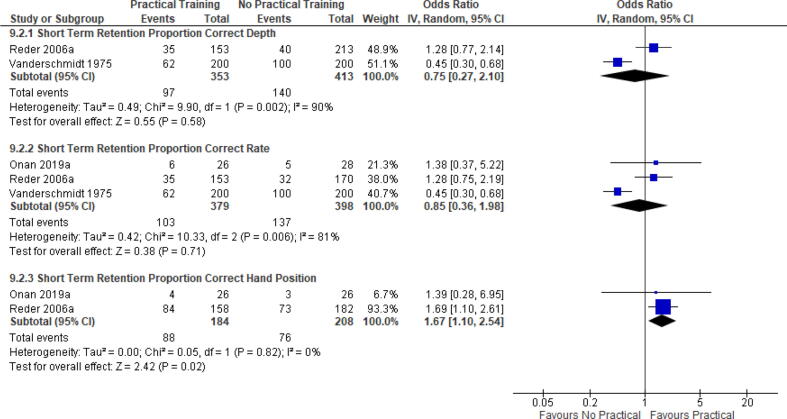
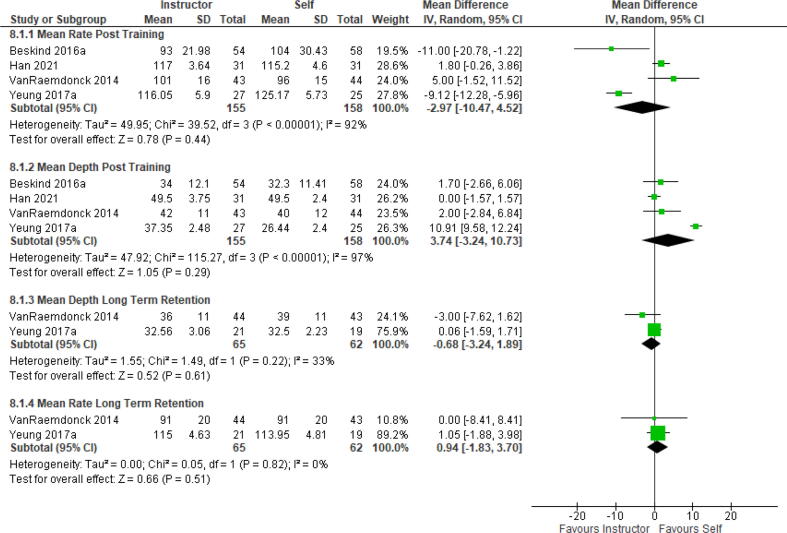
From 9793 citations, 96 studies published between 1975 and 2022 (44 RCTs and 52 before/after studies) were included. There were 43,754 students, average age of 11.5 ± 0.9 (range 5.9-17.6) and 49.2% male. Only 13 RCTs compared practical vs. nonpractical training (n = 5), self- vs. instructor-led training (n = 7) or peer- vs. instructor-led training (n = 5). The observed statistically significant differences in mean depth and rate of compressions between children with hands-on practical training and those without were not clinically relevant. Regardless of training modality, compression depth was consistently suboptimal. No differences were observed in CPR skills immediately or ≤ 3 months post-training, between children who were self- or peer-trained vs. instructor-led. Due to lack of data, we were unable to evaluate the impact of these novel training modalities on student self-confidence.
Although innovative training modalities are equally effective to instructor-led training when teaching schoolchildren CPR, compression depth was frequently suboptimal. Recommendations on standardized training and evaluation methods are necessary to understand the best ways to train children.
在全球范围内,旁观者实施心肺复苏术(CPR)的比例较低;提高这些比例的一种有效方法是对学童进行培训;然而,目前尚不清楚培训他们的最有效方法是什么。
本系统评价和荟萃分析纳入了随机对照试验(RCT)和观察性研究,评估对学童进行CPR培训时,采用创新教学模式(非实践、自我或同伴培训)与标准的教师指导培训相比,是否能带来更高质量的CPR、自信心以及CPR技能的短期(培训后≤3个月)或长期(培训后>3个月)保持。
从9793篇文献中,纳入了1975年至2022年发表的96项研究(44项RCT和52项前后对照研究)。共有43754名学生,平均年龄为11.5±0.9岁(范围5.9 - 17.6岁),男性占49.2%。只有13项RCT比较了实践培训与非实践培训(n = 5)、自我培训与教师指导培训(n = 7)或同伴培训与教师指导培训(n = 5)。接受实践培训的儿童与未接受实践培训的儿童在按压平均深度和频率上观察到的统计学显著差异并无临床意义。无论培训方式如何,按压深度始终未达最佳。在自我培训或同伴培训的儿童与教师指导培训的儿童之间,在培训后即刻或≤3个月时,CPR技能方面未观察到差异。由于缺乏数据,我们无法评估这些新型培训模式对学生自信心的影响。
虽然在对学童进行CPR教学时,创新培训模式与教师指导培训同样有效,但按压深度常常未达最佳。需要关于标准化培训和评估方法的建议,以了解培训儿童的最佳方式。