Department of Brain and Behavioral Sciences, University of Pavia, Pavia, Italy.
Headache Science and Neurorehabilitation Center, IRCCS Mondino Foundation, Pavia, Italy.
J Headache Pain. 2023 Sep 1;24(1):120. doi: 10.1186/s10194-023-01652-8.
Migraine is a highly prevalent primary headache disorder and a leading cause of disability. Difficulties in access to care during diagnostic and therapeutic journey contribute to the disease burden. Several target-specific drugs have reached the market in the past four years and have modified the treatment paradigm in migraine. The aim of this study is to provide an updated snapshot of the pathways and hurdles to care for migraine in different European countries by directly asking patients.
In 2021 the European Migraine and Headache Alliance proposed a 39-item questionnaire that was administered online to an adult migraine population in European countries. Questions were focused on socio-demographic and migraine data, access to diagnosis and treatment, disease-related burden and the main channel for disease information.
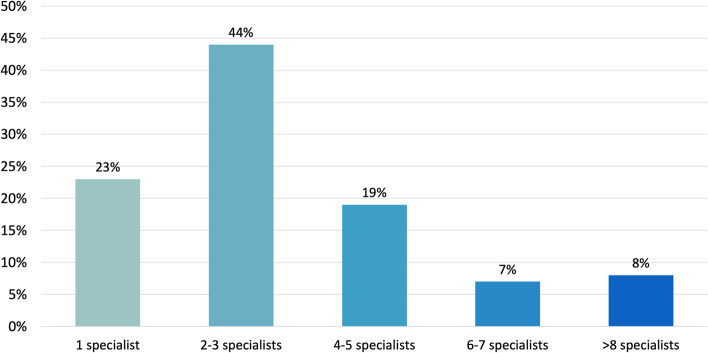
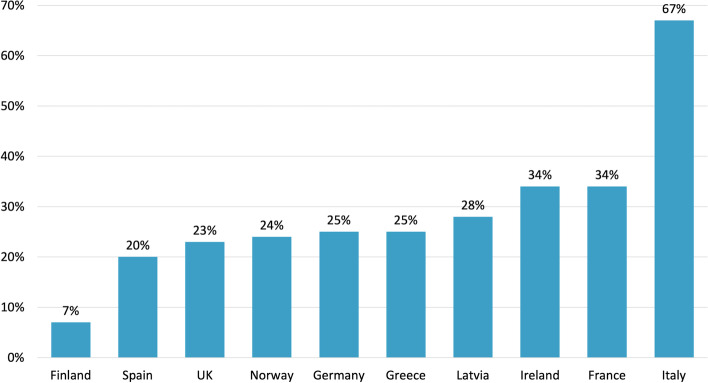
A total of 3169 questionnaires were returned from 10 European countries. Responders were predominantly females, age range 25-59 years, with a migraine history longer than 10 years in 82% of cases, and with at least 8 headache days per month in 57% of cases. Respondents reported limitations in social, working and personal life during both the ictal and interictal phase. The activities mostly impaired during the attacks were driving (55%), cooking or eating (42%), taking care of family/childcare (40%) and getting medicines at the pharmacy (40%). The most frequently reported unmet need was the long delay between the first visit and migraine diagnosis: 34% of respondents had to see ≥ 4 specialists before being correctly diagnosed, and between the diagnosis and treatment prescription: > 5 years in 40% of cases. The most relevant needs in terms of quality of life were the desire for a lower migraine frequency, an effective treatment and a greater involvement in society.
Data from the present survey point to the existence and persistence of multiple hurdles that result in significant limitations to access to care and to the patients' social life. A close cooperation between decision makers, healthcare workers and patients is needed to overcome these barriers.
偏头痛是一种高发的原发性头痛疾病,也是导致残疾的主要原因。在诊断和治疗过程中获得医疗服务的困难加剧了疾病负担。过去四年中,已有几种针对特定靶点的药物上市,并改变了偏头痛的治疗模式。本研究旨在通过直接询问患者,提供不同欧洲国家偏头痛患者获得医疗服务途径和障碍的最新情况。
2021 年,欧洲偏头痛和头痛联盟提出了一个 39 项问题的调查问卷,在欧洲国家的成年偏头痛患者中进行在线调查。问题主要集中在社会人口统计学和偏头痛数据、获得诊断和治疗的途径、与疾病相关的负担以及获取疾病信息的主要渠道。
共收到来自 10 个欧洲国家的 3169 份问卷。应答者主要为女性,年龄在 25-59 岁之间,82%的病例偏头痛病史超过 10 年,57%的病例每月头痛天数至少 8 天。应答者报告在发作期和间歇期均存在社会、工作和个人生活受限。发作期间活动受限最严重的是驾驶(55%)、烹饪或进食(42%)、照顾家庭/儿童保育(40%)和在药店买药(40%)。报告最多的未满足需求是从首次就诊到偏头痛诊断之间的长时间延迟:34%的患者在被正确诊断之前必须看≥4 位专科医生,从诊断到开具治疗处方之间的时间延迟超过 5 年的占 40%。在生活质量方面最相关的需求是希望偏头痛发作频率更低、有有效的治疗方法和更能融入社会。
本调查数据表明,存在并持续存在多种障碍,导致获得医疗服务的途径有限,并严重影响患者的社会生活。决策者、医疗保健工作者和患者需要密切合作,克服这些障碍。