Alvergne Alexandra, Woon Ee Von, Male Victoria
School of Anthropology and Museum Ethnography, University of Oxford, Oxford, United Kingdom.
Department of Metabolism, Digestion and Reproduction, Imperial College London, Chelsea and Westminster Hospital, London, United Kingdom.
Front Reprod Health. 2022 Jul 25;4:952976. doi: 10.3389/frph.2022.952976. eCollection 2022.
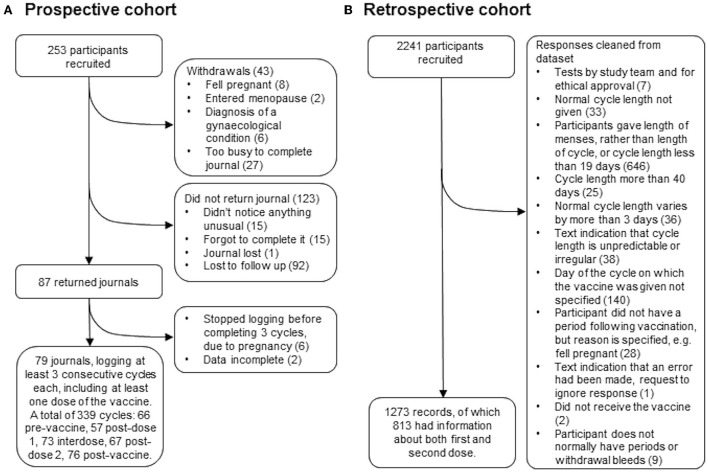
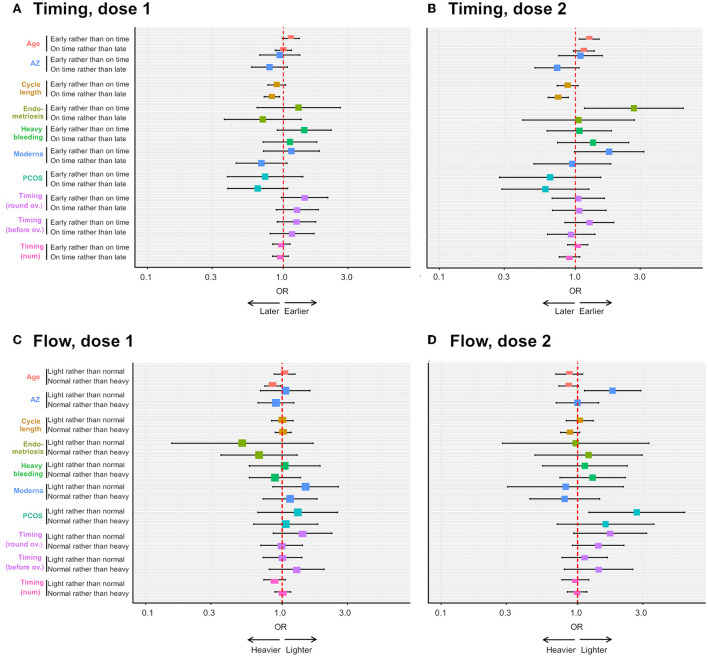
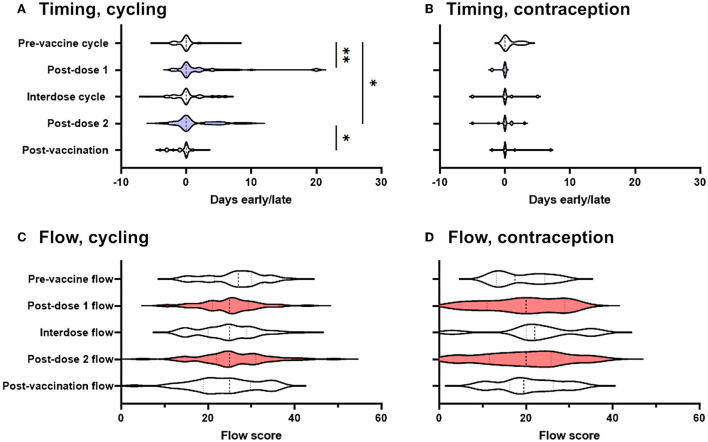
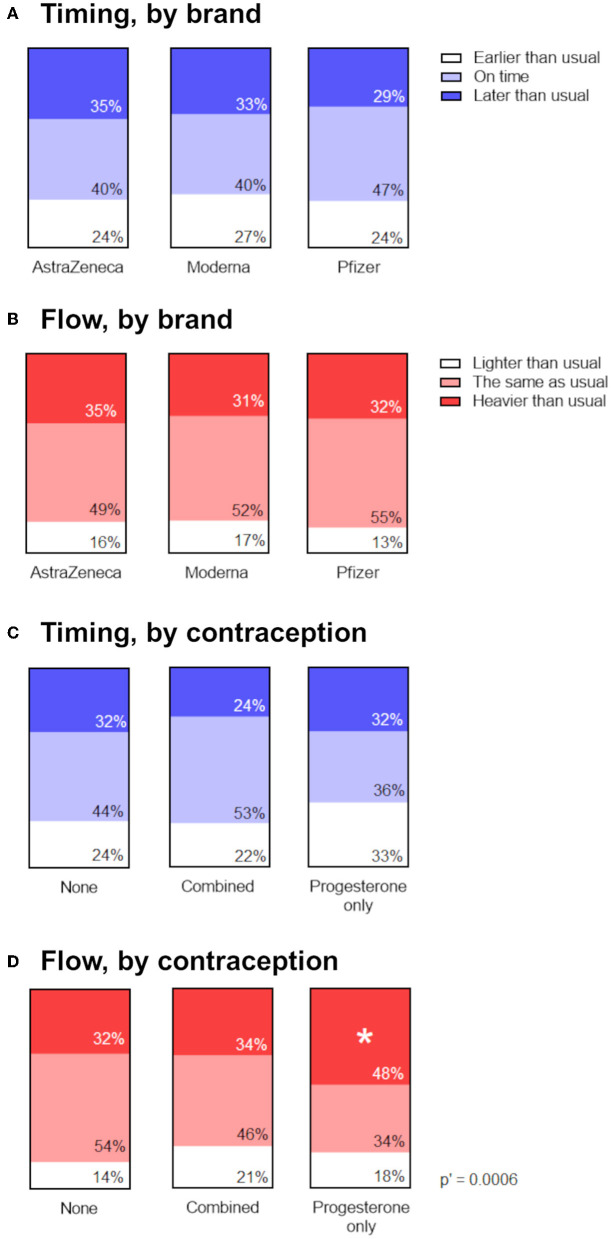
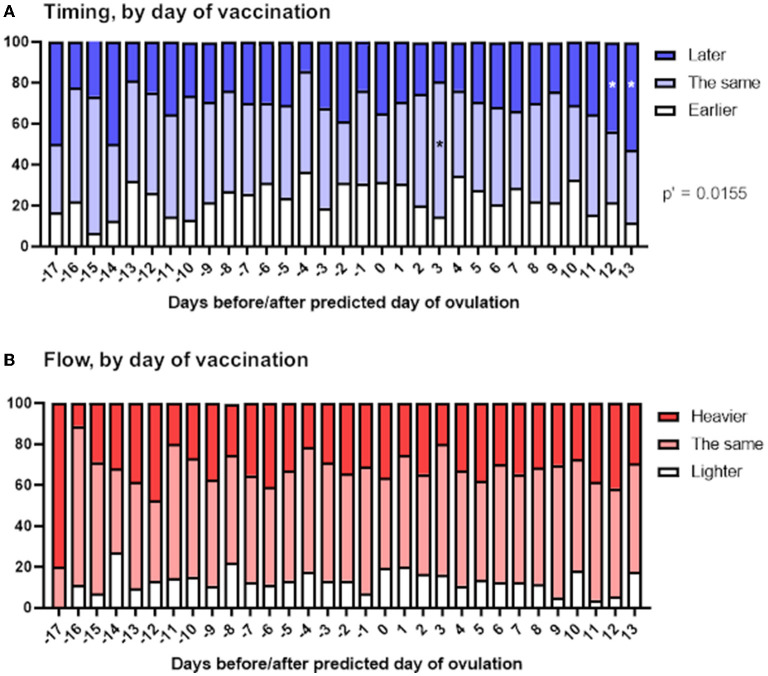
COVID-19 vaccination protects against the potentially serious consequences of SARS-CoV-2 infection, but some people have been hesitant to receive the vaccine because of reports that it could affect menstrual bleeding. To determine whether this occurs we prospectively recruited a cohort of 79 individuals, each of whom recorded details of at least three consecutive menstrual cycles, during which time they each received at least one dose of COVID-19 vaccine. In spontaneously cycling participants, COVID-19 vaccination was associated with a delay to the next period, but this change reversed in subsequent unvaccinated cycles. No delay was detected in those taking hormonal contraception. To explore hypotheses about the mechanism by which these menstrual changes occur, we retrospectively recruited a larger cohort, of 1,273 people who had kept a record of their menstrual cycle and vaccination dates. In this cohort, we found a trend toward use of combined hormonal contraception being protective against reporting a delayed period, suggesting that menstrual changes following vaccination may be mediated by perturbations to ovarian hormones. However, we were unable to detect a clear association between the timing of vaccination within the menstrual cycle and reports of menstrual changes. Our findings suggest that COVID-19 vaccination can lengthen the menstrual cycle and that this effect may be mediated by ovarian hormones. Importantly, we find that the menstrual cycle returns to its pre-vaccination length in unvaccinated cycles.
新冠病毒疫苗接种可预防严重急性呼吸综合征冠状病毒2(SARS-CoV-2)感染带来的潜在严重后果,但由于有报道称疫苗可能影响月经出血,一些人对接种疫苗犹豫不决。为了确定这种情况是否会发生,我们前瞻性招募了一组79人,每个人记录至少三个连续月经周期的细节,在此期间他们每人至少接种一剂新冠病毒疫苗。在自然月经周期的参与者中,接种新冠病毒疫苗与下次月经推迟有关,但这种变化在随后未接种疫苗的周期中会逆转。服用激素避孕药物的人未检测到月经推迟。为了探究这些月经变化发生机制的假设,我们回顾性招募了一个更大的队列,共1273人,他们记录了自己的月经周期和疫苗接种日期。在这个队列中,我们发现使用复方激素避孕药物有预防月经推迟报告的趋势,这表明接种疫苗后的月经变化可能是由卵巢激素紊乱介导的。然而,我们未能检测到月经周期内接种疫苗的时间与月经变化报告之间存在明显关联。我们的研究结果表明,新冠病毒疫苗接种会延长月经周期,这种影响可能由卵巢激素介导。重要的是,我们发现未接种疫苗的周期中月经周期会恢复到接种疫苗前的长度。