Beijing National Laboratory for Molecular Sciences, Key Laboratory of Polymer Physics and Chemistry, Institute of Chemistry, Chinese Academy of Sciences, 100190, Beijing, P. R. China.
University of Chinese Academy of Sciences Beijing, 100049, Beijing, P. R. China.
Nat Commun. 2023 Sep 2;14(1):5350. doi: 10.1038/s41467-023-40826-5.
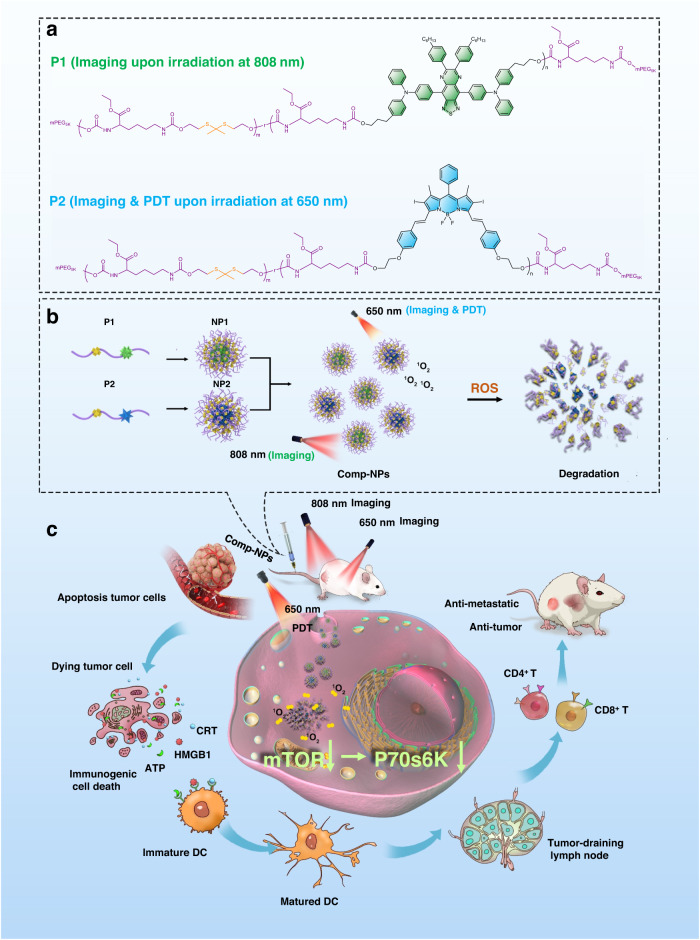
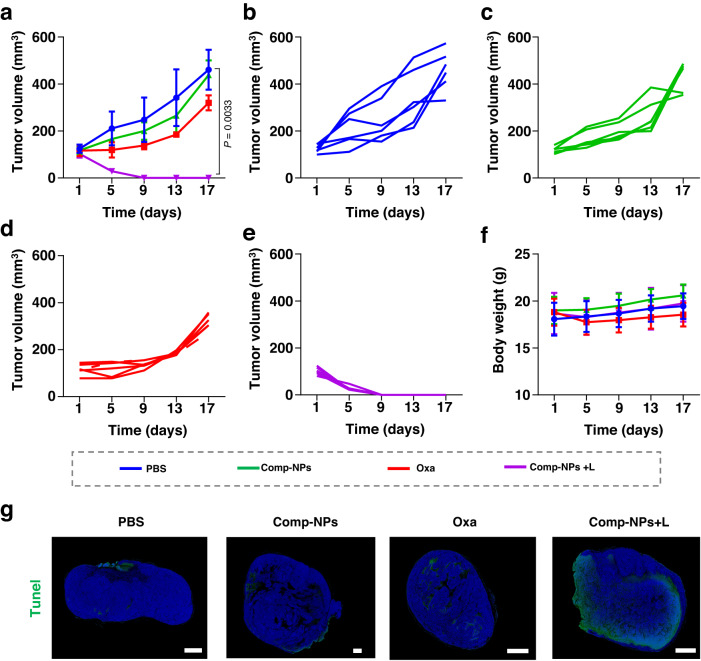
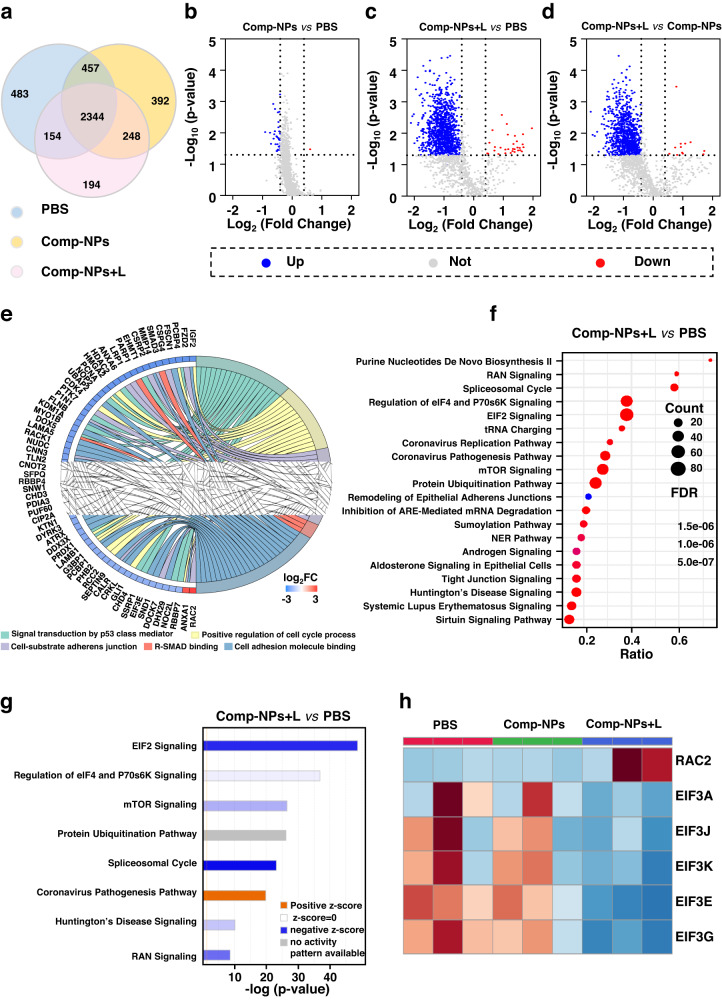
Tumor metastases are considered the leading cause of cancer-associated deaths. While clinically applied drugs have demonstrated to efficiently remove the primary tumor, metastases remain poorly accessible. To overcome this limitation, herein, the development of a theranostic nanomaterial by incorporating a chromophore for imaging and a photosensitizer for treatment of metastatic tumor sites is presented. The mechanism of action reveals that the nanoparticles are able to intervene by local generation of cellular damage through photodynamic therapy as well as by systemic induction of an immune response by immunotherapy upon inhibition of the mTOR signaling pathway which is of crucial importance for tumor onset, progression and metastatic spreading. The nanomaterial is able to strongly reduce the volume of the primary tumor as well as eradicates tumor metastases in a metastatic breast cancer and a multi-drug resistant patient-derived hepatocellular carcinoma models in female mice.
肿瘤转移被认为是癌症相关死亡的主要原因。虽然临床应用的药物已被证明能有效地去除原发肿瘤,但转移仍然难以触及。为了克服这一限制,本文通过将发色团用于成像和光敏剂用于治疗转移性肿瘤部位,开发了一种治疗诊断纳米材料。作用机制表明,纳米颗粒能够通过光动力疗法局部产生细胞损伤,以及通过免疫疗法抑制 mTOR 信号通路,系统诱导免疫反应,从而发挥作用,mTOR 信号通路对肿瘤的发生、进展和转移扩散至关重要。该纳米材料能够强烈地减少原发性肿瘤的体积,并在转移性乳腺癌和多药耐药的患者来源的肝癌模型中消除肿瘤转移,这些模型在雌性小鼠中建立。