Alghamdi Aisha A, Alghamdi Ahmed M, Alshareef Murooj A, AlGhamdi Abdulrahman A, Alghamdi Rahaf A, AlAmri Alyah A, Alzahrani Ghaday T
Medicine, King Abdulaziz University, Jedaah, SAU.
Medicine, King Abdulaziz University, Jeddah, SAU.
Cureus. 2023 Jul 31;15(7):e42778. doi: 10.7759/cureus.42778. eCollection 2023 Jul.
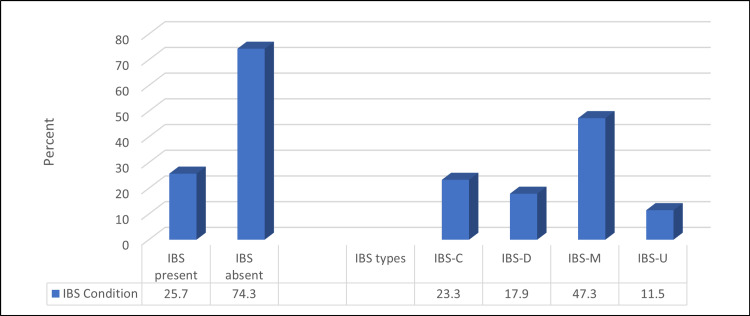
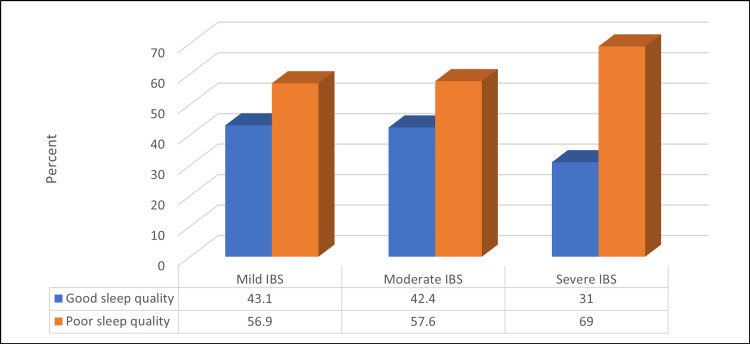
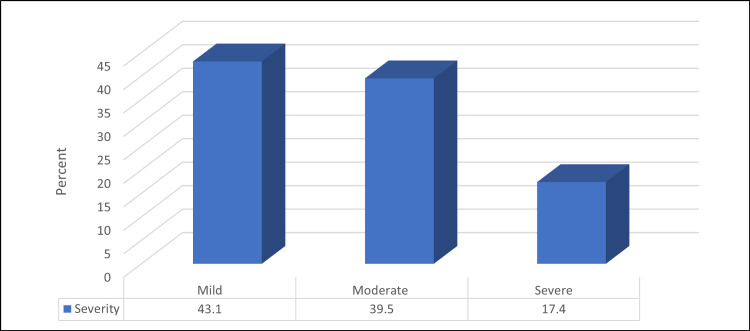
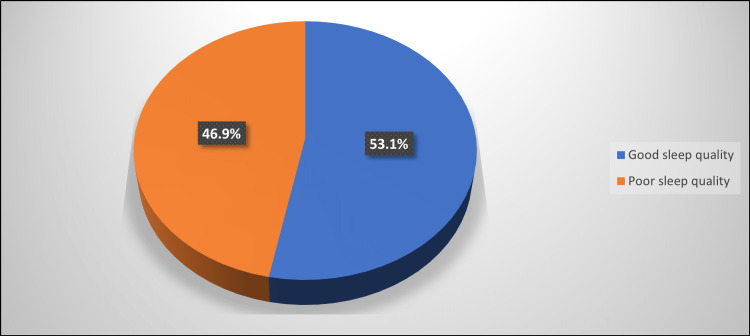
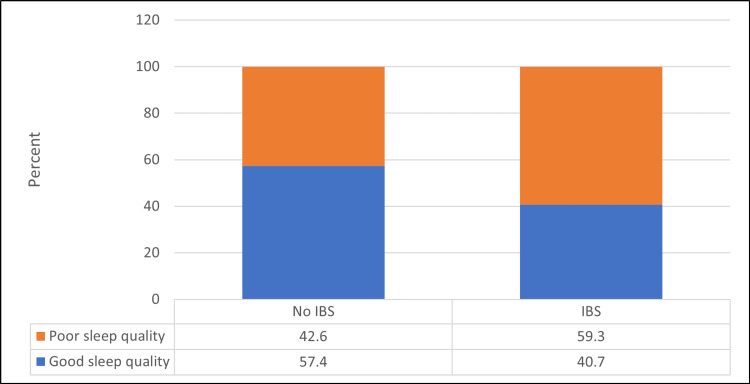
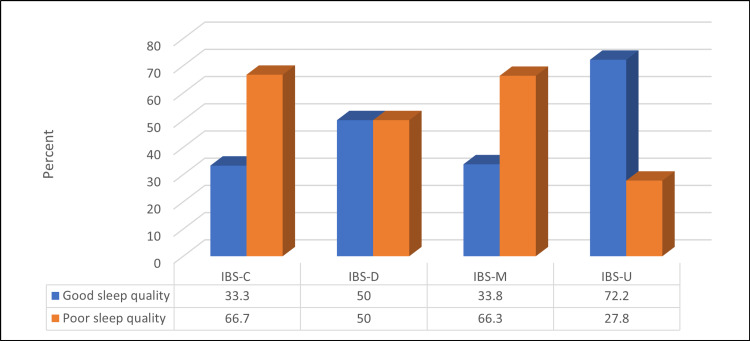
Background The frequency of irritable bowel syndrome (IBS) has increased significantly in the last ten years. Few studies were done in Saudi Arabia to assess the relationship between sleep quality and IBS. This study aims to assess the prevalence of IBS and its association with sleep quality among adolescents and adults in Saudi Arabia. Methods A cross-sectional study was done on 651 participants aged 15-65 years. An online questionnaire was used to collect data, including demographics; the Rome IV criteria (R4DQ) was used in the diagnosis of IBS, the IBS symptoms severity scale (IBS-SSS) assessed IBS symptoms and severity, and the Pittsburgh Sleep Quality Index (PSQI) was used to assess sleep quality. Results Based on the Rome IV criteria, 25.7% of the participants had IBS. Among them, 23.3%, 17.9%, 47.3%, and 11.5% had IBS types constipation (C), diarrhea (D), mixed bowel habits (M), and undefined subtype (U), respectively. Mild, moderate, and severe IBS were found among 43.1%, 39.5%, and 17.4% of IBS cases, respectively. About 46% had poor sleep quality, which was significantly higher among those with younger mean age, females, and students. Patients with IBS exhibited a considerably greater prevalence of poor sleep quality, and IBS-C had the highest prevalence. Conclusion A correlation was found between poor sleep quality and the positive status of IBS diagnosis among adolescents and adults. An evaluation of specific sleep disorders among IBS patients is needed.
肠易激综合征(IBS)的发病率在过去十年中显著增加。沙特阿拉伯很少有研究评估睡眠质量与IBS之间的关系。本研究旨在评估沙特阿拉伯青少年和成年人中IBS的患病率及其与睡眠质量的关联。方法:对651名年龄在15 - 65岁的参与者进行了横断面研究。使用在线问卷收集数据,包括人口统计学信息;采用罗马IV标准(R4DQ)诊断IBS,使用IBS症状严重程度量表(IBS - SSS)评估IBS症状及严重程度,并用匹兹堡睡眠质量指数(PSQI)评估睡眠质量。结果:根据罗马IV标准,25.7%的参与者患有IBS。其中,分别有23.3%、17.9%、47.3%和11.5%的人患有便秘型(C)、腹泻型(D)、混合型(M)和未定型(U)IBS。在IBS病例中,轻度、中度和重度IBS分别占43.1%、39.5%和17.4%。约46%的人睡眠质量差,在平均年龄较小者、女性和学生中这一比例显著更高。IBS患者睡眠质量差的患病率明显更高,且便秘型IBS的患病率最高。结论:在青少年和成年人中,睡眠质量差与IBS诊断阳性之间存在相关性。需要对IBS患者中的特定睡眠障碍进行评估。