Instituto de Ciencias Marinas y Limnológicas, Facultad de Ciencias, Campus Isla Teja, Universidad Austral de Chile, Valdivia, Chile.
Research Centre on Dynamics of High Latitude Marine Ecosystems (IDEAL), Valdivia, Chile.
Microbiome. 2023 Sep 5;11(1):200. doi: 10.1186/s40168-023-01643-6.
At the West Antarctic Peninsula, snow algae blooms are composed of complex microbial communities dominated by green microalgae and bacteria. During their progression, the assembly of these microbial communities occurs under harsh environmental conditions and variable nutrient content due to fast snow melting. To date, it is still unclear what are the ecological mechanisms governing the composition and abundance of microorganisms during the formation of snow algae blooms. In this study, we aim to examine the main ecological mechanisms governing the assembly of snow algae blooms from early stages to colorful stages blooms.
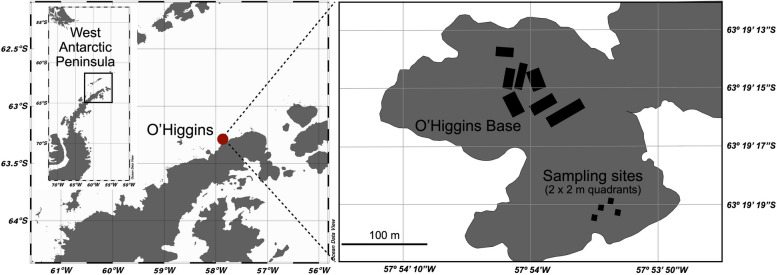
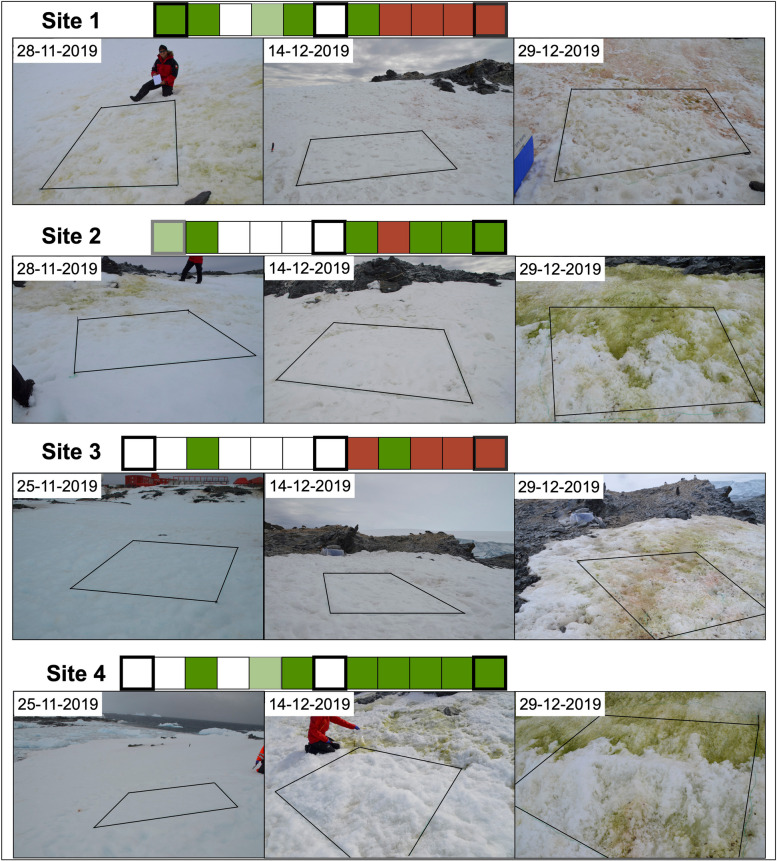
The composition of the microbial communities within snow algae blooms was recorded in the West Antarctic Peninsula (Isabel Riquelme Islet) during a 35-day period using 16S rRNA and 18S rRNA metabarcoding. In addition, the contribution of different ecological processes to the assembly of the microbial community was quantified using phylogenetic bin-based null model analysis.
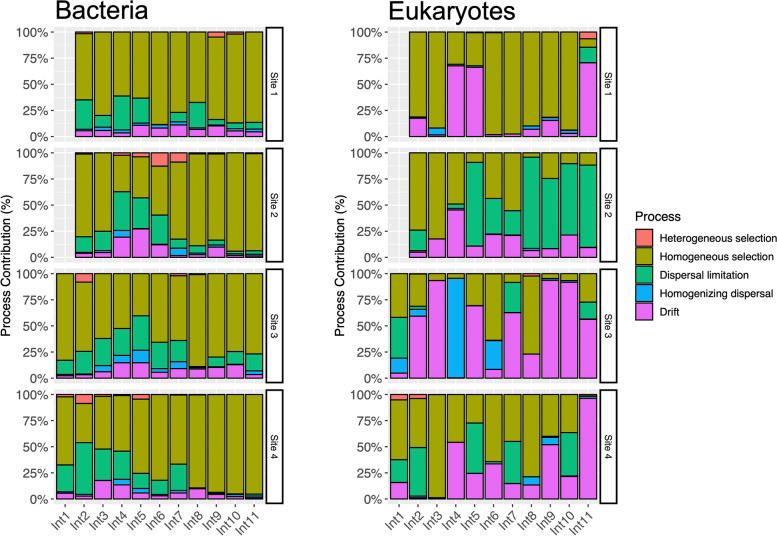
Our results showed that alpha diversity indices of the eukaryotic communities displayed a higher variation during the formation of the algae bloom compared with the bacterial community. Additionally, in a macronutrients rich environment, the content of nitrate, ammonium, phosphate, and organic carbon did not play a major role in structuring the community. The quantification of ecological processes showed that the bacterial community assembly was governed by selective processes such as homogenous selection. In contrast, stochastic processes such as dispersal limitation and drift, and to a lesser extent, homogenous selection, regulate the eukaryotic community.
Overall, our study highlights the differences in the microbial assembly between bacteria and eukaryotes in snow algae blooms and proposes a model to integrate both assembly processes. Video Abstract.
在西南极半岛,雪藻的生长由以绿藻和细菌为主的复杂微生物群落组成。在其生长过程中,由于雪的快速融化,这些微生物群落是在恶劣的环境条件和可变的营养物质含量下组装的。迄今为止,尚不清楚是什么生态机制控制着雪藻生长过程中微生物的组成和丰度。本研究旨在研究从雪藻早期生长到色彩丰富阶段,控制雪藻生长的主要生态机制。
在西南极半岛(Isabel Riquelme 小岛),我们使用 16S rRNA 和 18S rRNA 宏条形码在 35 天的时间内记录了雪藻中的微生物群落组成。此外,还使用基于系统发育分类单元的 null 模型分析来量化不同生态过程对微生物群落组装的贡献。
我们的结果表明,与细菌群落相比,真核生物群落的 alpha 多样性指数在藻华形成过程中表现出更高的变异性。此外,在富营养环境中,硝酸盐、铵盐、磷酸盐和有机碳的含量对群落结构没有起到主要作用。生态过程的定量分析表明,细菌群落的组装受选择过程的控制,如同质性选择。相比之下,扩散限制和漂变等随机过程(以及在较小程度上的同质性选择)控制着真核生物群落。
总体而言,本研究强调了雪藻中细菌和真核生物微生物组装之间的差异,并提出了一个整合两种组装过程的模型。