The First Clinical Medical College, Lanzhou University, Lanzhou, Gansu, China.
The First Clinical Medical College, Lanzhou University, Lanzhou, Gansu, China; Department of Endocrinology, The First Hospital of Lanzhou University, Lanzhou, Gansu, China.
Turk J Gastroenterol. 2023 Sep;34(9):952-960. doi: 10.5152/tjg.2023.22453.
BACKGROUND/AIMS: Previous studies have shown that hyperferritinemia is a common phenomenon in non-alcoholic fatty liver dis- ease patients. We aim to further explore the relationship between serum ferritin levels and non-alcoholic fatty liver disease using a meta-analysis.
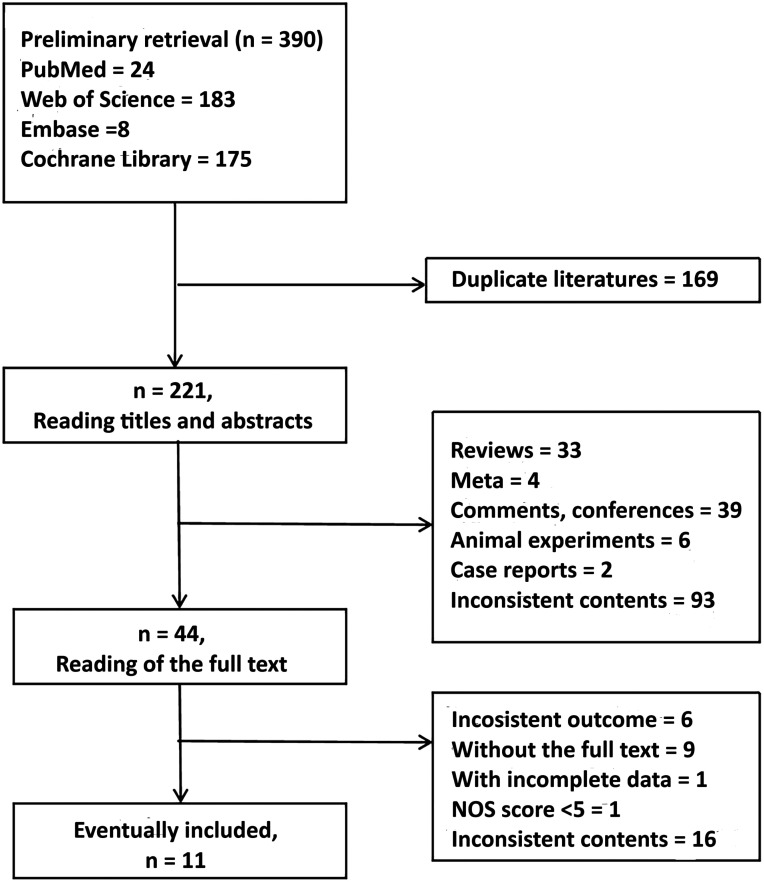
Four Library databases were electronically searched from inception until December 2021 to find prospective cohort or case-control studies examining the relationship between serum ferritin levels and non-alcoholic fatty liver disease, and all kinds of literature were screened according to the inclusion and exclusion criteria. The odds ratio and other related data were extracted, and a meta-analysis was performed.
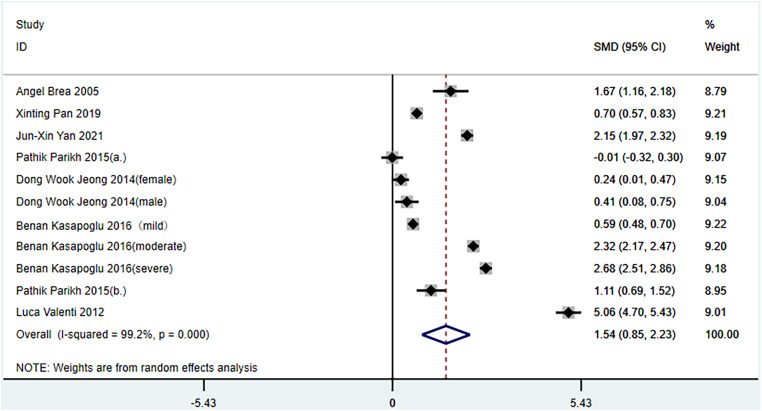
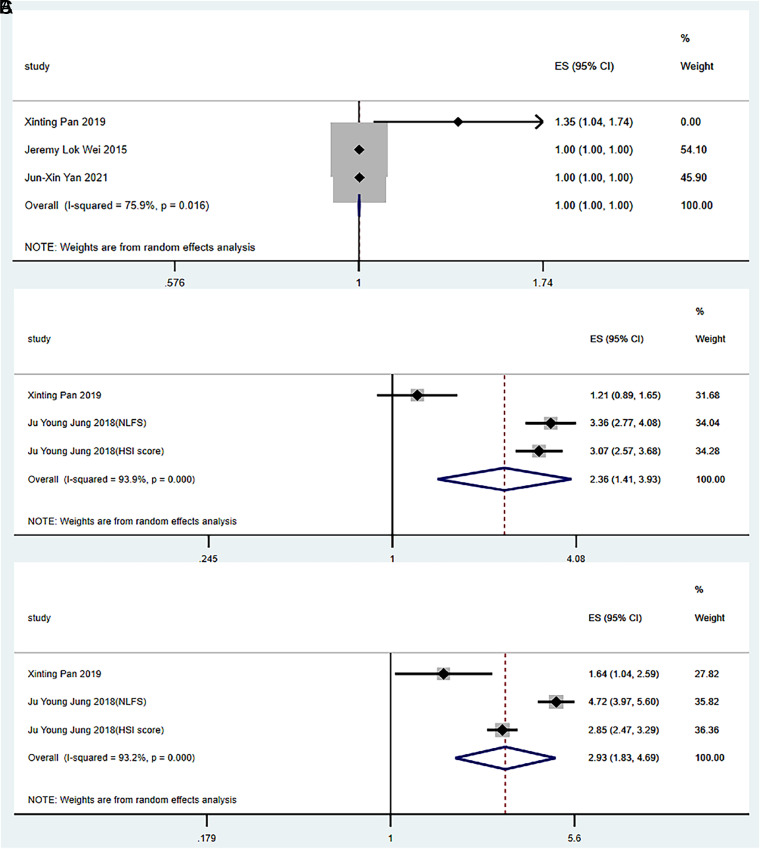
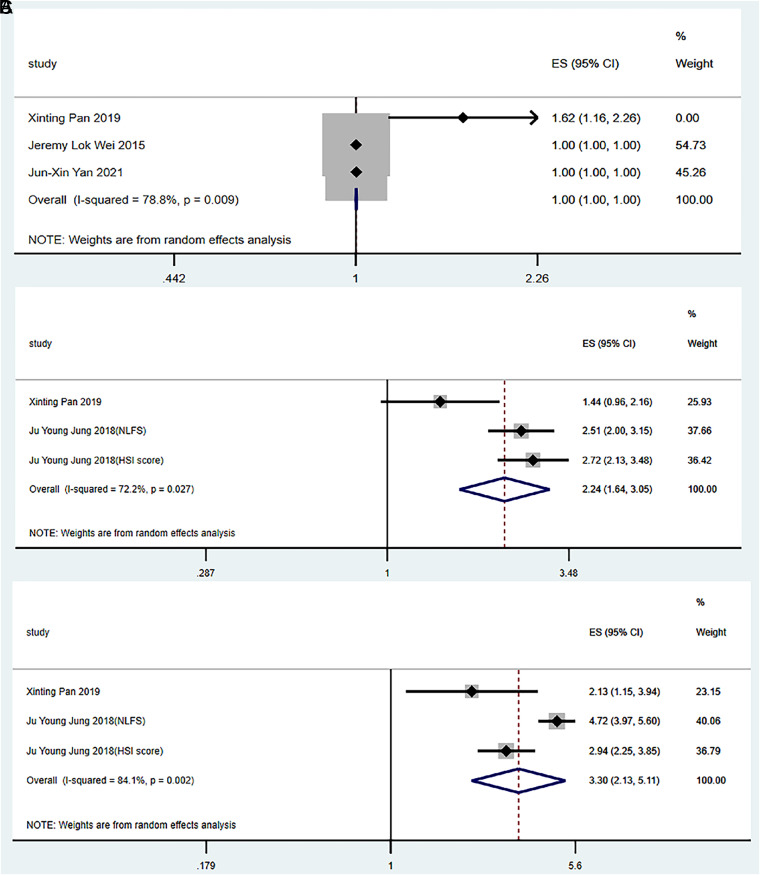
Eleven studies examining the relationship between serum ferritin levels and non-alcoholic fatty liver disease were included. The serum ferritin levels in the non-alcoholic fatty liver disease group were significantly higher than those without non-alcoholic fatty liver disease group (1.54 ng/mL, 95% CI: 0.85-2.23, P < .001). Serum ferritin levels were significantly associated with the risk of non-alcoholic fatty liver disease in both men and women (odds ratio = 2.36, 95% CI: 1.41-3.93, P = .001 and odds ratio = 2.93, 95% CI: 1.83-4.69, P < .001, respectively), and after adjusting for the parameters, the relationships were still shown to be significant in men and women (odds ratio = 2.24, 95% CI: 1.64-3.05, P < .001 and odds ratio = 3.30, 95% CI: 2.13-5.11, P < .001, respectively).
Serum ferritin levels were higher in patients with non-alcoholic fatty liver disease than in those without non-alcoholic fatty liver disease and were associated with the risk of non-alcoholic fatty liver disease in both men and women.
背景/目的:既往研究表明,高血清铁蛋白血症是非酒精性脂肪性肝病患者的常见现象。我们旨在通过荟萃分析进一步探讨血清铁蛋白水平与非酒精性脂肪性肝病之间的关系。
从建库至 2021 年 12 月,我们通过电子检索四个数据库,以查找前瞻性队列或病例对照研究,来检验血清铁蛋白水平与非酒精性脂肪性肝病之间的关系,并根据纳入和排除标准筛选各种文献。提取比值比和其他相关数据,并进行荟萃分析。
纳入了 11 项检验血清铁蛋白水平与非酒精性脂肪性肝病之间关系的研究。非酒精性脂肪性肝病组的血清铁蛋白水平明显高于非酒精性脂肪性肝病组(1.54ng/ml,95%CI:0.85-2.23,P<.001)。血清铁蛋白水平与男性和女性非酒精性脂肪性肝病的发病风险显著相关(比值比=2.36,95%CI:1.41-3.93,P=.001和比值比=2.93,95%CI:1.83-4.69,P<.001),并且在调整参数后,这种关系在男性和女性中仍然显著(比值比=2.24,95%CI:1.64-3.05,P<.001和比值比=3.30,95%CI:2.13-5.11,P<.001)。
与非酒精性脂肪性肝病患者相比,非酒精性脂肪性肝病患者的血清铁蛋白水平更高,且与男性和女性的非酒精性脂肪性肝病发病风险相关。