Quetglas-Llabrés Maria Magdalena, Monserrat-Mesquida Margalida, Bouzas Cristina, García Silvia, Mateos David, Casares Miguel, Gómez Cristina, Ugarriza Lucía, Tur Josep A, Sureda Antoni
Centro de Investigación Biomédica en Red de Fisiopatología de la Obesidad y Nutrición (CIBEROBN), Instituto de Salud Carlos III, 28029 Madrid, Spain.
Research Group on Community Nutrition & Oxidative Stress, University of Balearic Islands-IUNICS, 07120 Palma de Mallorca, Spain.
Antioxidants (Basel). 2024 Jun 21;13(7):754. doi: 10.3390/antiox13070754.
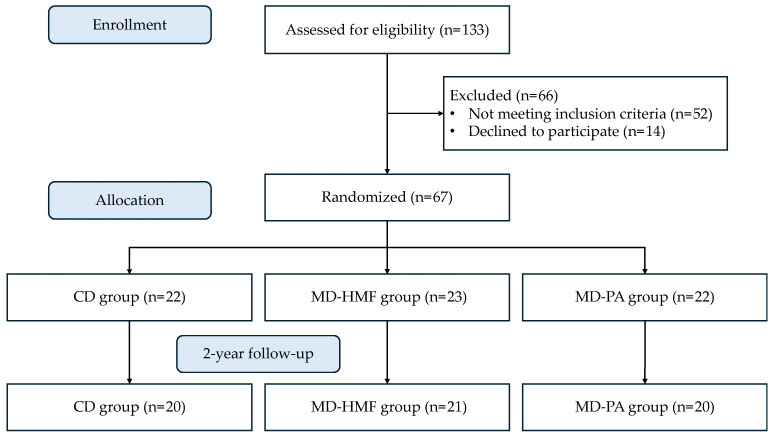
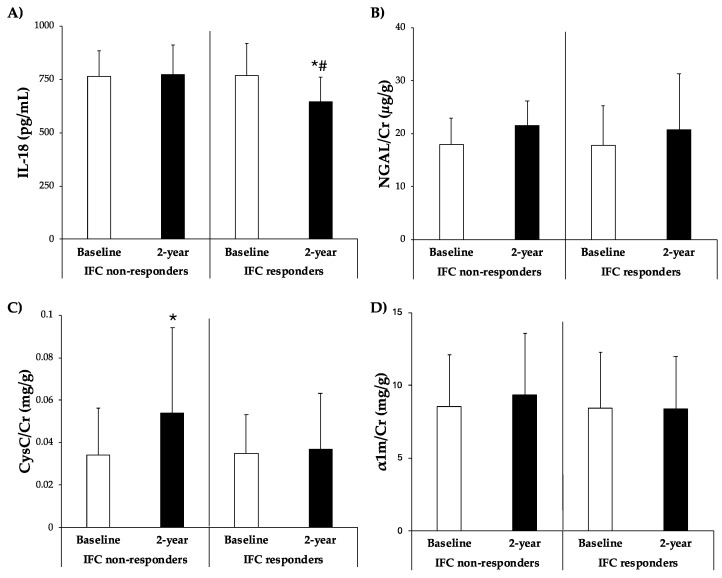
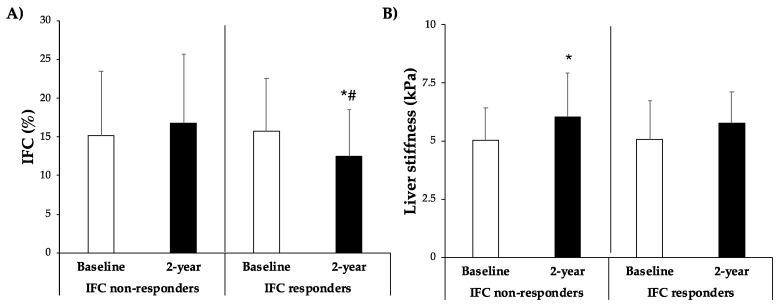
Metabolic-associated fatty liver disease (MAFLD) is the most common chronic liver disease observed in clinical practice worldwide. This disorder has been independently associated with an increased risk of developing chronic kidney disease (CKD). The aim of this study was to evaluate whether a 2-year intervention based on a Mediterranean diet (MedDiet) and physical activity focussed on reducing intrahepatic fat contents (IFC) was associated with a decreased risk of CKD. Forty adults (50% women) residing in Mallorca, aged 48 to 60 years, diagnosed with MAFLD were recruited. Participants were divided into two groups based on whether they improved IFC measured by nuclear magnetic resonance. Anthropometric and clinical parameters improved in responders, including reduced weight, body mass index (BMI), and waist circumference. Only responders showed improvements in lipid profile and liver enzymes. Haematological parameters showed favourable changes in both groups. Oxidative stress and inflammatory biomarkers differed between groups. Responders had lower plasma interleukine-18 (IL-18) levels, but higher erythrocyte malonaldehyde (MDA) levels. Non-responders showed increased erythrocyte catalase and superoxide dismutase activity. After 2 years, non-responders had higher serum creatinine, Modification of Diet in Renal Disease (MDRD), and Chronic Kidney Disease Epidemiology Collaboration (CKD-EPI) levels, while responders showed reductions in these parameters together with uric acid and urine albumin-to-creatinine ratio (UACR). Positive correlations were found between changes in IFC and kidney injury biomarkers, including MDRD and serum creatinine levels. In conclusion, a healthy diet based on the Mediterranean dietary pattern and lifestyle promotes significant improvements in parameters related to cardiovascular, hepatic, and renal health.
代谢相关脂肪性肝病(MAFLD)是全球临床实践中最常见的慢性肝病。这种疾病与患慢性肾脏病(CKD)风险增加独立相关。本研究的目的是评估基于地中海饮食(MedDiet)和以减少肝内脂肪含量(IFC)为重点的体育活动的两年干预措施是否与CKD风险降低相关。招募了40名居住在马略卡岛、年龄在48至60岁之间、被诊断为MAFLD的成年人(50%为女性)。根据通过核磁共振测量的IFC是否改善,将参与者分为两组。应答者的人体测量和临床参数有所改善,包括体重、体重指数(BMI)和腰围降低。只有应答者的血脂谱和肝酶有所改善。两组的血液学参数均有有利变化。两组之间氧化应激和炎症生物标志物存在差异。应答者的血浆白细胞介素-18(IL-18)水平较低,但红细胞丙二醛(MDA)水平较高。无应答者的红细胞过氧化氢酶和超氧化物歧化酶活性增加。2年后,无应答者的血清肌酐、肾脏病饮食改良(MDRD)和慢性肾脏病流行病学协作组(CKD-EPI)水平较高,而应答者的这些参数以及尿酸和尿白蛋白与肌酐比值(UACR)均有所降低。在IFC变化与肾脏损伤生物标志物之间发现正相关,包括MDRD和血清肌酐水平。总之,基于地中海饮食模式和生活方式的健康饮食可显著改善与心血管、肝脏和肾脏健康相关的参数。