Mathieu Yann, Raji Olanrewaju, Bellemare Annie, Di Falco Marcos, Nguyen Thi Truc Minh, Viborg Alexander Holm, Tsang Adrian, Master Emma, Brumer Harry
Michael Smith Laboratories, University of British Columbia, 2185 East Mall, Vancouver, BC, V6T 1Z4, Canada.
BioProducts Institute, University of British Columbia, 2385 East Mall, Vancouver, BC, V6T 1Z4, Canada.
Biotechnol Biofuels Bioprod. 2023 Sep 7;16(1):132. doi: 10.1186/s13068-023-02383-3.
Microbial lytic polysaccharide monooxygenases (LPMOs) cleave diverse biomass polysaccharides, including cellulose and hemicelluloses, by initial oxidation at C1 or C4 of glycan chains. Within the Carbohydrate-Active Enzymes (CAZy) classification, Auxiliary Activity Family 9 (AA9) comprises the first and largest group of fungal LPMOs, which are often also found in tandem with non-catalytic carbohydrate-binding modules (CBMs). LPMOs originally attracted attention for their ability to potentiate complete biomass deconstruction to monosaccharides. More recently, LPMOs have been applied for selective surface modification of insoluble cellulose and chitin.
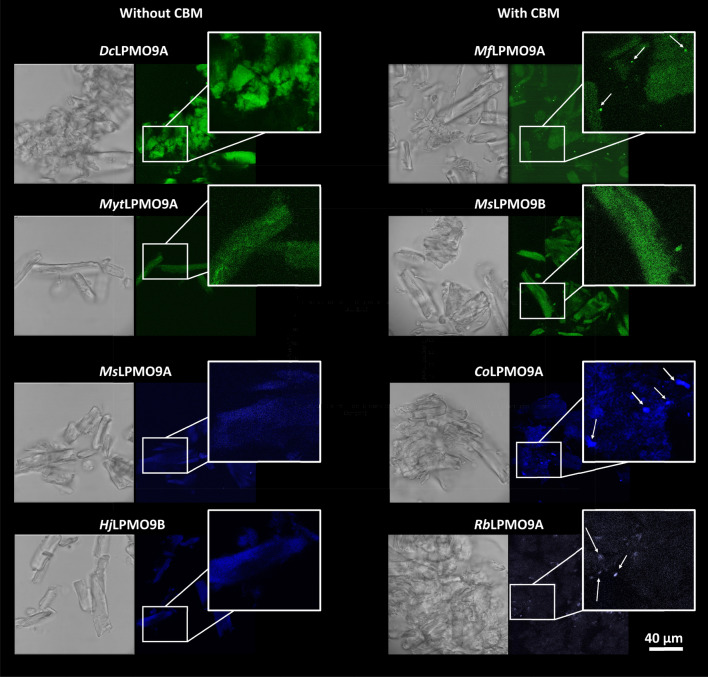
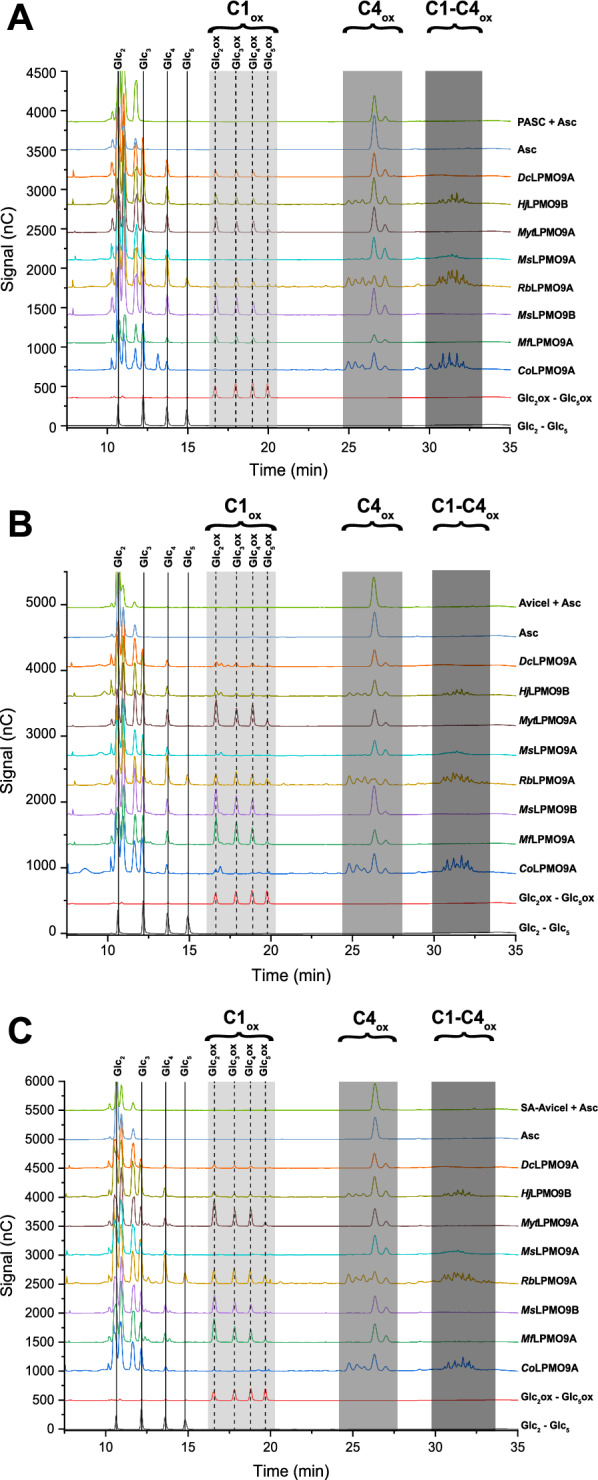
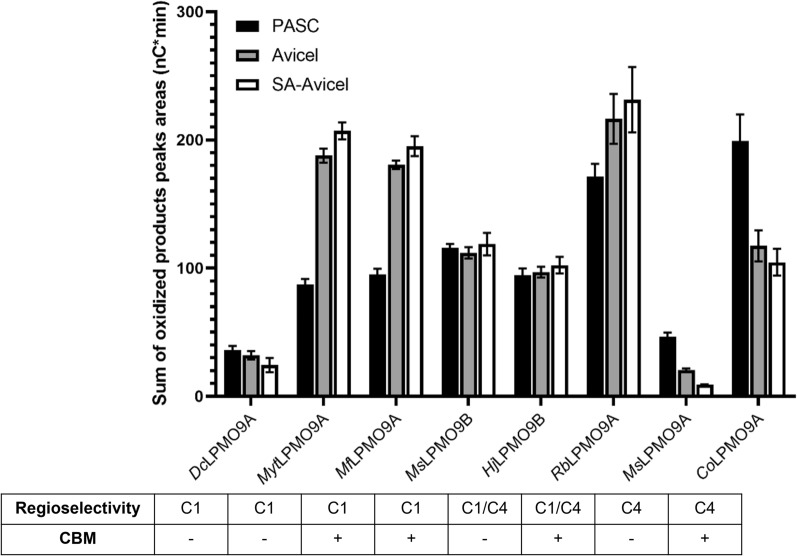
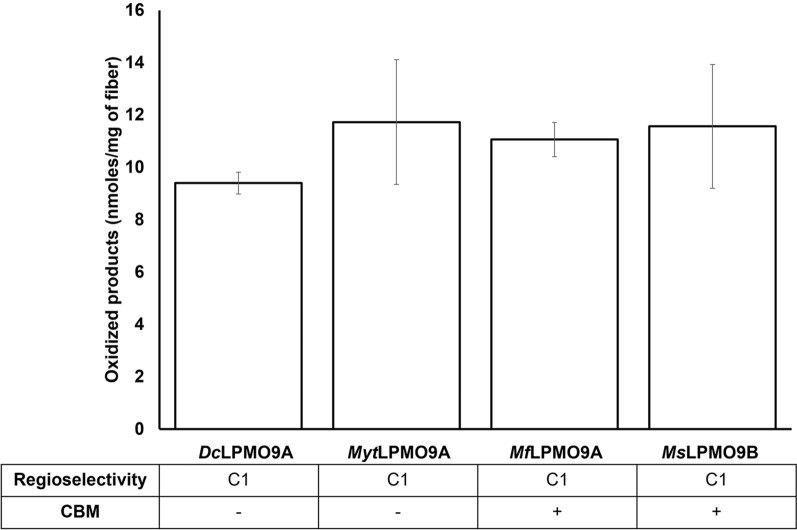
To further explore the catalytic diversity of AA9 LPMOs, over 17,000 sequences were extracted from public databases, filtered, and used to construct a sequence similarity network (SSN) comprising 33 phylogenetically supported clusters. From these, 32 targets were produced successfully in the industrial filamentous fungus Aspergillus niger, 25 of which produced detectable LPMO activity. Detailed biochemical characterization of the eight most highly produced targets revealed individual C1, C4, and mixed C1/C4 regiospecificities of cellulose surface oxidation, different redox co-substrate preferences, and CBM targeting effects. Specifically, the presence of a CBM correlated with increased formation of soluble oxidized products and a more localized pattern of surface oxidation, as indicated by carbonyl-specific fluorescent labeling. On the other hand, LPMOs without native CBMs were associated with minimal release of soluble products and comparatively dispersed oxidation pattern.
This work provides insight into the structural and functional diversity of LPMOs, and highlights the need for further detailed characterization of individual enzymes to identify those best suited for cellulose saccharification versus surface functionalization toward biomaterials applications.
微生物裂解多糖单加氧酶(LPMO)通过对聚糖链的C1或C4位进行初始氧化来裂解多种生物质多糖,包括纤维素和半纤维素。在碳水化合物活性酶(CAZy)分类中,辅助活性家族9(AA9)包含第一组也是最大的一组真菌LPMO,它们通常还与非催化性碳水化合物结合模块(CBM)串联存在。LPMO最初因其能够增强生物质完全解构为单糖的能力而受到关注。最近,LPMO已被应用于不溶性纤维素和几丁质的选择性表面修饰。
为了进一步探索AA9 LPMO的催化多样性,从公共数据库中提取了超过17000个序列,进行筛选后用于构建一个包含33个系统发育支持簇的序列相似性网络(SSN)。从这些序列中,在工业丝状真菌黑曲霉中成功表达了32个目标蛋白,其中25个产生了可检测到的LPMO活性。对八个表达量最高的目标蛋白进行详细的生化特性分析,揭示了纤维素表面氧化的单个C1、C4和混合C1/C4区域特异性、不同的氧化还原共底物偏好以及CBM靶向效应。具体而言,如羰基特异性荧光标记所示,CBM的存在与可溶性氧化产物形成增加以及更局部化的表面氧化模式相关。另一方面,没有天然CBM的LPMO与可溶性产物的最小释放以及相对分散的氧化模式相关。
这项工作深入了解了LPMO的结构和功能多样性,并强调需要对单个酶进行进一步详细表征,以确定那些最适合纤维素糖化与用于生物材料应用的表面功能化的酶。