Li James, Solhi Laleh, Goddard-Borger Ethan D, Mathieu Yann, Wakarchuk Warren W, Withers Stephen G, Brumer Harry
Michael Smith Laboratories, University of British Columbia, 2185 East Mall, Vancouver, BC, V6T 1Z4, Canada.
Department of Biochemistry and Molecular Biology, University of British Columbia, 2350 Health Sciences Mall, Vancouver, BC, V6T 1Z3, Canada.
Biotechnol Biofuels. 2021 Jan 23;14(1):29. doi: 10.1186/s13068-020-01860-3.
The discovery of lytic polysaccharide monooxygenases (LPMOs) has fundamentally changed our understanding of microbial lignocellulose degradation. Cellulomonas bacteria have a rich history of study due to their ability to degrade recalcitrant cellulose, yet little is known about the predicted LPMOs that they encode from Auxiliary Activity Family 10 (AA10).
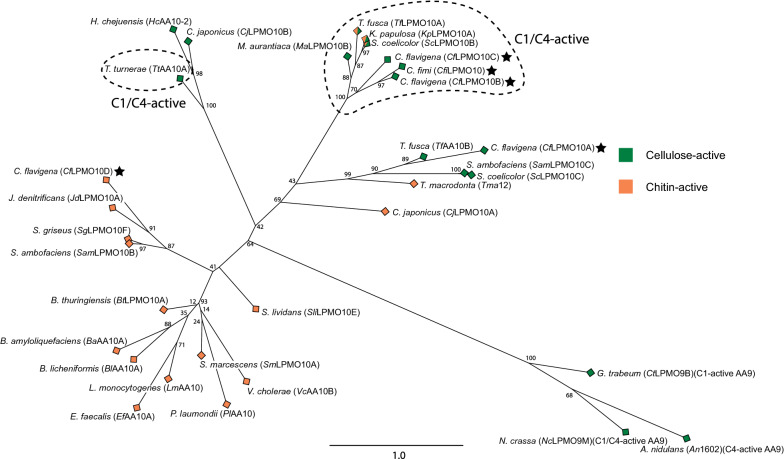
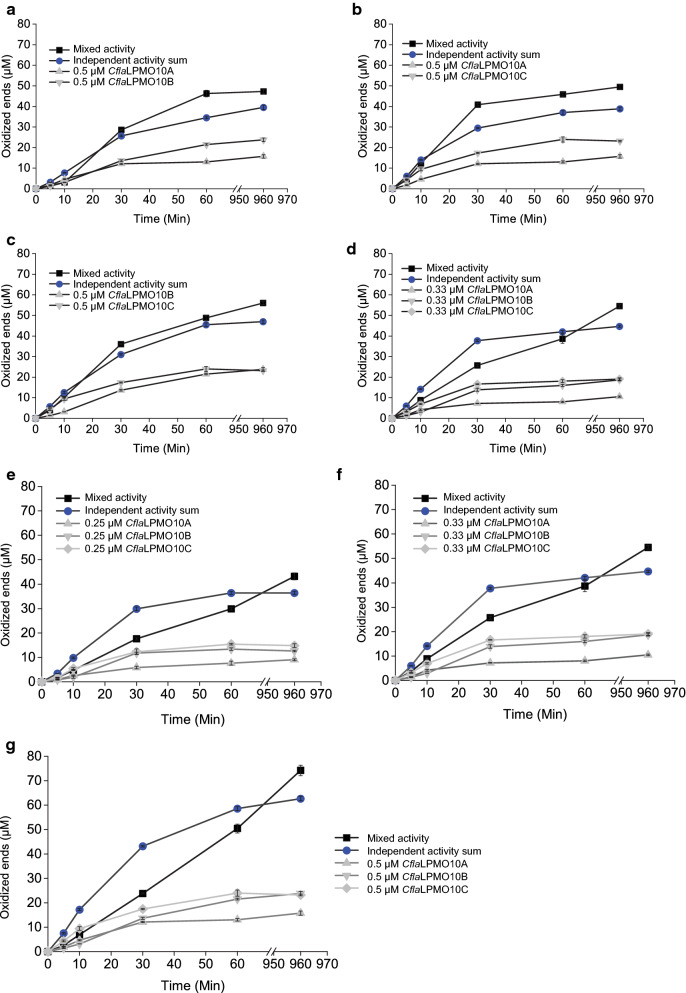
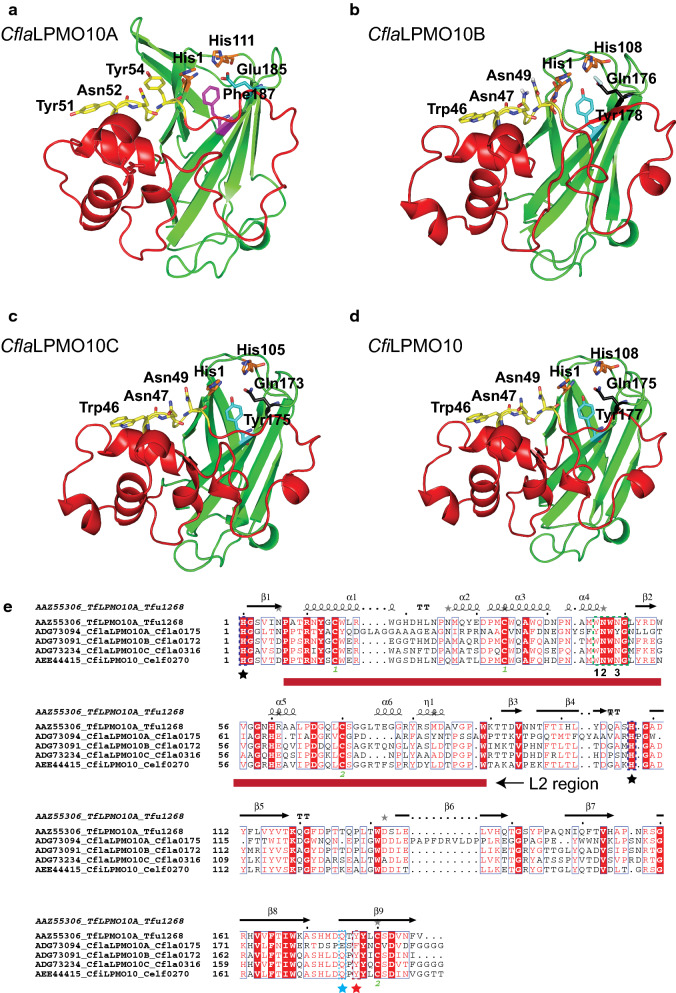
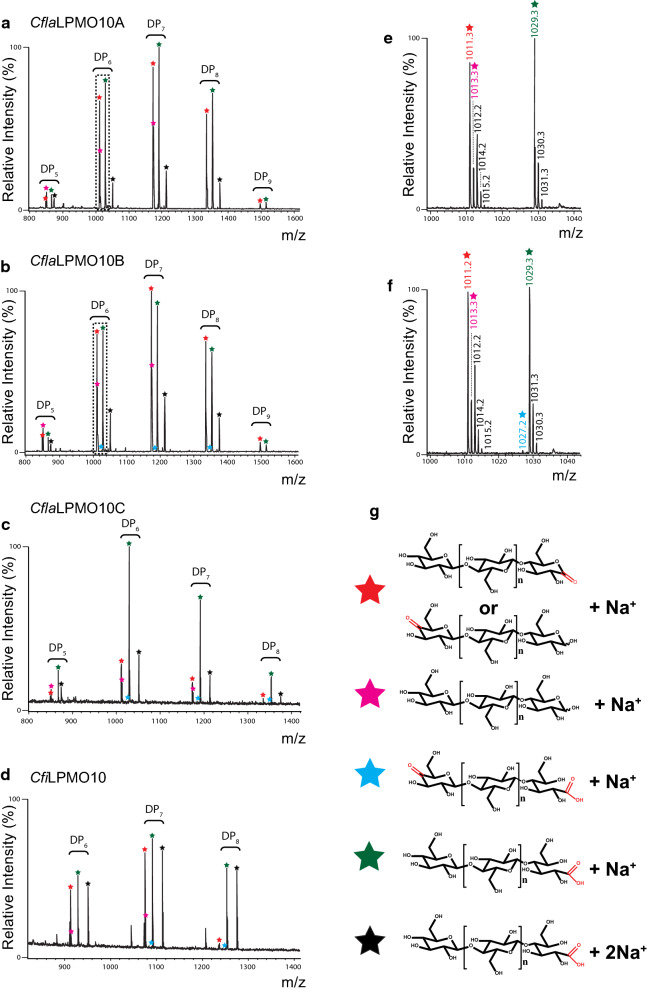
Here, we present the comprehensive biochemical characterization of three AA10 LPMOs from Cellulomonas flavigena (CflaLPMO10A, CflaLPMO10B, and CflaLPMO10C) and one LPMO from Cellulomonas fimi (CfiLPMO10). We demonstrate that these four enzymes oxidize insoluble cellulose with C1 regioselectivity and show a preference for substrates with high surface area. In addition, CflaLPMO10B, CflaLPMO10C, and CfiLPMO10 exhibit limited capacity to perform mixed C1/C4 regioselective oxidative cleavage. Thermostability analysis indicates that these LPMOs can refold spontaneously following denaturation dependent on the presence of copper coordination. Scanning and transmission electron microscopy revealed substrate-specific surface and structural morphological changes following LPMO action on Avicel and phosphoric acid-swollen cellulose (PASC). Further, we demonstrate that the LPMOs encoded by Cellulomonas flavigena exhibit synergy in cellulose degradation, which is due in part to decreased autoinactivation.
Together, these results advance understanding of the cellulose utilization machinery of historically important Cellulomonas species beyond hydrolytic enzymes to include lytic cleavage. This work also contributes to the broader mapping of enzyme activity in Auxiliary Activity Family 10 and provides new biocatalysts for potential applications in biomass modification.
溶菌性多糖单加氧酶(LPMOs)的发现从根本上改变了我们对微生物木质纤维素降解的理解。纤维单胞菌属细菌因其降解难降解纤维素的能力而有着丰富的研究历史,但对于它们从辅助活性家族10(AA10)中编码的预测LPMOs却知之甚少。
在此,我们展示了来自黄纤维单胞菌的三种AA10 LPMOs(CflaLPMO10A、CflaLPMO10B和CflaLPMO10C)以及来自栖瘤胃纤维单胞菌的一种LPMO(CfiLPMO10)的全面生化特性。我们证明这四种酶以C1区域选择性氧化不溶性纤维素,并对具有高比表面积的底物表现出偏好。此外,CflaLPMO10B、CflaLPMO10C和CfiLPMO10在进行混合C1/C4区域选择性氧化裂解方面表现出有限的能力。热稳定性分析表明,这些LPMOs在变性后能够依赖于铜配位的存在而自发重折叠。扫描电子显微镜和透射电子显微镜揭示了LPMO作用于微晶纤维素和磷酸膨胀纤维素(PASC)后底物特异性的表面和结构形态变化。此外,我们证明黄纤维单胞菌编码的LPMOs在纤维素降解中表现出协同作用,这部分归因于自失活的降低。
总之,这些结果推进了我们对具有重要历史意义的纤维单胞菌属物种纤维素利用机制的理解,从水解酶扩展到包括溶菌性裂解。这项工作也有助于更广泛地绘制辅助活性家族10中的酶活性图谱,并为生物质改性的潜在应用提供了新的生物催化剂。