Master Student, Post-Graduation of Health Science-PPGCS, Federal University of Amapá - UNIFAP, Macapá, AP, Brazil.
Researcher at Centro Iberoamericano Cochrane-Biomedical Research Institute Sant Pau (IIB Sant Pau), Barcelona, Spain.
PLoS One. 2023 Sep 8;18(9):e0291345. doi: 10.1371/journal.pone.0291345. eCollection 2023.
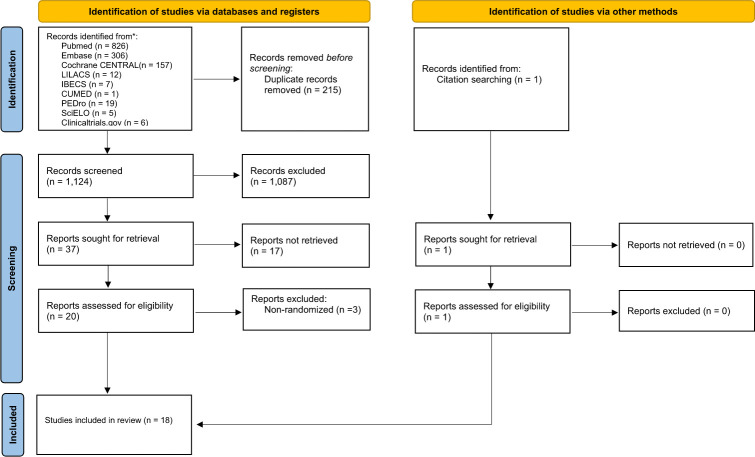
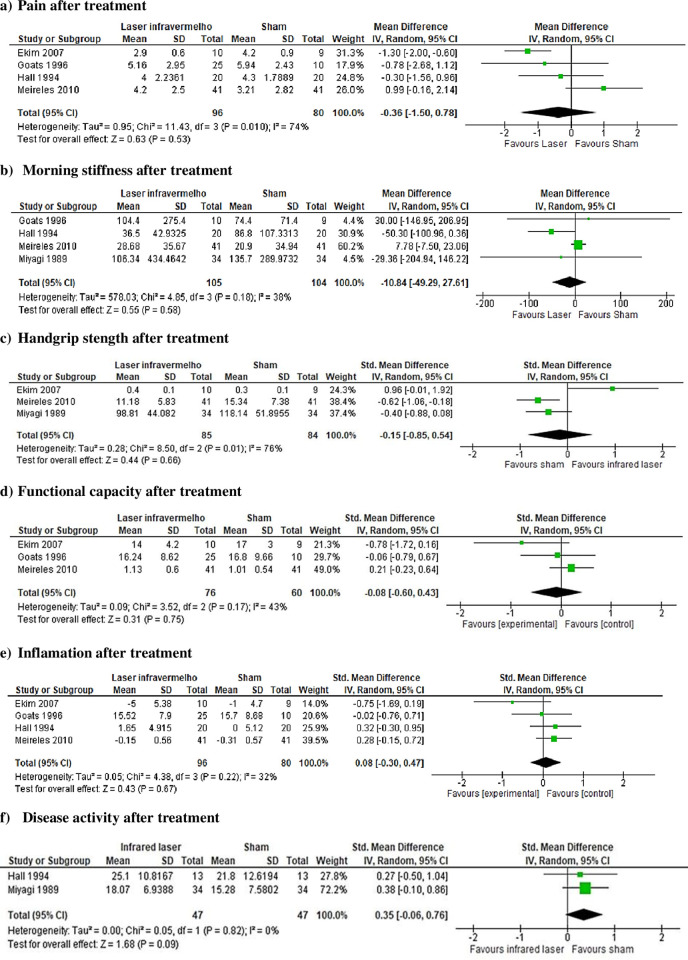
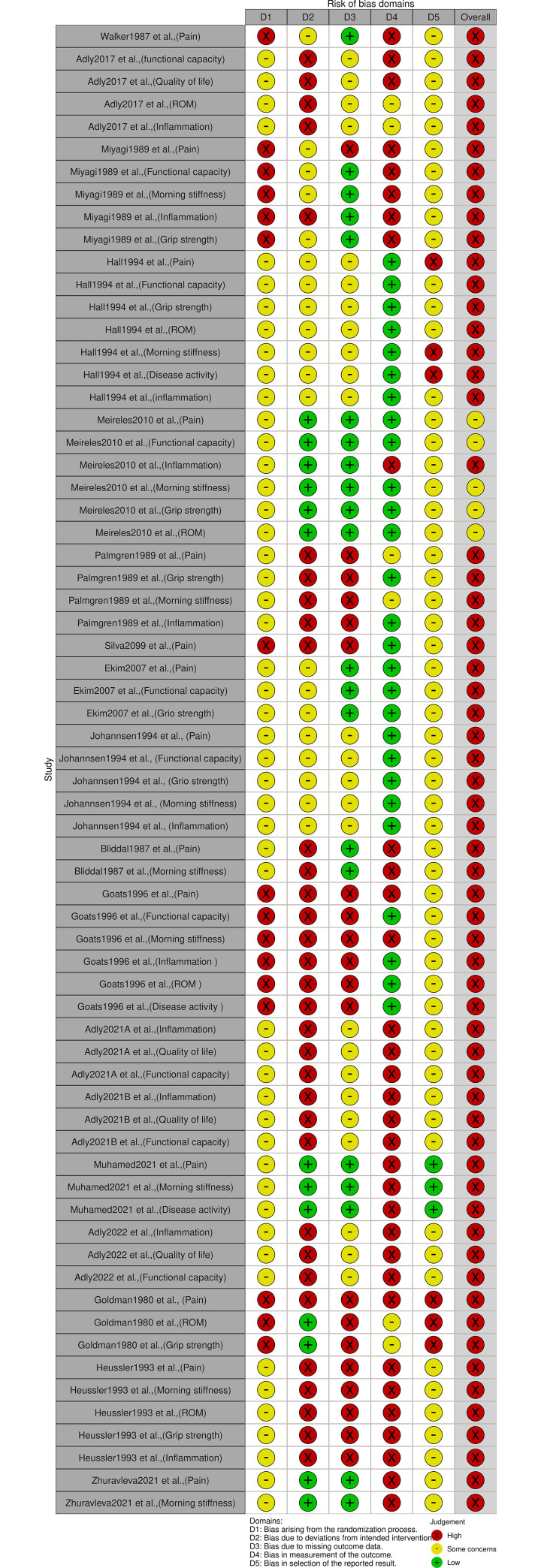
Rheumatoid arthritis (RA) is an inflammatory, systemic and chronic disease that mainly affects the joints. It is characterized mainly by pain, edema and joint stiffness, which can lead to significant loss of functional capacity and quality of life. Several physical therapy resources are used in the treatment of AR, such as low-level laser therapy (LLLT) and its analgesic and anti-inflammatory effects. However, the efficacy of LLLT in AR is still controversial. The objective of this study is to evaluate the efficacy of low-level laser therapy in adults with RA. Methods and findings: We searched MEDLINE, EMBASE, CENTRAL, PEDro, LILACS, IBECS, CUMED, SCIELO and ClinicalTrials.gov. Two researchers independently selected studies, extracted data, evaluated the risk of bias and assessed the certainty of evidence using GRADE approach. Disagreements were resolved by a third author. Meta-analyses were performed. Currently available evidence was from 18 RCTs, with a total of 793 participants. We found low-quality evidence suggesting there may be no difference between using infrared laser and sham in terms of pain, morning stiffness, grip strength, functional capacity, inflammation, ROM, disease activity and adverse events. The evidence is very uncertain about the effects of red laser compared to sham in pain, morning stiffness. The evidence is also very uncertain about the effects of laser acupuncture compared to placebo in functional capacity, quality of life, range of motion and inflammation. Conclusions: Thus, infrared laser may not be superior to sham in RA patients. There is insufficient information to support or refute the effectiveness of red laser, laser acupuncture and reflexology for treating patients with RA.
类风湿关节炎(RA)是一种炎症性、全身性和慢性疾病,主要影响关节。其主要特征为疼痛、肿胀和关节僵硬,可导致功能能力和生活质量的显著丧失。在 RA 的治疗中使用了几种物理治疗资源,例如低水平激光疗法(LLLT)及其镇痛和抗炎作用。然而,LLLT 在 RA 中的疗效仍存在争议。本研究的目的是评估低水平激光疗法在成人 RA 中的疗效。
我们检索了 MEDLINE、EMBASE、CENTRAL、PEDro、LILACS、IBECS、CUMED、SCIELO 和 ClinicalTrials.gov。两名研究人员独立选择研究、提取数据、评估偏倚风险,并使用 GRADE 方法评估证据的确定性。意见分歧由第三位作者解决。进行了荟萃分析。目前的证据来自 18 项 RCT,共 793 名参与者。我们发现,低质量证据表明,在疼痛、晨僵、握力、功能能力、炎症、ROM、疾病活动度和不良事件方面,使用红外激光与假对照之间可能没有差异。与假对照相比,关于红激光在疼痛、晨僵方面的效果的证据非常不确定。关于激光针灸与安慰剂在功能能力、生活质量、运动范围和炎症方面的效果的证据也非常不确定。
因此,红外激光可能对 RA 患者没有优势。关于红激光、激光针灸和反射疗法治疗 RA 患者的有效性,没有足够的信息来支持或反驳。