Fort Ada, Landi Elia, Mugnaini Marco, Vignoli Valerio
Department of Information Engineering and Mathematics, University of Siena, 53100 Siena, Italy.
Sensors (Basel). 2023 Aug 30;23(17):7546. doi: 10.3390/s23177546.
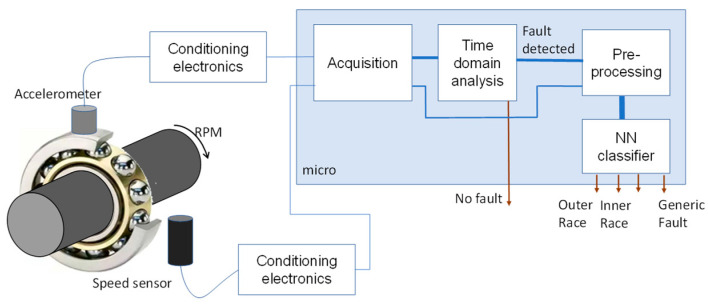
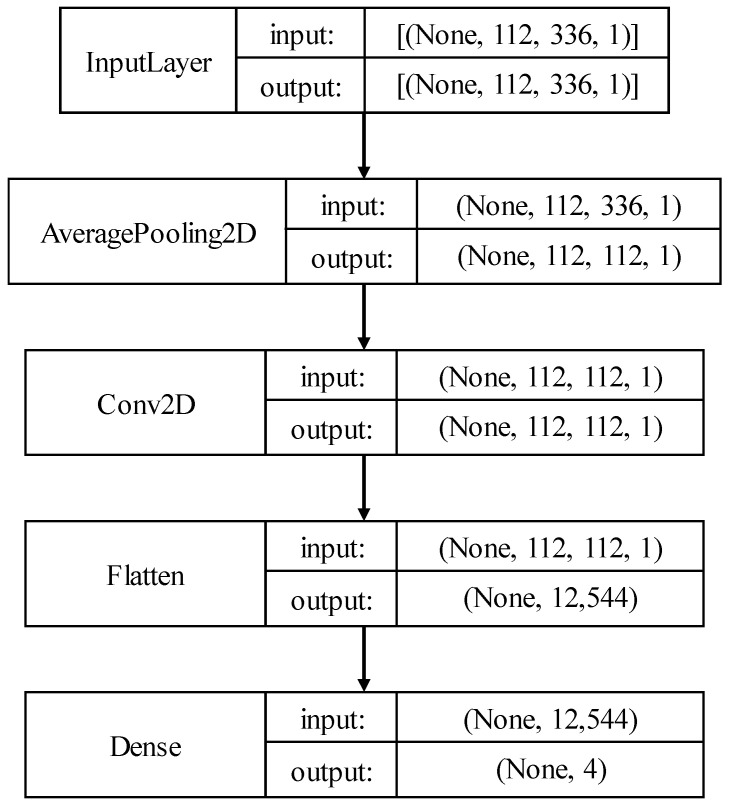
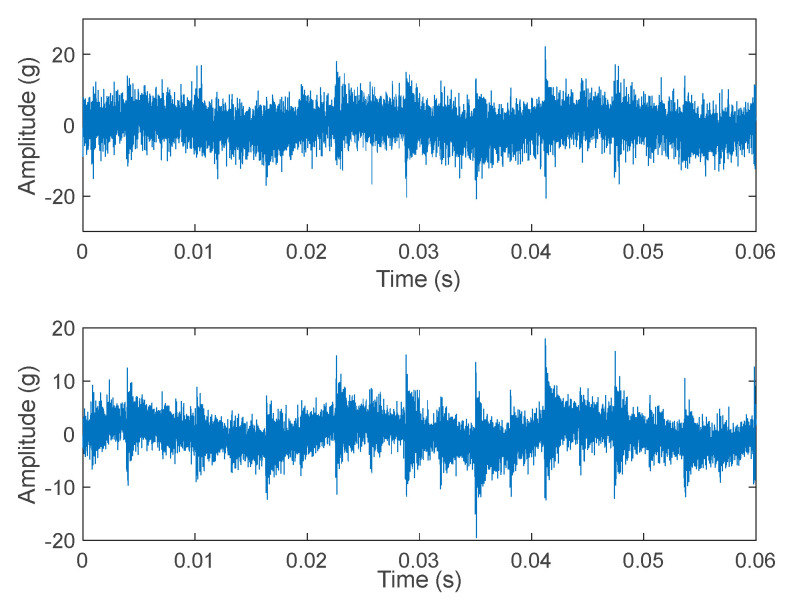
In this work, we present a diagnosis system for rolling bearings that leverages simultaneous measurements of vibrations and machine rotation speed. Our approach combines the robustness of simple time domain methods for fault detection with the potential of machine learning techniques for fault location. This research is based on a neural network classifier, which exploits a simple and novel preprocessing algorithm specifically designed for minimizing the dependency of the classifier performance on the machine working conditions, on the bearing model and on the acquisition system set-up. The overall diagnosis system is based on light algorithms with reduced complexity and hardware resource demand and is designed to be deployed in embedded electronics. The fault diagnosis system was trained using emulated data, exploiting an ad-hoc test bench thus avoiding the problem of generating enough data, achieving an overall classifier accuracy larger than 98%. Its noteworthy ability to generalize was proven by using data emulating different working conditions and acquisition set-ups and noise levels, obtaining in all the cases accuracies greater than 97%, thereby proving in this way that the proposed system can be applied in a wide spectrum of different applications. Finally, real data from an on-line database containing vibration signals obtained in a completely different scenario are used to demonstrate the distinctive capability of the proposed system to generalize.
在这项工作中,我们提出了一种用于滚动轴承的诊断系统,该系统利用振动和机器转速的同步测量。我们的方法将用于故障检测的简单时域方法的稳健性与用于故障定位的机器学习技术的潜力相结合。这项研究基于一个神经网络分类器,该分类器利用一种简单新颖的预处理算法,该算法专门设计用于最小化分类器性能对机器工作条件、轴承模型和采集系统设置的依赖性。整个诊断系统基于复杂度和硬件资源需求降低的轻量级算法,旨在部署在嵌入式电子设备中。故障诊断系统使用模拟数据进行训练,利用一个专门的测试台,从而避免了生成足够数据的问题,实现了总体分类器准确率大于98%。通过使用模拟不同工作条件、采集设置和噪声水平的数据,证明了其值得注意的泛化能力,在所有情况下都获得了大于97%的准确率,从而证明了所提出的系统可以应用于广泛的不同应用中。最后,使用来自一个在线数据库的真实数据,该数据库包含在完全不同场景下获得的振动信号,以证明所提出系统独特的泛化能力。