Wang Tao, Chen Xinzhe, Wang Kai, Ju Jie, Yu Xue, Yu Wanpeng, Liu Cuiyun, Wang Yin
Institute for Translational Medicine, The Affiliated Hospital of Qingdao University, College of Medicine, Qingdao University, Qingdao, Shandong 266023, China.
College of Medicine, Qingdao University, Qingdao, Shandong 266023, China.
Genes Dis. 2023 Mar 24;11(2):747-759. doi: 10.1016/j.gendis.2023.01.031. eCollection 2024 Mar.
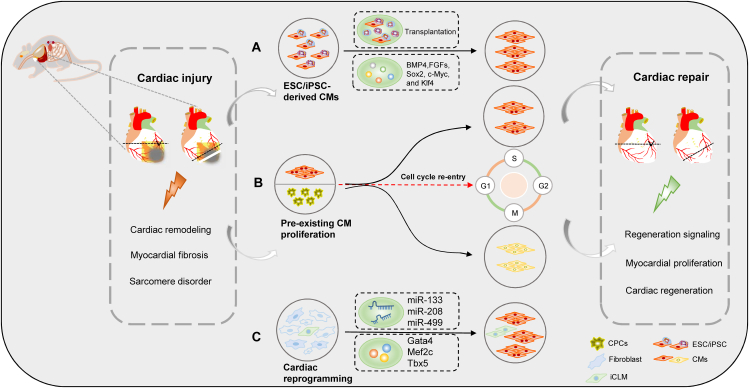
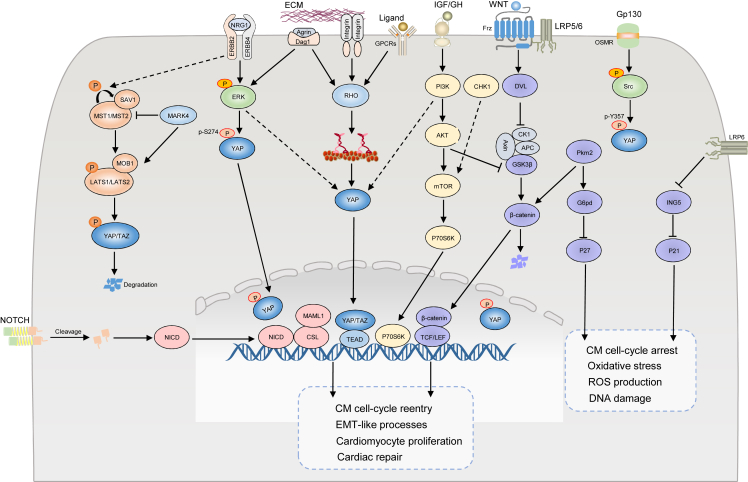
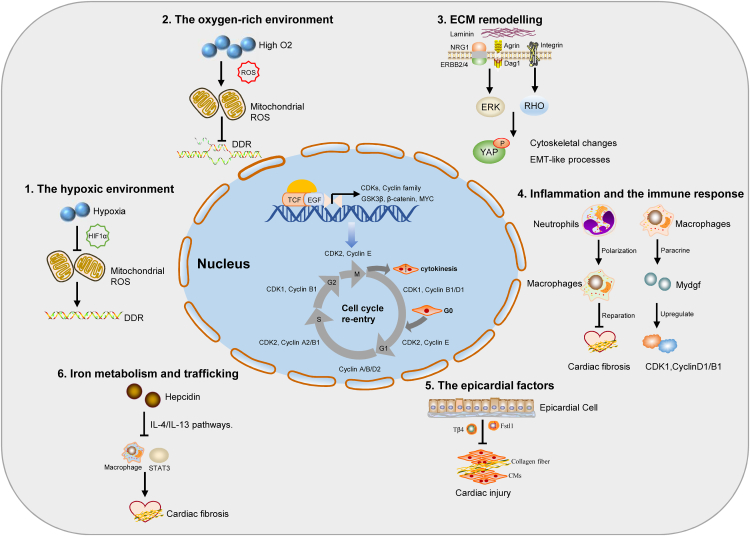
In the mammalian heart, cardiomyocytes are forced to withdraw from the cell cycle shortly after birth, limiting the ability of the heart to regenerate and repair. The development of multimodal regulation of cardiac proliferation has verified that pre-existing cardiomyocyte proliferation is an essential driver of cardiac renewal. With the continuous development of genetic lineage tracking technology, it has been revealed that cell cycle activity produces polyploid cardiomyocytes during the embryonic, juvenile, and adult stages of cardiogenesis, but newly formed mononucleated diploid cardiomyocytes also elevated sporadically during myocardial infarction. It implied that adult cardiomyocytes have a weak regenerative capacity under the condition of ischemia injury, which offers hope for the clinical treatment of myocardial infarction. However, the regeneration frequency and source of cardiomyocytes are still low, and the mechanism of regulating cardiomyocyte proliferation remains further explained. It is noteworthy to explore what force triggers endogenous cardiomyocyte proliferation and heart regeneration. Here, we focused on summarizing the recent research progress of emerging endogenous key modulators and crosstalk with other signaling pathways and furnished valuable insights into the internal mechanism of heart regeneration. In addition, myocardial transcription factors, non-coding RNAs, cyclins, and cell cycle-dependent kinases are involved in the multimodal regulation of pre-existing cardiomyocyte proliferation. Ultimately, awakening the myocardial proliferation endogenous modulator and regeneration pathways may be the final battlefield for the regenerative therapy of cardiovascular diseases.
在哺乳动物心脏中,心肌细胞在出生后不久就被迫退出细胞周期,这限制了心脏再生和修复的能力。心脏增殖多模态调节的发展证实,已有的心肌细胞增殖是心脏更新的重要驱动因素。随着遗传谱系追踪技术的不断发展,人们发现细胞周期活性在心脏发生的胚胎、幼年和成年阶段都会产生多倍体心肌细胞,但新形成的单核二倍体心肌细胞在心肌梗死期间也会偶尔增加。这意味着成年心肌细胞在缺血损伤条件下的再生能力较弱,这为心肌梗死的临床治疗带来了希望。然而,心肌细胞的再生频率和来源仍然很低,调节心肌细胞增殖的机制仍有待进一步阐明。探索何种力量触发内源性心肌细胞增殖和心脏再生值得关注。在此,我们着重总结了新兴内源性关键调节因子的最新研究进展及其与其他信号通路的相互作用,并对心脏再生的内在机制提供了有价值的见解。此外,心肌转录因子、非编码RNA、细胞周期蛋白和细胞周期依赖性激酶参与了对已有的心肌细胞增殖的多模态调节。最终,唤醒心肌增殖内源性调节因子和再生途径可能是心血管疾病再生治疗的最终战场。