Schulz Lisa Maria, Dreier Fabienne, de Sousa Miranda Lisa Marie, Rismondo Jeanine
Department of General Microbiology, Institute of Microbiology and Genetics, GZMB, Georg-August University Göttingen , Göttingen, Germany.
Microbiol Spectr. 2023 Sep 11;11(5):e0144123. doi: 10.1128/spectrum.01441-23.
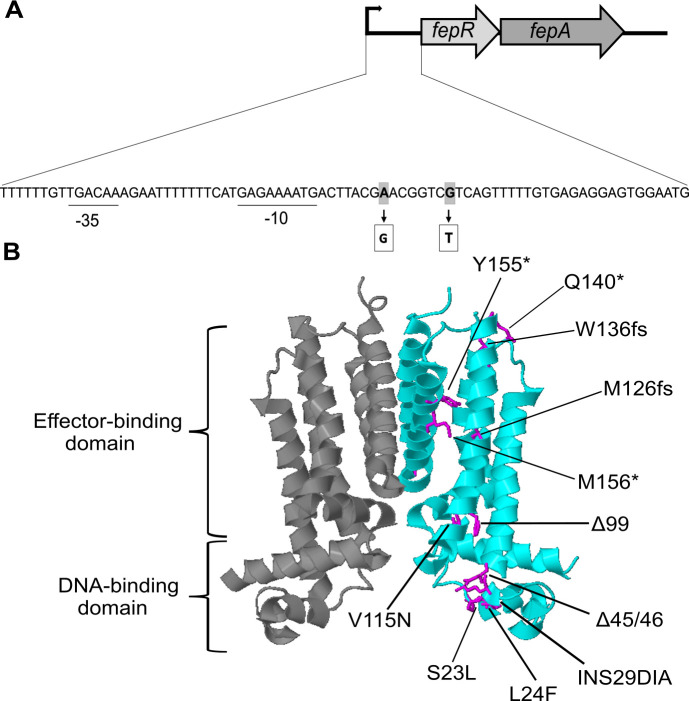
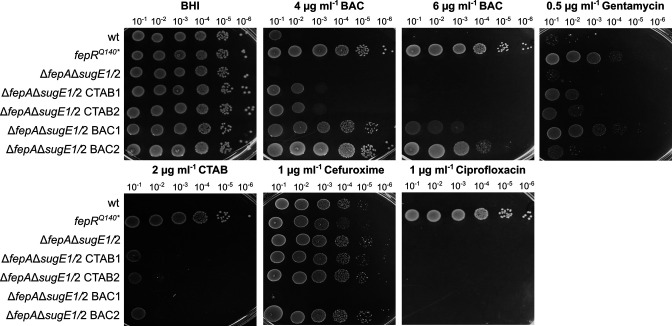
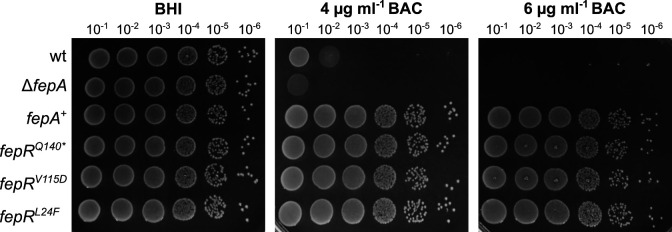
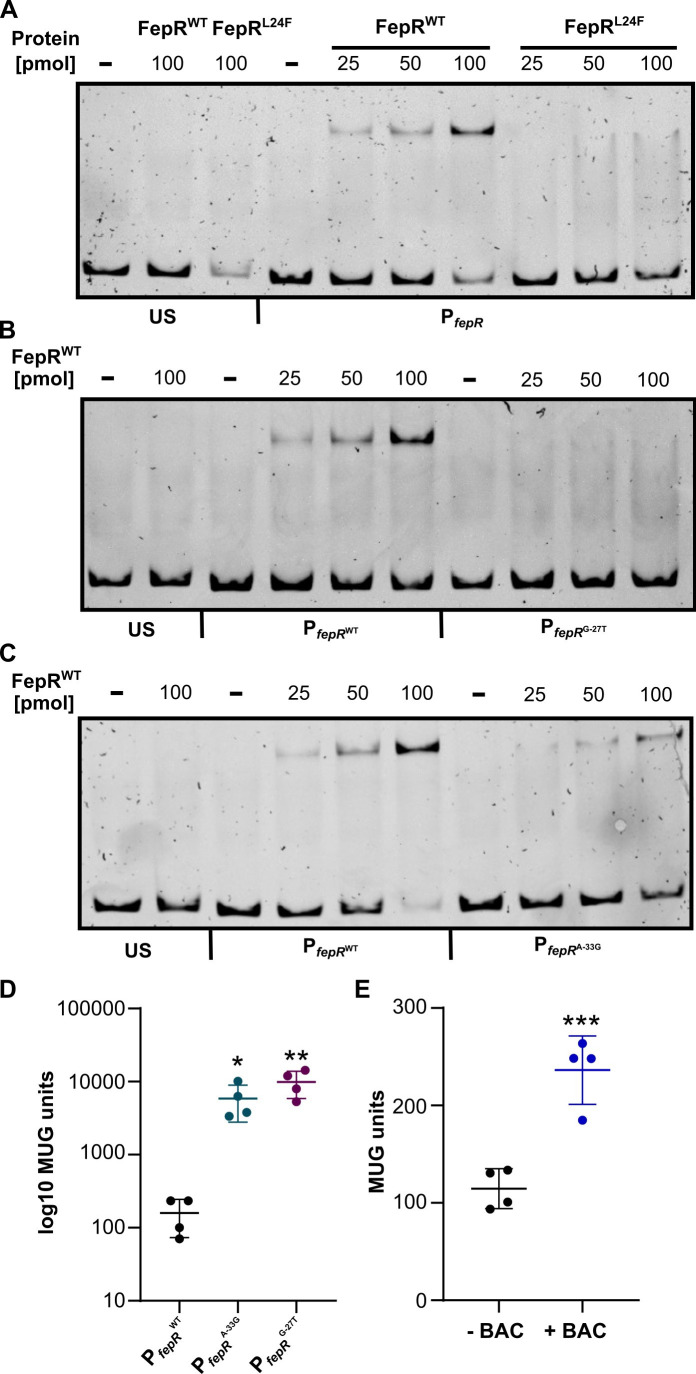
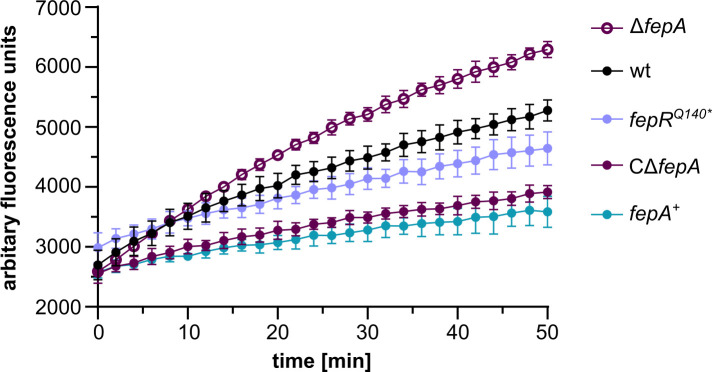
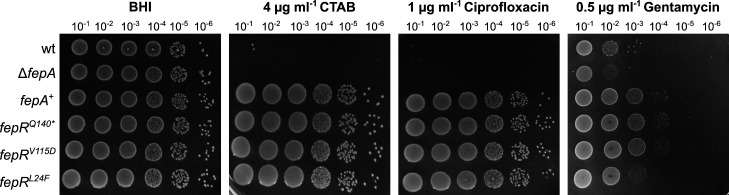
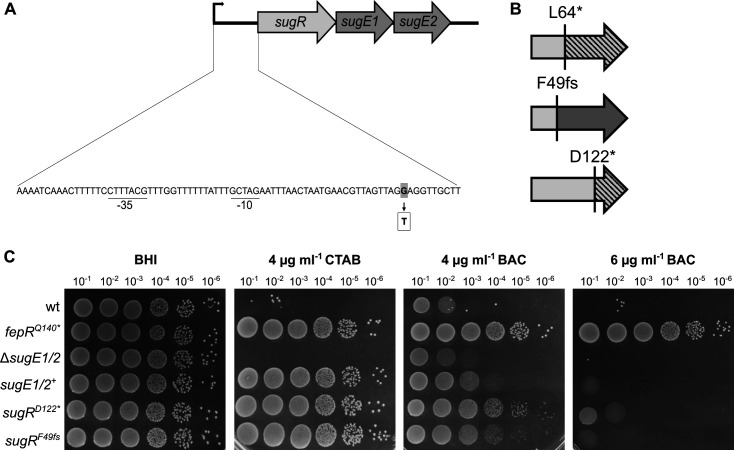
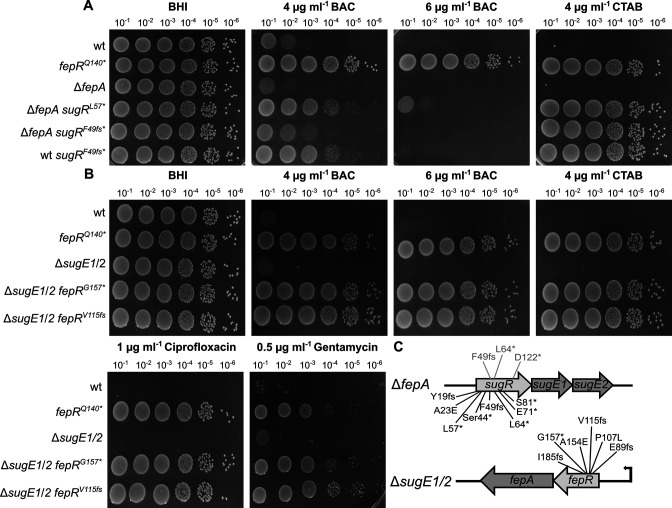
is ubiquitously found in nature and can easily enter food-processing facilities due to contaminations of raw materials. Several countermeasures are used to combat contamination of food products, for instance, the use of disinfectants that contain quaternary ammonium compounds, such as benzalkonium chloride (BAC) and cetyltrimethylammonium bromide (CTAB). In this study, we assessed the potential of the commonly used wild-type strain EGD-e to adapt to BAC and CTAB under laboratory growth conditions. All BAC-tolerant suppressors exclusively carried mutations in , encoding a TetR-like transcriptional regulator, or its promoter region, likely resulting in the overproduction of the efflux pump FepA. In contrast, CTAB tolerance was associated with mutations in , which regulates the expression of the efflux pumps SugE1 and SugE2. strains lacking either FepA or SugE1/2 could still acquire tolerance toward BAC and CTAB. Genomic analysis revealed that the overproduction of the remaining efflux system could compensate for the deleted one, and even in the absence of both efflux systems, tolerant strains could be isolated, which all carried mutations in the diacylglycerol kinase-encoding gene (). DgkB converts diacylglycerol to phosphatidic acid, which is subsequently reused for the synthesis of phospholipids, suggesting that alterations in membrane composition could be the third adaptation mechanism. IMPORTANCE Survival and proliferation of in the food industry are ongoing concerns, and while there are various countermeasures to combat contamination of food products, the pathogen still successfully manages to withstand the harsh conditions present in food-processing facilities, resulting in reoccurring outbreaks, subsequent infection, and disease. To counteract the spread of , it is crucial to understand and elucidate the underlying mechanism that permits their successful evasion. We present various adaptation mechanisms of to withstand two important quaternary ammonium compounds.
在自然界中广泛存在,由于原材料受到污染,它很容易进入食品加工设施。人们采取了多种对策来对抗食品污染,例如,使用含有季铵化合物的消毒剂,如苯扎氯铵(BAC)和十六烷基三甲基溴化铵(CTAB)。在本研究中,我们评估了常用野生型菌株EGD - e在实验室生长条件下适应BAC和CTAB的潜力。所有耐BAC的抑制子仅在编码类TetR转录调节因子的基因或其启动子区域发生突变,这可能导致外排泵FepA的过量产生。相比之下,CTAB耐受性与调节外排泵SugE1和SugE2表达的基因突变有关。缺乏FepA或SugE1/2的菌株仍可获得对BAC和CTAB的耐受性。基因组分析表明,剩余外排系统的过量产生可以补偿缺失的外排系统,甚至在两个外排系统都不存在的情况下,也可以分离出耐受菌株,这些菌株在编码二酰基甘油激酶的基因()中均发生了突变。DgkB将二酰基甘油转化为磷脂酸,随后磷脂酸被重新用于磷脂的合成,这表明膜成分的改变可能是第三种适应机制。重要性:在食品工业中的存活和增殖一直是人们关注的问题,虽然有各种对抗食品污染的对策,但这种病原体仍能成功抵御食品加工设施中存在的恶劣条件,导致疫情反复爆发、后续感染和疾病。为了对抗的传播,了解和阐明其成功逃避的潜在机制至关重要。我们展示了对抗两种重要季铵化合物的多种适应机制。