Department of Food and Nutrition, College of Human Ecology, Kyung Hee University, 26 Kyunghee-daero, Dongdaemun-gu, Seoul 02447, Republic of Korea.
Nondestructive Bio-Sensing Laboratory, Dept. of Biosystems Machinery Engineering, College of Agriculture and Life Science, Chungnam National University, Daejeon 34134, Republic of Korea.
ACS Appl Bio Mater. 2023 Oct 16;6(10):3959-3983. doi: 10.1021/acsabm.3c00458. Epub 2023 Sep 12.
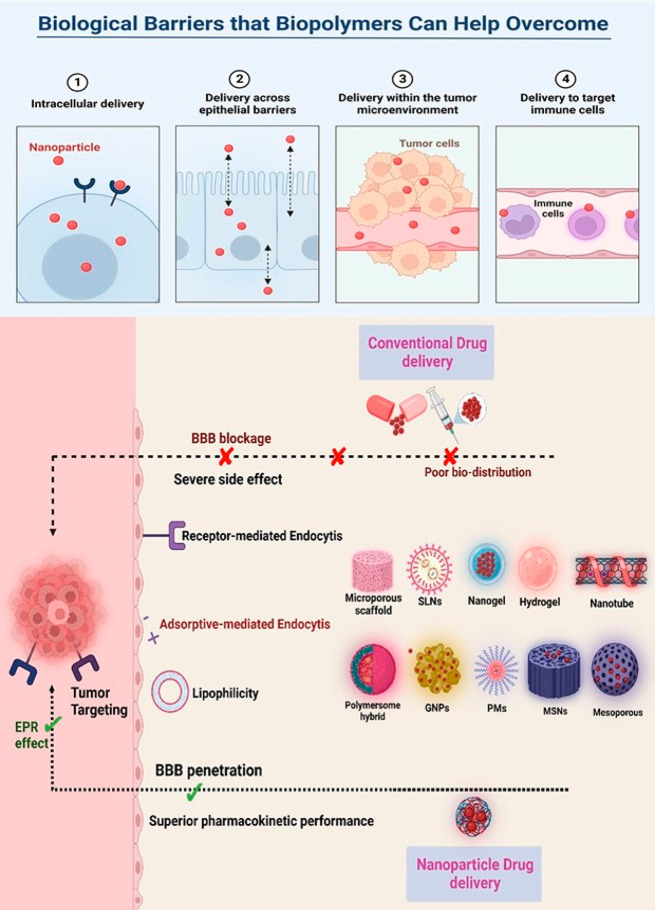
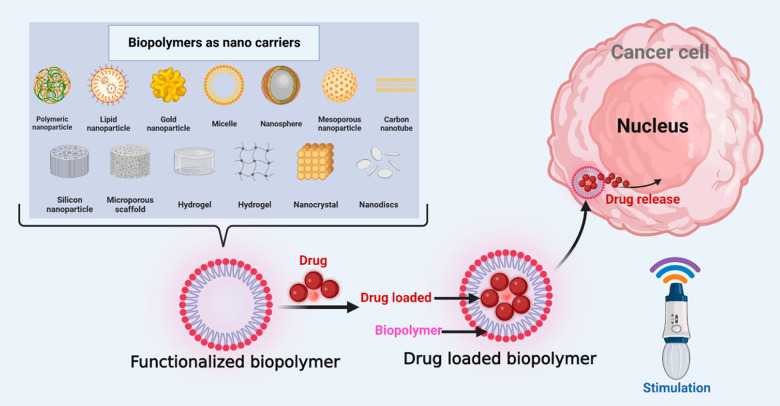
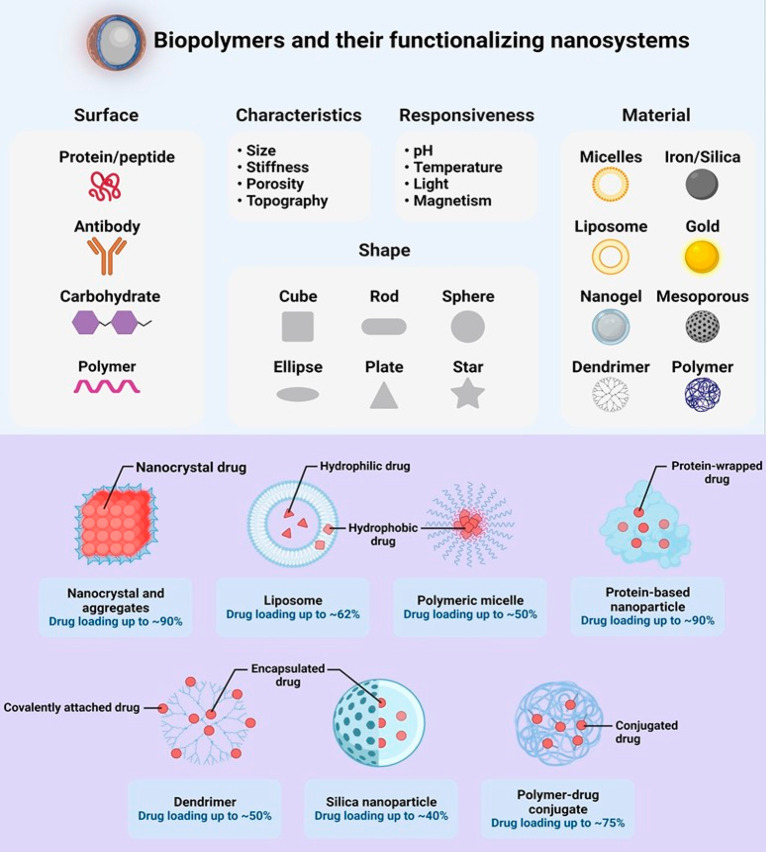
Applications of nanotechnology have increased the importance of research and nanocarriers, which have revolutionized the method of drug delivery to treat several diseases, including cancer, in the past few years. Cancer, one of the world's fatal diseases, has drawn scientists' attention for its multidrug resistance to various chemotherapeutic drugs. To minimize the side effects of chemotherapeutic agents on healthy cells and to develop technological advancement in drug delivery systems, scientists have developed an alternative approach to delivering chemotherapeutic drugs at the targeted site by integrating it inside the nanocarriers like synthetic polymers, nanotubes, micelles, dendrimers, magnetic nanoparticles, quantum dots (QDs), lipid nanoparticles, nano-biopolymeric substances, etc., which has shown promising results in both preclinical and clinical trials of cancer management. Besides that, nanocarriers, especially biopolymeric nanoparticles, have received much attention from researchers due to their cost-effectiveness, biodegradability, treatment efficacy, and ability to target drug delivery by crossing the blood-brain barrier. This review emphasizes the fabrication processes, the therapeutic and theragnostic applications, and the importance of different biopolymeric nanocarriers in targeting cancer both and , which conclude with the challenges and opportunities of future exploration using biopolymeric nanocarriers in onco-therapy with improved availability and reduced toxicity.
纳米技术的应用增加了研究和纳米载体的重要性,这在过去几年中彻底改变了药物输送方法,以治疗包括癌症在内的多种疾病。癌症是世界上致命的疾病之一,由于其对各种化疗药物的多药耐药性,引起了科学家的关注。为了最大限度地减少化疗药物对健康细胞的副作用,并在药物输送系统的技术进步方面取得进展,科学家们开发了一种替代方法,即将化疗药物整合到纳米载体(如合成聚合物、纳米管、胶束、树枝状聚合物、磁性纳米颗粒、量子点 (QD)、脂质纳米颗粒、纳米生物聚合物等)中,在癌症管理的临床前和临床试验中均取得了有希望的结果。此外,由于成本效益、生物降解性、治疗效果以及通过血脑屏障靶向药物输送的能力,纳米载体,特别是生物聚合物纳米颗粒,受到了研究人员的广泛关注。这篇综述强调了不同生物聚合物纳米载体在癌症靶向治疗和诊断应用中的制造工艺、治疗效果,以及总结了使用生物聚合物纳米载体进行肿瘤治疗的未来探索的挑战和机遇,提高了可用性并降低了毒性。