Cheryl K. Olson, Sc.D., LLC, 633 Elm Street, San Carlos, CA, 94070, USA.
Neil Sherwood Consulting, Avenue Alfred Cortot 21, Nyon, 1260, Switzerland.
Harm Reduct J. 2023 Sep 13;20(1):132. doi: 10.1186/s12954-023-00864-0.
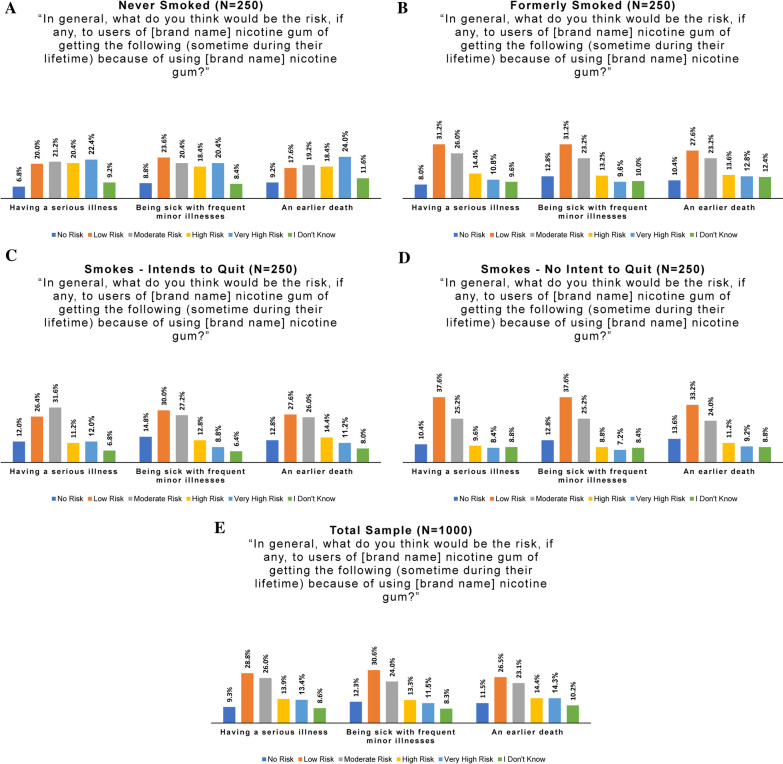
Little is known about perceptions, use intentions, and behaviors of adults regarding nicotine gum that is marketed and regulated as a consumer product rather than as a medicinal nicotine replacement therapy (NRT).
Survey data were collected from a Qualtrics online panel (N = 1000) of adults who had never used a consumer nicotine gum, recruited based on smoking behavior, and from current and former purchasers of one commercially available nicotine gum product (LUCY Chew and Park), recruited via emails to a customer database (N = 500). In addition to descriptive cross-sectional analyses, logistic regression was used to estimate the probability of intent to try and of product appeal among these different groups.
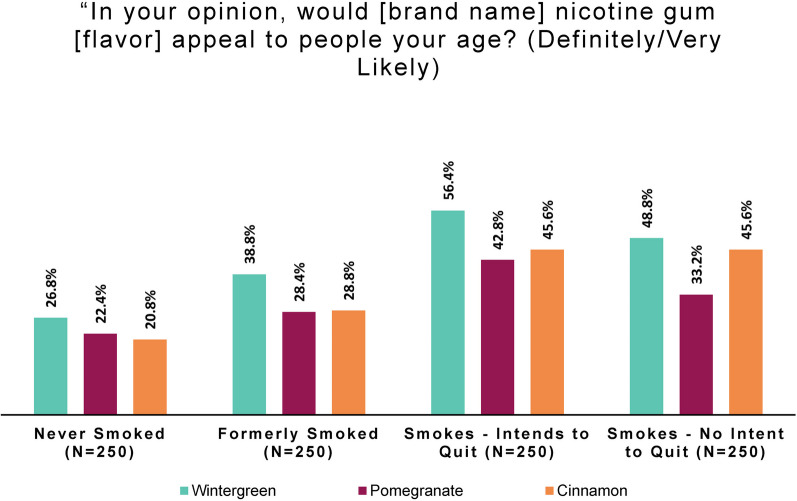
Among online panel respondents, individuals who smoked with and without plans to quit showed high intention to try the product (odds ratios 15.6 [95% CI 9.3, 27.6] and 9.8 [95% CI 5.8, 17.3] respectively, compared to people who formerly smoked) and persons who had never smoked showed low intentions to try. These results stood regardless of flavor. Among current and former purchasers of the study product, 43.4% of persons who had smoked cigarettes regularly indicated they were motivated to try the product "to help me quit smoking." Only 0.6% of young adult consumers of the nicotine gum (aged 21-30) had not tried tobacco products previously.
Consumer nicotine gum does not appear to attract those who have never used a tobacco product and the results for young adults suggest minimal appeal to youth. The study product was used primarily by individuals who currently smoke and/or use e-cigarettes but who wished to quit or reduce consumption. These results suggest that a consumer nicotine gum may reduce harm by substituting for higher-risk products such as combustible cigarettes.
对于以消费品而非药用尼古丁替代疗法(NRT)形式销售和监管的尼古丁口香糖,成年人对其认知、使用意图和行为知之甚少。
本研究通过 Qualtrics 在线小组(N=1000)收集从未使用过消费者尼古丁口香糖的成年人的调查数据,这些参与者是根据吸烟行为招募的,以及通过电子邮件向客户数据库招募当前和以前购买过一种市售尼古丁口香糖产品(LUCY Chew 和 Park)的成年人(N=500)。除了描述性的横断面分析外,还使用逻辑回归来估计不同群体尝试的意图和产品吸引力的概率。
在在线小组受访者中,有和没有戒烟计划的吸烟者都表现出很高的尝试该产品的意愿(与以前吸烟者相比,比值比分别为 15.6[95%CI9.3,27.6]和 9.8[95%CI5.8,17.3]),而从未吸烟者则表现出较低的尝试意愿。这些结果与口味无关。在研究产品的当前和以前使用者中,43.4%的经常吸烟的人表示他们有动机尝试该产品“帮助我戒烟”。只有 0.6%的研究产品的年轻成年消费者(年龄在 21-30 岁之间)以前没有尝试过烟草产品。
消费者尼古丁口香糖似乎并没有吸引那些从未使用过烟草产品的人,而对于年轻成年人的结果表明,对年轻人的吸引力有限。该研究产品主要由目前吸烟和/或使用电子烟但希望戒烟或减少消费的人使用。这些结果表明,消费者尼古丁口香糖可以通过替代风险更高的产品(如可燃香烟)来减少危害。