Palanikumar L, Kalmouni Mona, Houhou Tatiana, Abdullah Osama, Ali Liaqat, Pasricha Renu, Straubinger Rainer, Thomas Sneha, Afzal Ahmed Jawaad, Barrera Francisco N, Magzoub Mazin
Biology Program, Division of Science, New York University Abu Dhabi, P.O. Box 129188, Saadiyat Island, Abu Dhabi, United Arab Emirates.
Core Technology Platforms, New York University Abu Dhabi, P.O. Box 129188, Saadiyat Island, Abu Dhabi, United Arab Emirates.
ACS Nano. 2023 Oct 10;17(19):18979-18999. doi: 10.1021/acsnano.3c04564. Epub 2023 Sep 13.
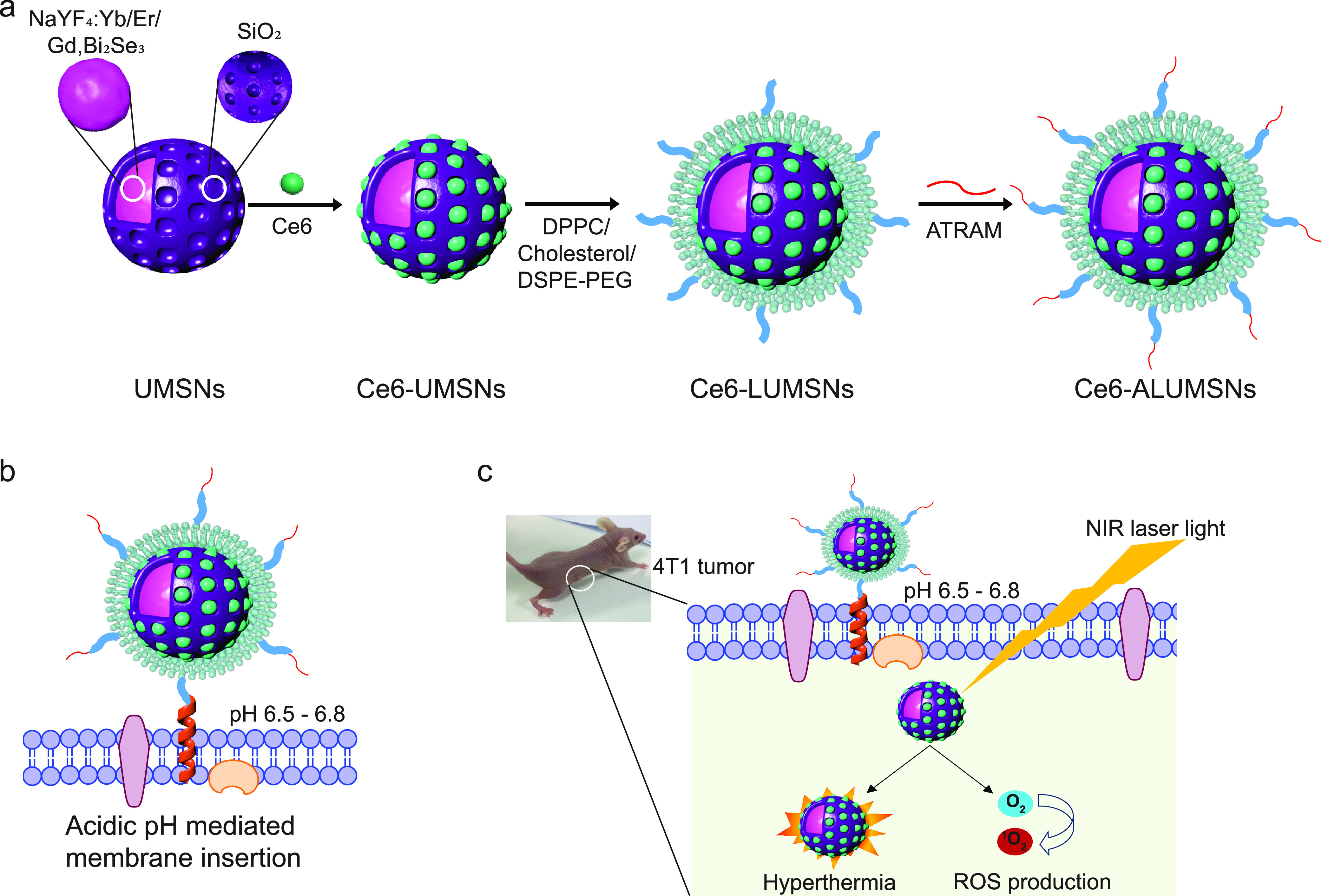
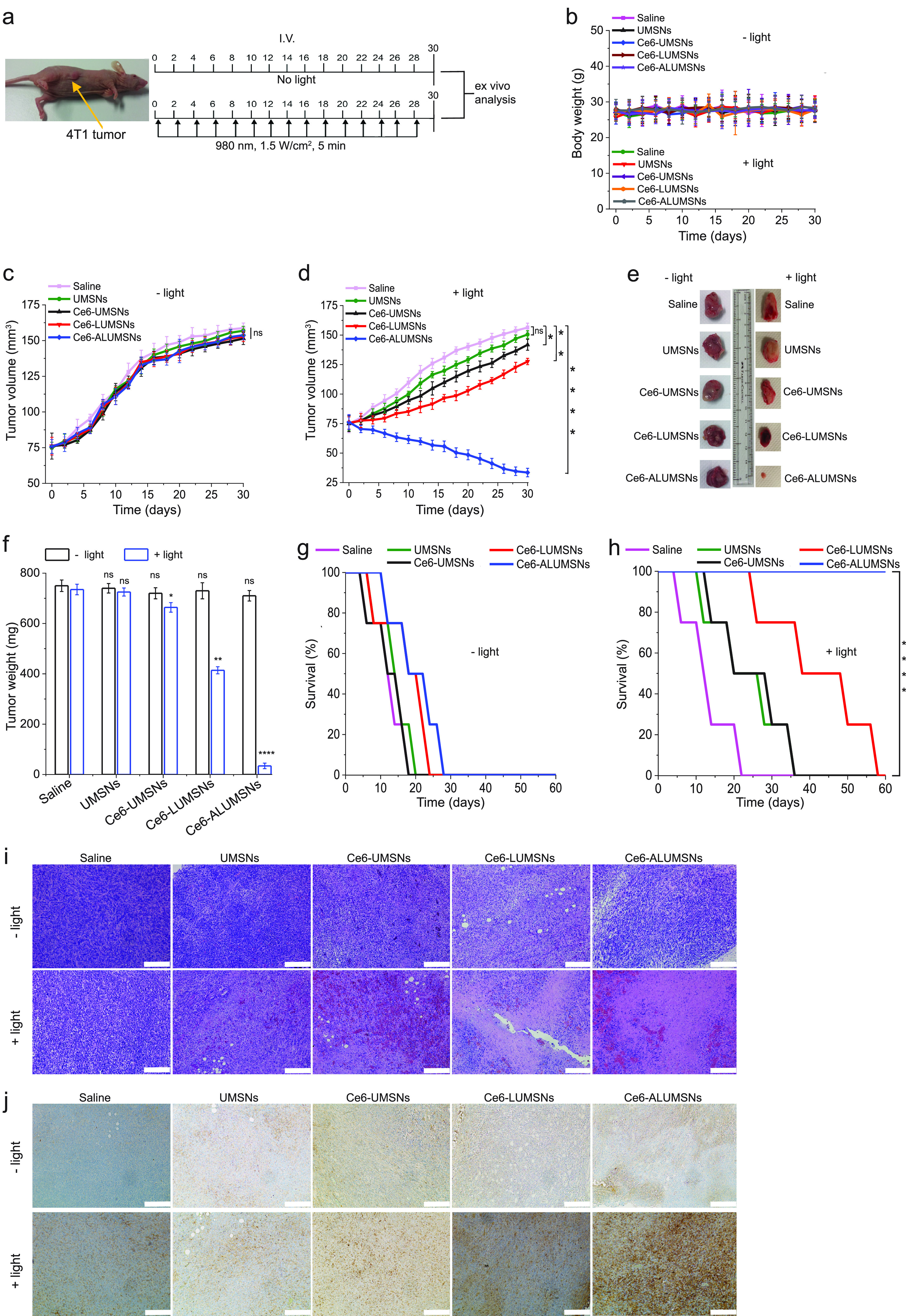
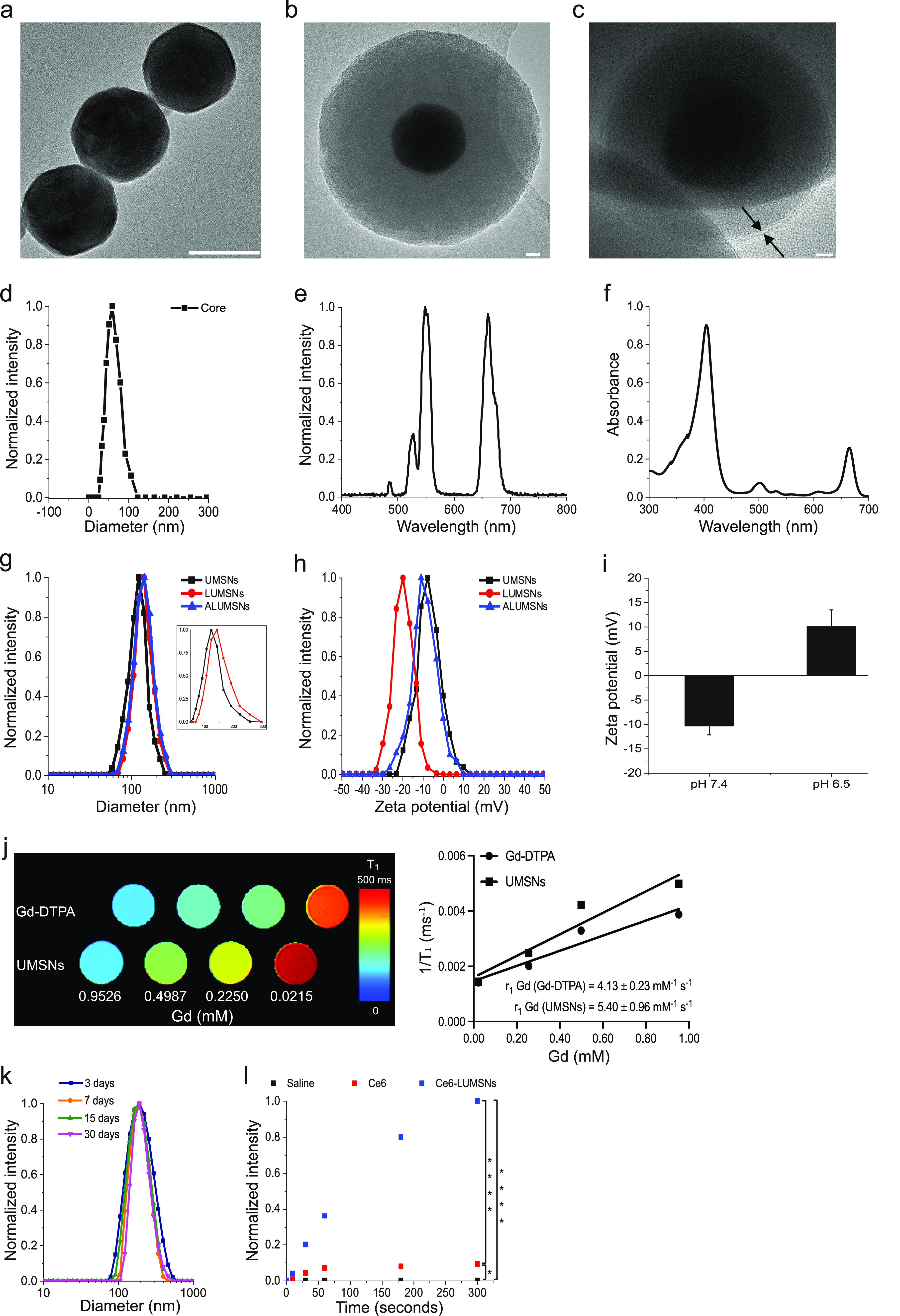
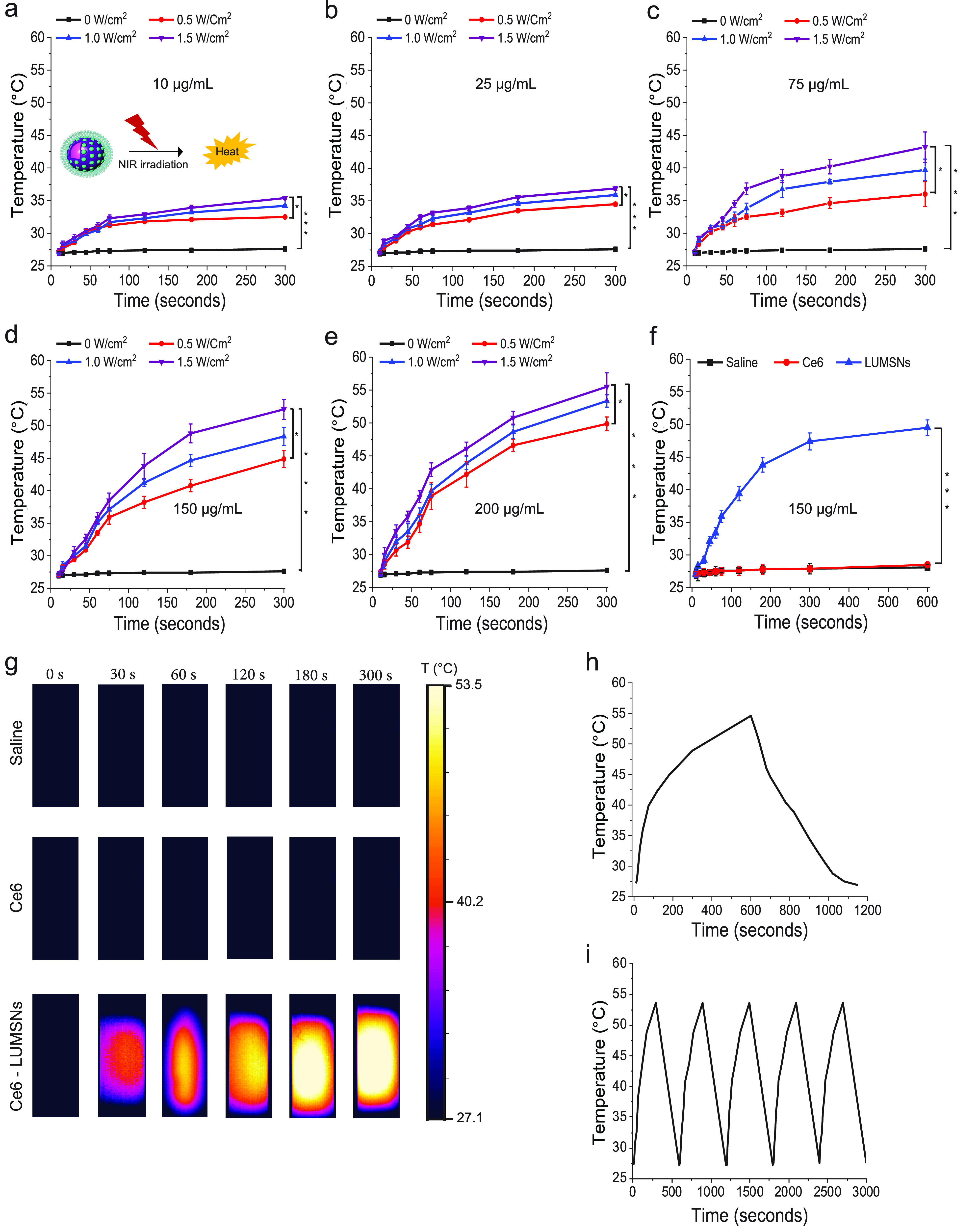
Photodynamic therapy (PDT) and photothermal therapy (PTT) have gained considerable attention as potential alternatives to conventional cancer treatments. However, these approaches remain limited by low solubility, poor stability, and inefficient targeting of many common photosensitizers (PSs) and photothermal agents (PTAs). To overcome the aforementioned limitations, we engineered biocompatible and biodegradable tumor-targeted upconversion nanospheres with imaging capabilities. The multifunctional nanospheres consist of a sodium yttrium fluoride core doped with lanthanides (ytterbium, erbium, and gadolinium) and the PTA bismuth selenide (NaYF:Yb/Er/Gd,BiSe) enveloped in a mesoporous silica shell that encapsulates a PS, chlorin e6 (Ce6), within its pores. NaYF:Yb/Er converts deeply penetrating near-infrared (NIR) light to visible light, which excites Ce6 to generate cytotoxic reactive oxygen species (ROS), while BiSe efficiently converts absorbed NIR light to heat. Additionally, Gd enables magnetic resonance imaging of the nanospheres. The mesoporous silica shell is coated with DPPC/cholesterol/DSPE-PEG to retain the encapsulated Ce6 and prevent serum protein adsorption and macrophage recognition that hinder tumor targeting. Finally, the coat is conjugated to the acidity-triggered rational membrane (ATRAM) peptide, which promotes specific and efficient internalization into malignant cells in the mildly acidic microenvironment of tumors. The nanospheres facilitated tumor magnetic resonance and thermal and fluorescence imaging and exhibited potent NIR laser light-induced anticancer effects and via combined ROS production and localized hyperthermia, with negligible toxicity to healthy tissue, hence markedly extending survival. Our results demonstrate that the ATRAM-functionalized, lipid/PEG-coated upconversion mesoporous silica nanospheres (ALUMSNs) offer multimodal diagnostic imaging and targeted combinatorial cancer therapy.
光动力疗法(PDT)和光热疗法(PTT)作为传统癌症治疗方法的潜在替代方案已受到广泛关注。然而,这些方法仍然受到许多常见光敏剂(PSs)和光热剂(PTAs)的低溶解度、稳定性差以及靶向效率低的限制。为了克服上述局限性,我们设计了具有成像能力的生物相容性和可生物降解的肿瘤靶向性上转换纳米球。多功能纳米球由掺杂镧系元素(镱、铒和钆)的氟化钇钠核以及包裹在介孔二氧化硅壳中的光热剂硒化铋(NaYF:Yb/Er/Gd,BiSe)组成,介孔二氧化硅壳在其孔内封装了一种光敏剂二氢卟吩e6(Ce6)。NaYF:Yb/Er将深度穿透的近红外(NIR)光转换为可见光,从而激发Ce6产生活性细胞毒性氧物种(ROS),而BiSe则有效地将吸收的NIR光转换为热量。此外,钆使纳米球能够进行磁共振成像。介孔二氧化硅壳涂有二棕榈酰磷脂酰胆碱/胆固醇/二硬脂酰磷脂酰乙醇胺-聚乙二醇,以保留封装的Ce6,并防止血清蛋白吸附和巨噬细胞识别,这些都会阻碍肿瘤靶向。最后,该涂层与酸度触发的理性膜(ATRAM)肽偶联,该肽在肿瘤的微酸性微环境中促进特异性和高效内化到恶性细胞中。纳米球促进了肿瘤磁共振、热成像和荧光成像,并通过联合产生ROS和局部热疗表现出强大的近红外激光诱导抗癌作用,对健康组织的毒性可忽略不计,从而显著延长了生存期。我们的结果表明,ATRAM功能化、脂质/聚乙二醇涂层的上转换介孔二氧化硅纳米球(ALUMSNs)提供了多模态诊断成像和靶向联合癌症治疗。