College of Pharmacy, Weifang Medical University, Weifang, 261053, China.
School of Clinical Medicine, Weifang Medical University, Weifang, 261053, Shandong, China.
J Nanobiotechnology. 2021 Oct 24;19(1):335. doi: 10.1186/s12951-021-01080-3.
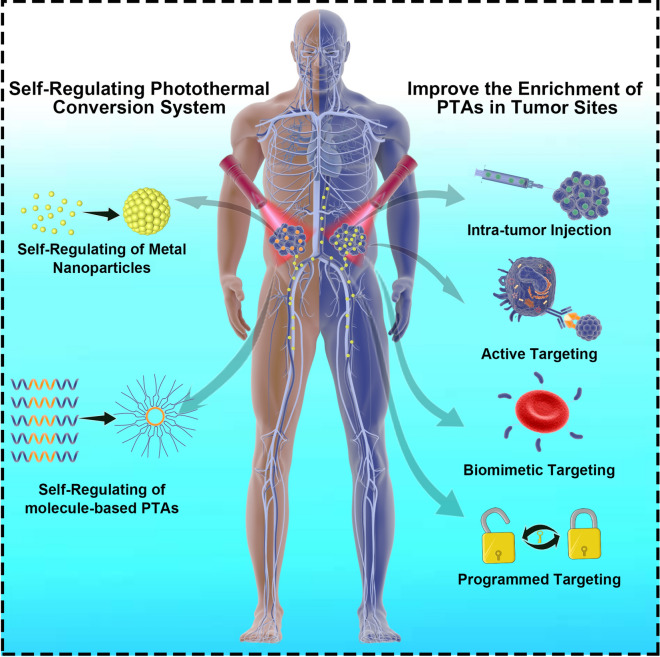
Photothermal therapy (PTT), which converts light energy to heat energy, has become a new research hotspot in cancer treatment. Although researchers have investigated various ways to improve the efficiency of tumor heat ablation to treat cancer, PTT may cause severe damage to normal tissue due to the systemic distribution of photothermal agents (PTAs) in the body and inaccurate laser exposure during treatment. To further improve the survival rate of cancer patients and reduce possible side effects on other parts of the body, it is still necessary to explore PTAs with high selectivity and precise treatment. In this review, we summarized strategies to improve the treatment selectivity of PTT, such as increasing the accumulation of PTAs at tumor sites and endowing PTAs with a self-regulating photothermal conversion function. The views and challenges of selective PTT were discussed, especially the prospects and challenges of their clinical applications.
光热疗法(PTT)将光能转化为热能,已成为癌症治疗的新研究热点。尽管研究人员已经研究了各种方法来提高肿瘤热消融的效率以治疗癌症,但由于体内光热剂(PTAs)的全身分布和治疗过程中激光照射的不准确,PTT 可能会对正常组织造成严重的损伤。为了进一步提高癌症患者的生存率并降低对身体其他部位可能产生的副作用,仍有必要探索具有高选择性和精确治疗作用的 PTA。在这篇综述中,我们总结了提高 PTT 治疗选择性的策略,例如增加 PTA 在肿瘤部位的积累和赋予 PTA 自我调节的光热转换功能。讨论了选择性 PTT 的观点和挑战,特别是其临床应用的前景和挑战。