Benson L A, Kar S, McLaughlin G, Ihler G M
Infect Immun. 1986 Nov;54(2):347-53. doi: 10.1128/iai.54.2.347-353.1986.
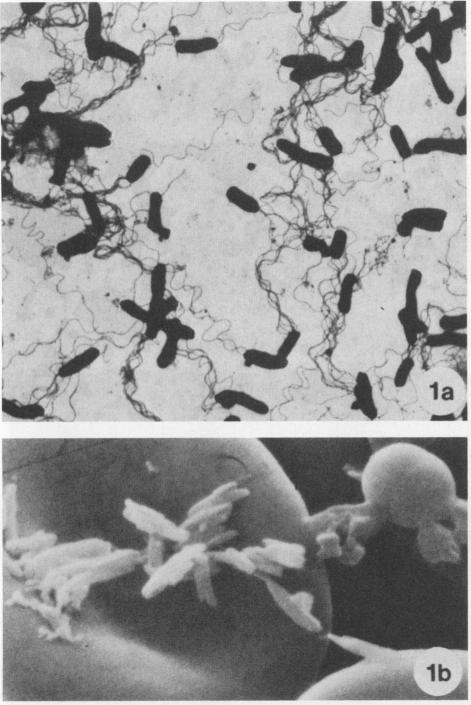
Bartonella bacilliformis, which causes the human diseases Oroya fever and verruga peruana, binds to human erythrocytes in vitro and produces substantial and long-lasting deformations in erythrocyte membranes, including cone-shaped depressions, trenches, and deep invaginations. The deforming force is probably provided by the polar flagella of these highly motile bacteria. Deep invaginations containing bacteria are commonly seen, and membrane fusion at the necks of the invaginations leads to the formation of intracellular vacuoles containing bacteria. Fluorescent compounds present externally render the vacuoles fluorescent and, occasionally, lightly fluorescent cells are seen, suggesting that the vacuoles sometimes rupture to admit the bacteria to the cytoplasm. Vacuoles present in fluorescent erythrocytes prepared by preloading the erythrocytes with fluorescent compounds are seen as dark areas from which the fluorescent marker is excluded. Entry of the bacteria appears to be the result of a process of forced endocytosis.
引起人类疾病奥罗亚热和秘鲁疣的杆状巴尔通体,在体外可与人类红细胞结合,并在红细胞膜上产生大量且持久的变形,包括锥形凹陷、沟槽和深陷。这种变形力可能由这些高度运动性细菌的极鞭毛提供。常见到含有细菌的深陷,深陷颈部的膜融合导致形成含有细菌的细胞内空泡。外部存在的荧光化合物使空泡发荧光,偶尔可见轻度荧光细胞,这表明空泡有时会破裂以使细菌进入细胞质。通过用荧光化合物预加载红细胞制备的荧光红细胞中存在的空泡被视为排除荧光标记的暗区。细菌的进入似乎是强制内吞作用过程的结果。