Department of Pancreatic Surgery, West China Hospital, Sichuan University, No. 37, Guoxue Lane, Wuhou District, Sichuan Province, Chengdu, 610000, People's Republic of China.
Department of General Surgery, Chongqing Kaizhou District People's Hospital, Chongqing, 400700, People's Republic of China.
Mol Med. 2023 Sep 14;29(1):127. doi: 10.1186/s10020-023-00720-8.
Recent years have witnessed impressive growth in applying natural medicine in tumor treatment. Saffron is reported to elicit an inhibitory property against BC. Herein, we sought to explore the specific components and mechanistic basis of saffron's anti-breast carcinoma (BC) function.
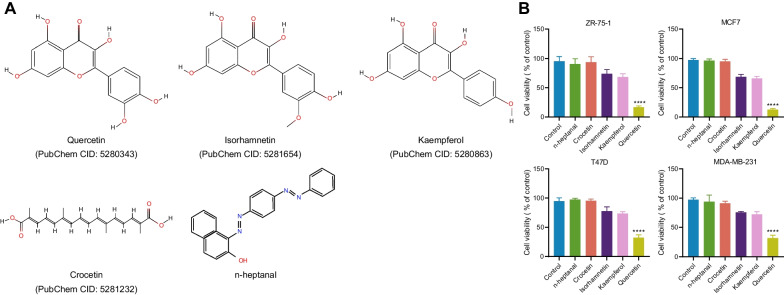
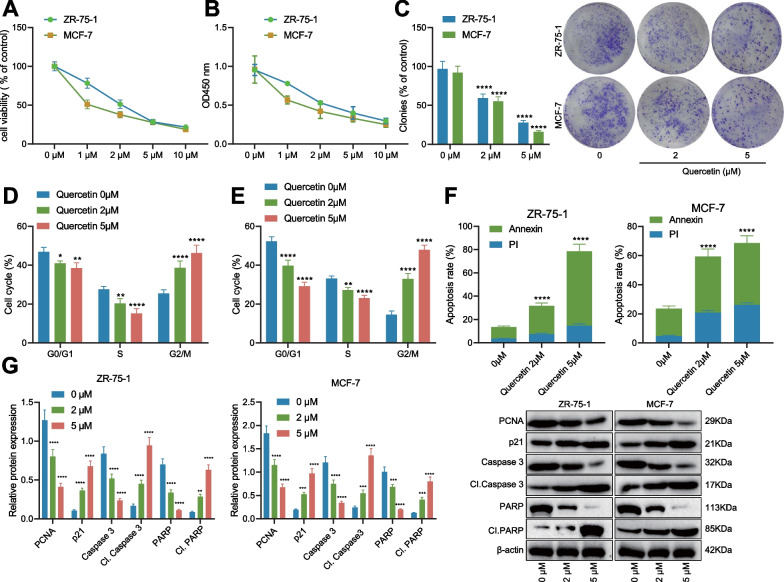
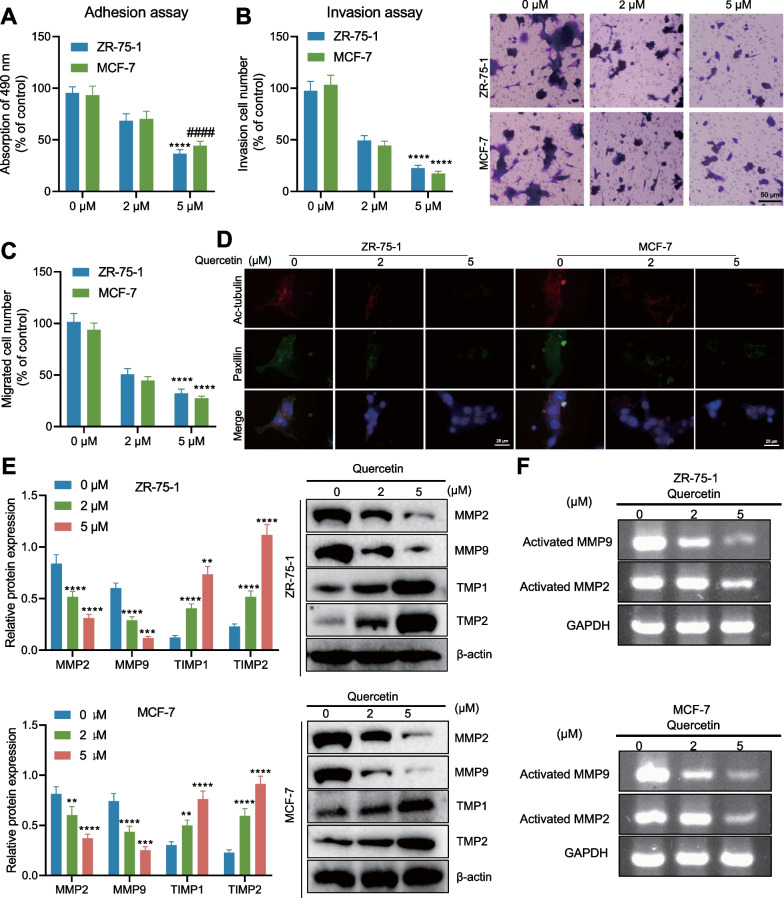
Bioinformatics analysis was employed to analyze saffron components' anti-BC activity and screen the corresponding target genes involved in BC. Then, the roles of the main saffron ingredient quercetin in the activity of BC cells were examined using CCK-8, MTS, flow cytometry, colony formation, Transwell, and Gelatin zymogram assays. Additionally, the interactions among Quercetin, EET, and Stat3 were assessed by immunofluorescence and Western blot, and LC-MS/MS determined the levels of AA, EETs, and CYP3A. Finally, BC xenograft mouse models were established to verify the anti-BC function of Quercetin in vivo.
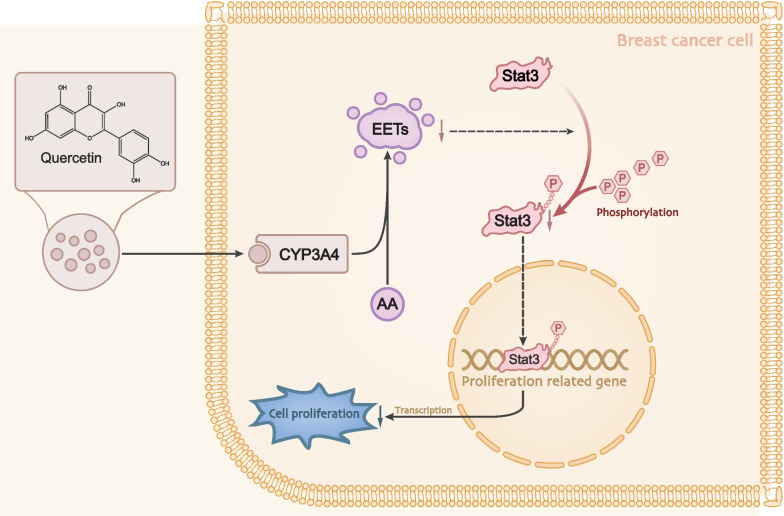
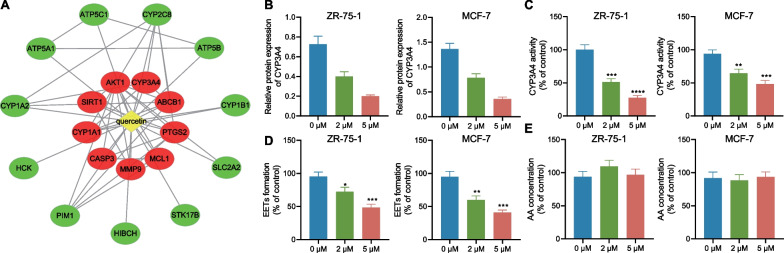
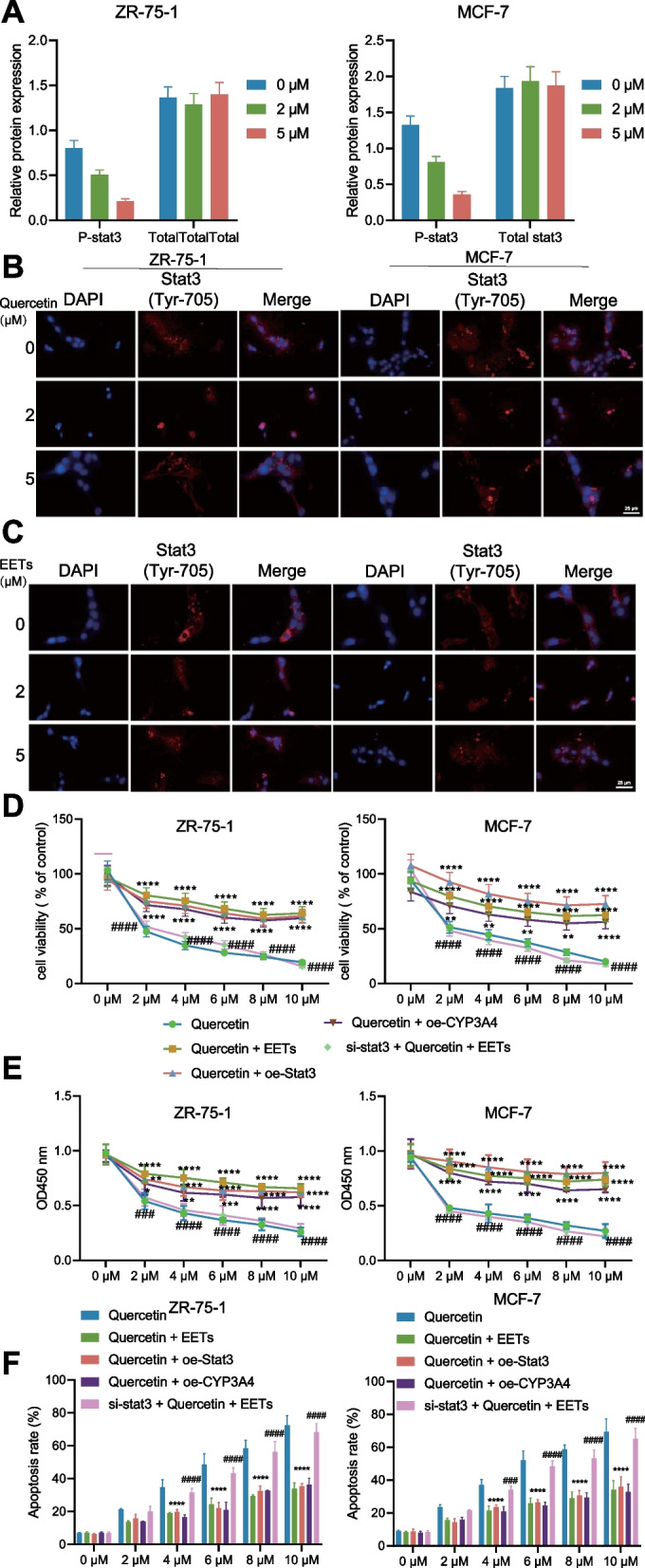
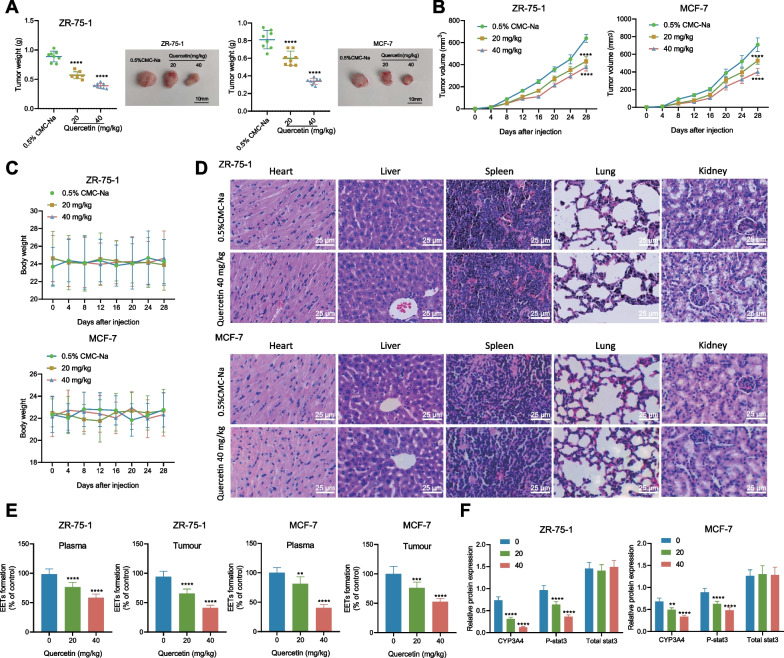
Quercetin, the main active component of saffron, inhibited BC progression. Quercetin suppressed BC cell growth, migration, and invasion and inhibited CYP3A4 expression and activity in BC. Mechanistically, Quercetin down-regulated CYP3A4 to block the nuclear translocation of Stat3 by decreasing the metabolization of AA to EETs, thereby alleviating BC. Moreover, exogenously added EETs counteracted the anti-tumor effect of Quercetin on BC. Quercetin also inhibited the tumor growth of tumor-bearing nude mice.
Quercetin could inhibit the activity of CYP3A to down-regulate AA metabolites EETs, consequently hampering p-Stat3 and nuclear translocation, thus impeding BC development.
近年来,在肿瘤治疗中应用天然药物取得了令人瞩目的进展。藏红花被报道具有抑制乳腺癌(BC)的特性。在此,我们旨在探索藏红花抗乳腺癌(BC)功能的具体成分和机制基础。
采用生物信息学分析方法分析藏红花成分的抗 BC 活性,筛选参与 BC 的相应靶基因。然后,使用 CCK-8、MTS、流式细胞术、集落形成、Transwell 和明胶酶谱分析来检查藏红花主要成分槲皮素在 BC 细胞活性中的作用。此外,通过免疫荧光和 Western blot 评估 Quercetin、EET 和 Stat3 之间的相互作用,通过 LC-MS/MS 测定 AA、EETs 和 CYP3A 的水平。最后,建立 BC 异种移植小鼠模型以体内验证 Quercetin 的抗 BC 功能。
藏红花的主要活性成分槲皮素抑制 BC 的进展。槲皮素抑制 BC 细胞生长、迁移和侵袭,并抑制 BC 中 CYP3A4 的表达和活性。从机制上讲,Quercetin 通过减少 AA 代谢为 EETs 来抑制 CYP3A4 的核易位,从而抑制 Stat3 的核易位,从而缓解 BC。此外,外源性添加的 EETs 抵消了 Quercetin 对 BC 的抗肿瘤作用。Quercetin 还抑制了荷瘤裸鼠的肿瘤生长。
槲皮素可以抑制 CYP3A 的活性,下调 AA 代谢物 EETs,从而阻碍 p-Stat3 和核易位,从而阻碍 BC 的发展。