Gutteridge D S, Tully P J, Smith A E, Loetscher T, Keage H A
Cognitive Ageing and Impairment Neuroscience Laboratory (CAIN), University of South Australia, Adelaide, SA, Australia.
Faculty of Medicine and Health, School of Psychology, University of New England, Armidale, NSW, Australia.
Cereb Circ Cogn Behav. 2023 Sep 1;5:100181. doi: 10.1016/j.cccb.2023.100181. eCollection 2023.
High blood pressure variability (BPV), particularly in older age, appears to be an independent risk factor for incident dementia. The current study aimed to investigate the association between different BPV measures (short- and mid-term BPV including circadian patterns) and cognitive functioning as well as vascular stiffness measures to better understand the role that BPV plays in cognitive impairment.
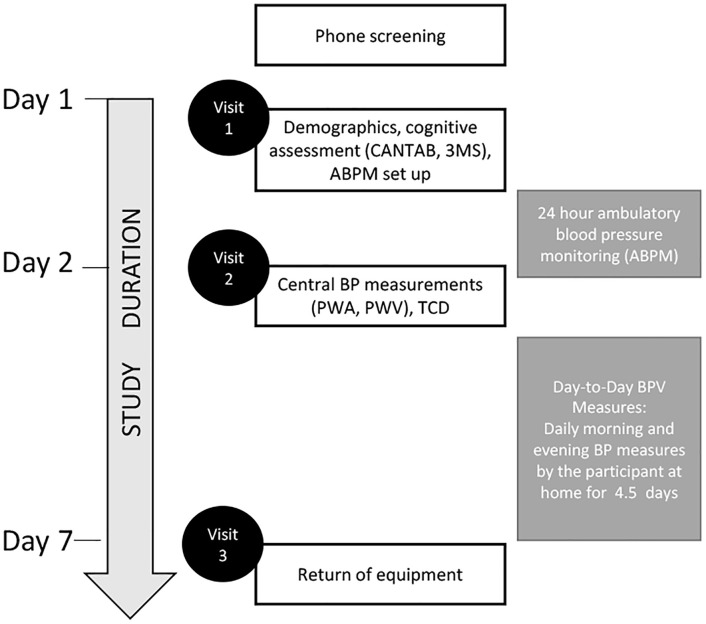
70 older adults (60-80-year-olds) without dementia completed a cognitive test battery and had their blood pressure (BP) assessed via a 24-hour ambulatory BP monitor (divided into sleep and wake for short-term BPV) and 4-day morning and evening home-based BP monitor (for day-to-day BPV). Arterial stiffness was evaluated via pulse wave analysis and pulse wave velocity (PWV) and cerebrovascular pulsatility was assessed via transcranial doppler sonography of the middle cerebral arteries.
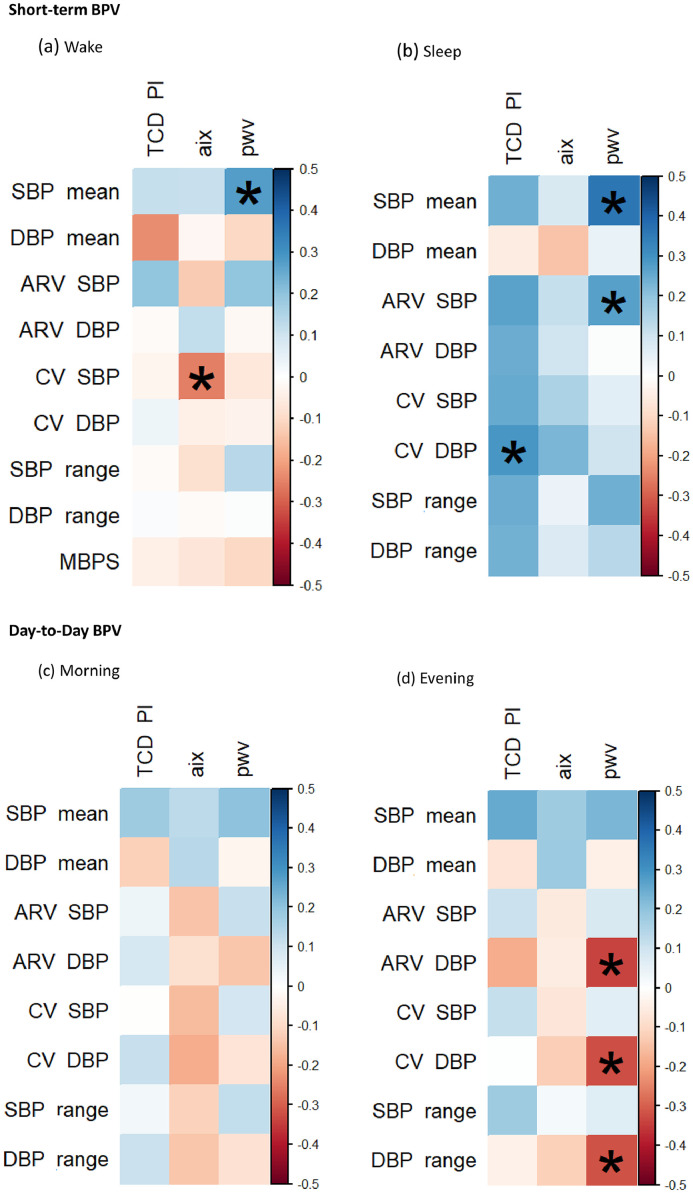
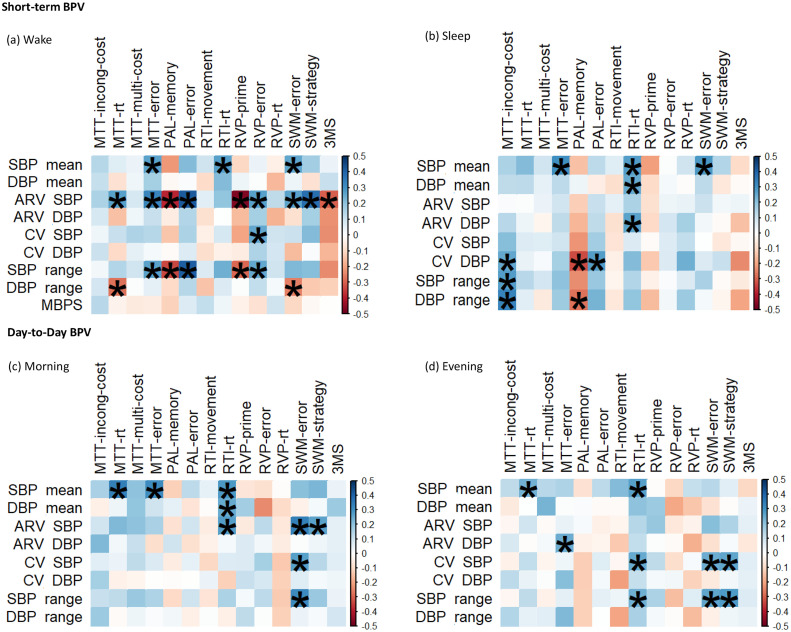
High systolic as well as diastolic short- and mid-term BPV were associated with poorer cognitive functioning, independent of the mean BP. Higher short-term BPV was associated with poorer attention and psychomotor speed, whilst day-to-day BPV was negatively linked with executive functioning. Circadian BP patterns (dipping and morning BP surge) showed no significant relationships with cognition after adjusting for covariates. Higher systolic short-term BPV was associated with higher arterial stiffness (PWV) and higher diastolic day-to-day BPV was linked with lower arterial stiffness. No significant associations between BPV measures and cerebrovascular pulsatility were present.
High BPV, independently of the mean BP, is associated with lower cognitive performance and increased arterial stiffness in older adults without clinically-relevant cognitive impairment. This highlights the role of systolic and diastolic BPV as a potential early clinical marker for cognitive impairment.
血压变异性(BPV),尤其是在老年人群中,似乎是新发痴呆的独立危险因素。本研究旨在调查不同血压变异性测量指标(短期和中期BPV,包括昼夜模式)与认知功能以及血管僵硬度测量指标之间的关联,以更好地理解BPV在认知障碍中所起的作用。
70名无痴呆的老年人(60 - 80岁)完成了一套认知测试,并通过24小时动态血压监测仪(分为睡眠和清醒时段以测量短期BPV)以及4天的早晚居家血压监测仪(用于测量日常BPV)评估其血压。通过脉搏波分析和脉搏波速度(PWV)评估动脉僵硬度,并通过大脑中动脉的经颅多普勒超声评估脑血管搏动性。
收缩压以及舒张压的短期和中期BPV与较差的认知功能相关,且独立于平均血压。较高的短期BPV与较差的注意力和精神运动速度相关,而日常BPV与执行功能呈负相关。在调整协变量后,昼夜血压模式(血压波动和早晨血压激增)与认知无显著关系。较高的收缩压短期BPV与较高的动脉僵硬度(PWV)相关,较高的舒张压日常BPV与较低的动脉僵硬度相关。BPV测量指标与脑血管搏动性之间无显著关联。
在无临床相关认知障碍的老年人中,独立于平均血压的高BPV与较低的认知表现和增加的动脉僵硬度相关。这突出了收缩压和舒张压BPV作为认知障碍潜在早期临床标志物的作用。