Xiang Xiaoling, Kayser Jay, Ash Samson, Zheng Chuxuan, Sun Yihang, Weaver Addie, Dunkle Ruth, Blackburn James A, Halavanau Alex, Xue Jia, Himle Joseph A
School of Social Work, University of Michigan-Ann Arbor, Ann Arbor, MI, United States.
Department of Psychology, University of Michigan-Ann Arbor, Ann Arbor, MI, United States.
JMIR Aging. 2023 Sep 19;6:e47691. doi: 10.2196/47691.
Homebound older adults are a high-risk group for depression. However, many of them face barriers to accessing evidence-supported mental health treatments. Digital mental health interventions can potentially improve treatment access, but few web-based interventions are explicitly tailored for depression in older adults.
This paper describes the development process of Empower@Home, a web-delivered intervention for depression in homebound older adults that is based on cognitive behavioral therapy, and reports on the outcomes of usability studies.
Empower@Home was developed in collaboration with community agencies, stakeholders, and older adults, guided by user-centered design principles. User needs were assessed through secondary data analysis, demographic and health profiles from administrative data, and interviews and surveys of community partners. A comparative usability evaluation was conducted with 10 older adults to assess the usability of Empower@Home compared to 2 similar programs. Field testing was conducted with 4 end users to detect additional usability issues.
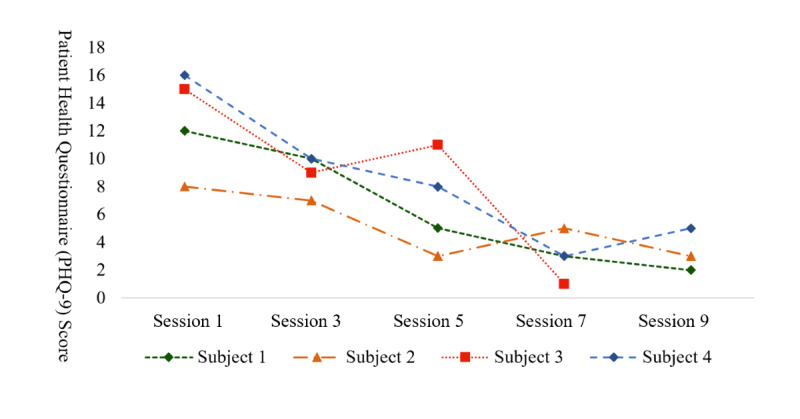
Feedback and recommendations from community partners heavily influenced the content and design of Empower@Home. The intervention consists of 9 sessions, including psychoeducation and an introduction to cognitive behavioral therapy skills and tools through short video clips, in-session exercises, an animated storyline, and weekly out-of-session home practice. A printed workbook accompanies the web-based lessons. In comparative usability testing (N=10), Empower@Home received a System Usability Scale score of 78 (SD 7.4), which was significantly higher than the 2 comparator programs (t=3.28; P=.005 and t=2.78; P=.011). Most participants, 80% (n=8), preferred Empower@Home over the comparators. In the longitudinal field test (n=4), all participants reported liking the program procedures and feeling confident in performing program-related tasks. The single-subject line graph showed an overall downward trend in their depression scores over time, offering an encouraging indication of the intervention's potential effects.
Collaboration with community stakeholders and careful consideration of potential implementation issues during the design process can result in more usable, engaging, and effective digital mental health interventions.
居家的老年人是抑郁症的高危群体。然而,他们中的许多人在获得循证心理健康治疗方面面临障碍。数字心理健康干预有可能改善治疗的可及性,但很少有基于网络的干预措施是专门针对老年人抑郁症量身定制的。
本文描述了“居家赋能”(Empower@Home)的开发过程,这是一种基于认知行为疗法、通过网络提供给居家老年人的抑郁症干预措施,并报告可用性研究的结果。
“居家赋能”是在以用户为中心的设计原则指导下,与社区机构、利益相关者和老年人合作开发的。通过二次数据分析、行政数据中的人口统计学和健康概况以及对社区合作伙伴的访谈和调查来评估用户需求。对10名老年人进行了比较可用性评估,以评估“居家赋能”与另外两个类似项目相比的可用性。对4名最终用户进行了实地测试,以发现其他可用性问题。
社区合作伙伴的反馈和建议对“居家赋能”的内容和设计产生了重大影响。该干预包括9个环节,包括心理教育,以及通过短视频片段、环节内练习、动画故事情节和每周的环节外家庭练习,介绍认知行为疗法的技能和工具。基于网络的课程配有一本印刷的练习册。在比较可用性测试(N = 10)中,“居家赋能”的系统可用性量表得分为78(标准差7.4),显著高于另外两个对照项目(t = 3.28;P = 0.005和t = 2.78;P = 0.011)。大多数参与者,80%(n = 8),比起对照项目更喜欢“居家赋能”。在纵向实地测试(n = 4)中,所有参与者都表示喜欢该项目的流程,并对执行与项目相关的任务感到自信。单受试者折线图显示,随着时间的推移,他们的抑郁得分总体呈下降趋势,这为干预的潜在效果提供了令人鼓舞的迹象。
在设计过程中与社区利益相关者合作,并仔细考虑潜在的实施问题,可以产生更实用、更具吸引力和更有效的数字心理健康干预措施。