Al-Asadi Ali M
Department of Arts and Education, Grande Prairie Regional College, Grande Prairie, AB, Canada.
Department of Psychology, University of South Africa, Johannesburg, South Africa.
JMIRx Med. 2021 Nov 26;2(4):e23713. doi: 10.2196/23713.
Sexual abuse and sexual assault are complex phenomena that involve many factors (or correlates) and have many health and financial implications for individuals, families, and society. Every correlate needs to be studied in detail, individually and in relation to other correlates. Only with a thorough understanding of these correlates can more efficient and targeted prevention and intervention programs be designed.
The purpose of this study was to examine the differences between male and female survivors of sexual abuse and sexual assault regarding the correlates of the survivors' age of onset of assault, age at the last assault, and age at which they entered therapy.
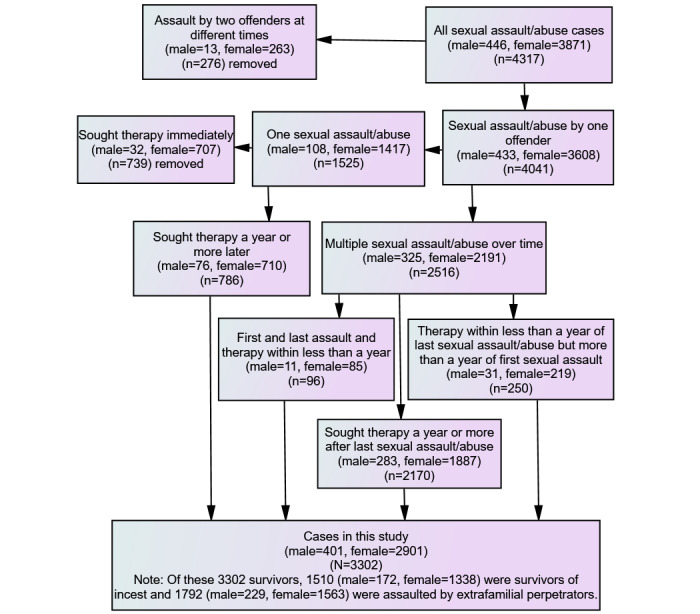
Therapists at eight sexual assault centers in the province of Alberta, Canada, completed a questionnaire on each of their clients over a period of 7 years. A total of 3302 participants, of whom 2901 (87.86%) were female and 401 (12.1%) were male survivors of sexual abuse and assault, were included in this study. Mostly descriptive analyses were carried out on the 4 variables of concern in this study.
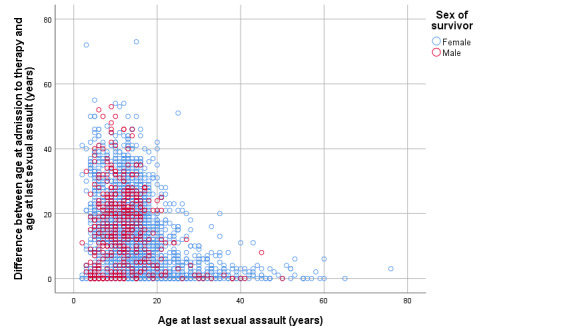
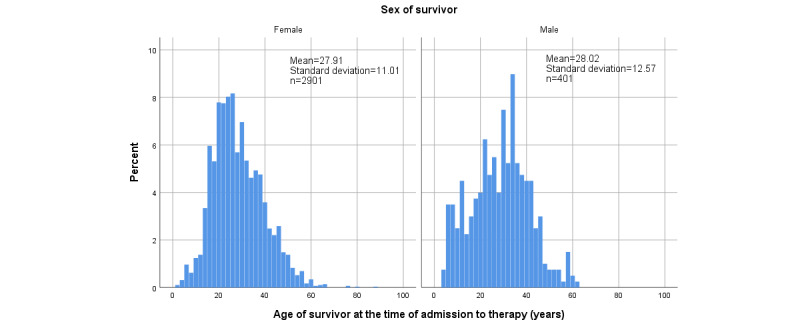
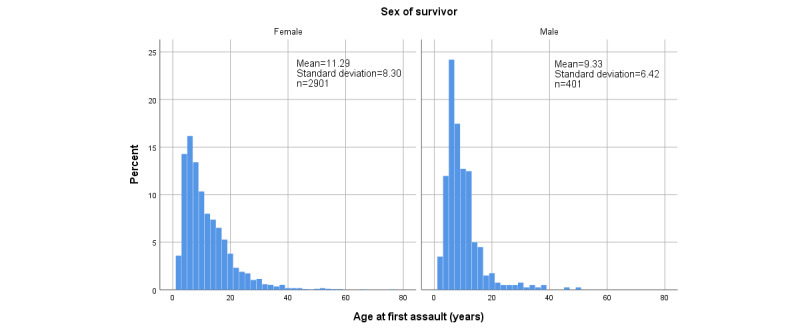
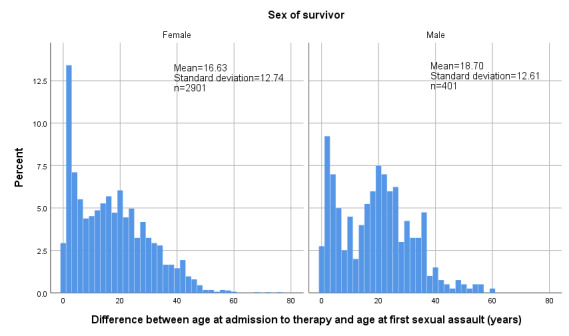
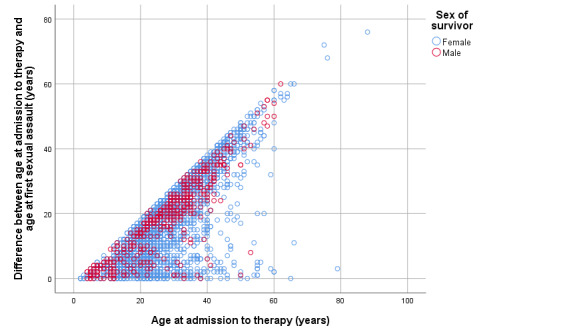
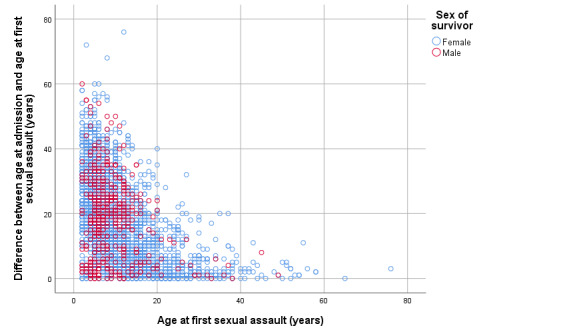
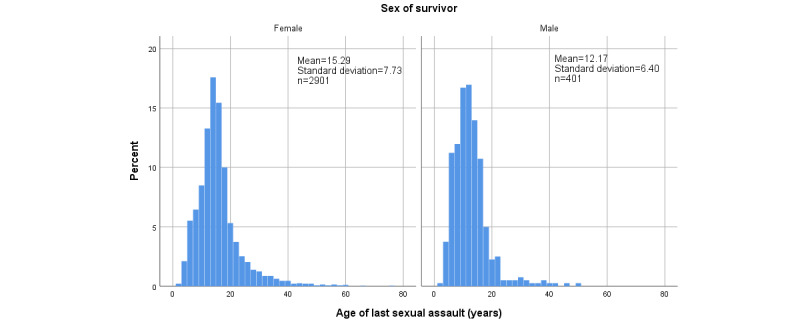
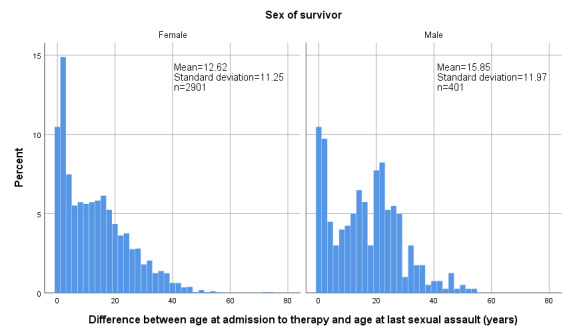
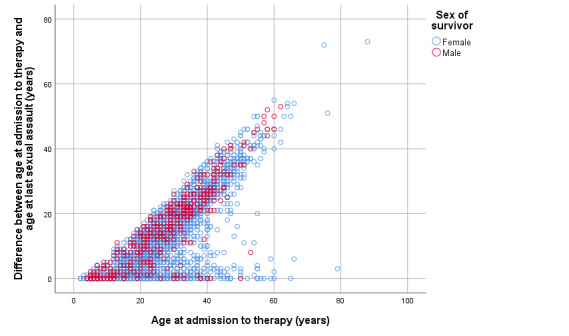
Regarding the number of survivors who sought therapy, female survivors outnumbered male survivors by a ratio of 7:1, with different ratios for different age groups. As children age, their risk of being sexually assaulted for the first time decreases. Male children are more likely to be sexually abused at a younger age, whereas female children are more vulnerable to being assaulted at all ages, particularly in adolescence. The mean age of onset of sexual abuse was found to be 6.71 (SD 2.86) years, and the odds of experiencing the first sexual assault during childhood, as opposed to adolescence, were 4:1 for females and 9:1 for males. Male survivors were two times more likely than female survivors to experience their first sexual assault in childhood. The vast majority of survivors sought help many years after being sexually assaulted, and male survivors waited an average of 3 years longer from the last sexual assault before seeking therapy.
The majority of survivors of sexual abuse and sexual assault live with the consequences for many years before they seek help, and a large proportion of male survivors are not likely to seek help.
性虐待和性侵犯是复杂的现象,涉及许多因素(或相关因素),对个人、家庭和社会有着诸多健康和经济方面的影响。每个相关因素都需要单独以及与其他相关因素联系起来进行详细研究。只有深入了解这些相关因素,才能设计出更有效、更有针对性的预防和干预方案。
本研究旨在探讨性虐待和性侵犯的男性和女性幸存者在袭击开始年龄、最后一次袭击时的年龄以及开始接受治疗的年龄等相关因素方面的差异。
加拿大艾伯塔省八个性侵犯中心的治疗师在7年时间里为每位客户填写了一份问卷。本研究共纳入3302名参与者,其中2901名(87.86%)为女性,401名(12.1%)为性虐待和性侵犯的男性幸存者。对本研究关注的4个变量主要进行了描述性分析。
在寻求治疗的幸存者数量方面,女性幸存者与男性幸存者的比例为7:1,不同年龄组的比例有所不同。随着儿童年龄的增长,他们首次遭受性侵犯的风险会降低。男童在较小年龄时更容易遭受性虐待,而女童在各个年龄段都更容易受到袭击,尤其是在青春期。性虐待的平均开始年龄为6.71(标准差2.86)岁,女性在童年而非青春期遭受首次性侵犯的几率为4:1,男性为9:1。男性幸存者在童年时期遭受首次性侵犯的可能性是女性幸存者的两倍。绝大多数幸存者在遭受性侵犯多年后才寻求帮助,男性幸存者从最后一次性侵犯到寻求治疗的平均等待时间比女性长3年。
大多数性虐待和性侵犯的幸存者在寻求帮助之前会背负多年的后果,而且很大一部分男性幸存者不太可能寻求帮助。