You Seulgi, Park Ji Hyun, Park Bumhee, Shin Han-Bit, Ha Taeyang, Yun Jae Sung, Park Kyoung Joo, Jung Yongjun, Kim You Na, Kim Minji, Sun Joo Sung
Department of Radiology, Ajou University School of Medicine, Suwon, Republic of Korea.
Office of Biostatistics, Ajou Research Institute for Innovative Medicine, Ajou University Medical Center, Suwon, Republic of Korea.
Insights Imaging. 2023 Sep 19;14(1):149. doi: 10.1186/s13244-023-01497-4.
The deep learning-based nodule detection (DLD) system improves nodule detection performance of observers on chest radiographs (CXRs). However, its performance in different pulmonary nodule (PN) locations remains unknown.
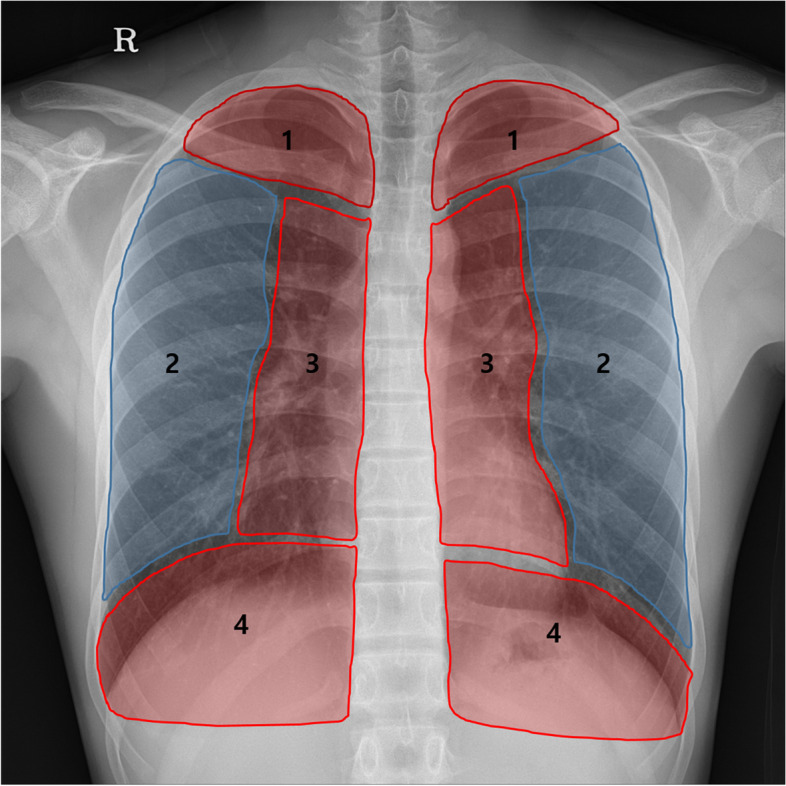
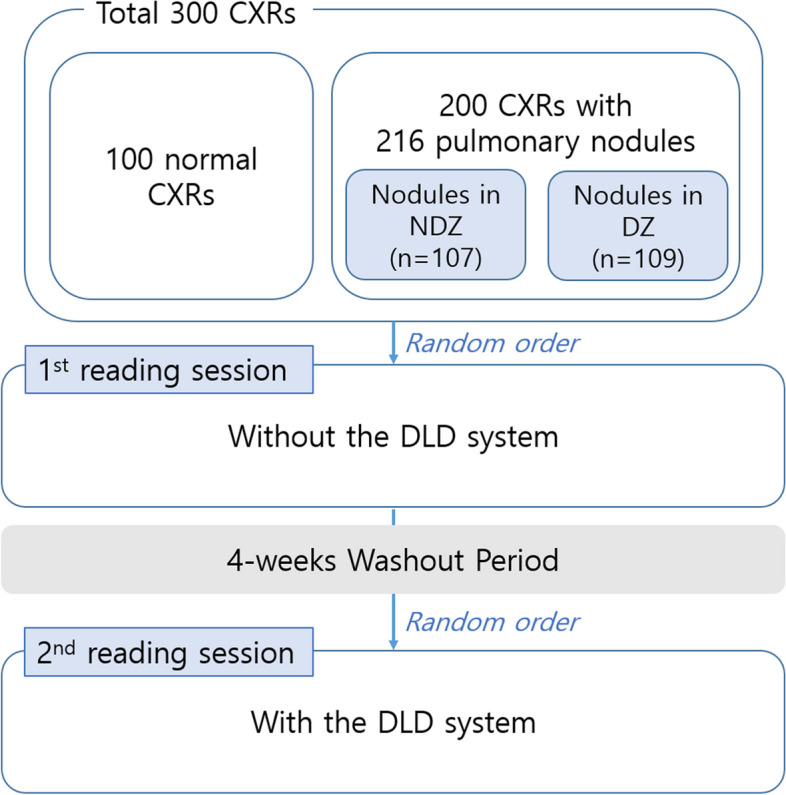
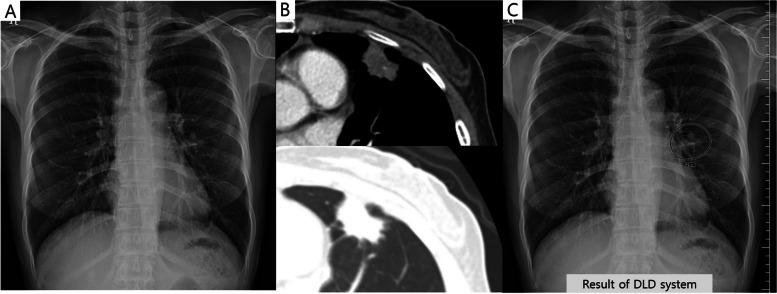
We divided the CXR intrathoracic region into non-danger zone (NDZ) and danger zone (DZ). The DZ included the lung apices, paramediastinal areas, and retrodiaphragmatic areas, where nodules could be missed. We used a dataset of 300 CXRs (100 normal and 200 abnormal images with 216 PNs [107 NDZ and 109 DZ nodules]). Eight observers (two thoracic radiologists [TRs], two non-thoracic radiologists [NTRs], and four radiology residents [RRs]) interpreted each radiograph with and without the DLD system. The metric of lesion localization fraction (LLF; the number of correctly localized lesions divided by the total number of true lesions) was used to evaluate the diagnostic performance according to the nodule location.
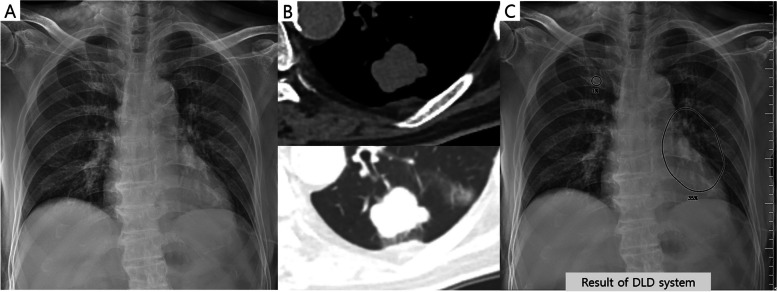
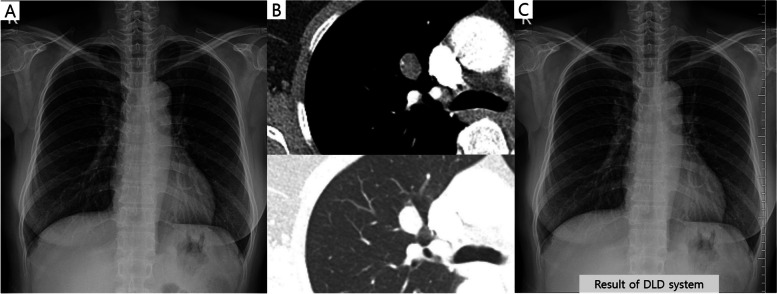
The DLD system demonstrated a lower LLF for the detection of DZ nodules (64.2) than that of NDZ nodules (83.2, p = 0.008). For DZ nodule detection, the LLF of the DLD system (64.2) was lower than that of TRs (81.7, p < 0.001), which was comparable to that of NTRs (56.4, p = 0.531) and RRs (56.7, p = 0.459). Nonetheless, the LLF of RRs significantly improved from 56.7 to 65.6 using the DLD system (p = 0.021) for DZ nodule detection.
The performance of the DLD system was lower in the detection of DZ nodules compared to that of NDZ nodules. Nonetheless, RR performance in detecting DZ nodules improved upon using the DLD system.
Despite the deep learning-based nodule detection system's limitations in detecting danger zone nodules, it proves beneficial for less-experienced observers by providing valuable assistance in identifying these nodules, thereby advancing nodule detection in clinical practice.
• The deep learning-based nodule detection (DLD) system can improve the diagnostic performance of observers in nodule detection. • The DLD system shows poor diagnostic performance in detecting danger zone nodules. • For less-experienced observers, the DLD system is helpful in detecting danger zone nodules.
基于深度学习的结节检测(DLD)系统提高了观察者对胸部X光片(CXR)的结节检测性能。然而,其在不同肺结节(PN)位置的性能仍不清楚。
我们将CXR胸腔内区域分为非危险区(NDZ)和危险区(DZ)。DZ包括肺尖、纵隔旁区域和膈后区域,这些区域的结节可能会被漏诊。我们使用了一个包含300张CXR的数据集(100张正常图像和200张异常图像,有216个PN[107个NDZ结节和109个DZ结节])。八名观察者(两名胸科放射科医生[TRs]、两名非胸科放射科医生[NTRs]和四名放射科住院医师[RRs])在有和没有DLD系统的情况下解读每张X光片。使用病变定位分数(LLF;正确定位的病变数量除以真实病变总数)指标根据结节位置评估诊断性能。
DLD系统检测DZ结节的LLF(64.2)低于NDZ结节(83.2,p = 0.008)。对于DZ结节检测,DLD系统的LLF(64.2)低于TRs(81.7,p < 0.001),与NTRs(56.4,p = 0.531)和RRs(56.7,p = 0.459)相当。尽管如此,对于DZ结节检测,使用DLD系统时RRs的LLF从56.7显著提高到65.6(p = 0.021)。
与NDZ结节相比,DLD系统在检测DZ结节方面的性能较低。尽管如此,RRs在使用DLD系统检测DZ结节时的性能有所提高。
尽管基于深度学习的结节检测系统在检测危险区结节方面存在局限性,但它通过在识别这些结节方面提供有价值的帮助,证明对经验较少的观察者有益,从而推动了临床实践中的结节检测。
• 基于深度学习的结节检测(DLD)系统可以提高观察者在结节检测中的诊断性能。• DLD系统在检测危险区结节方面显示出较差的诊断性能。• 对于经验较少的观察者,DLD系统有助于检测危险区结节。