Lancet Glob Health. 2023 Oct;11(10):e1553-e1565. doi: 10.1016/S2214-109X(23)00355-8.
Peripheral artery disease is a growing public health problem. We aimed to estimate the global disease burden of peripheral artery disease, its risk factors, and temporospatial trends to inform policy and public measures.
Data on peripheral artery disease were modelled using the Global Burden of Disease, Injuries, and Risk Factors Study (GBD) 2019 database. Prevalence, disability-adjusted life years (DALYs), and mortality estimates of peripheral artery disease were extracted from GBD 2019. Total DALYs and age-standardised DALY rate of peripheral artery disease attributed to modifiable risk factors were also assessed.
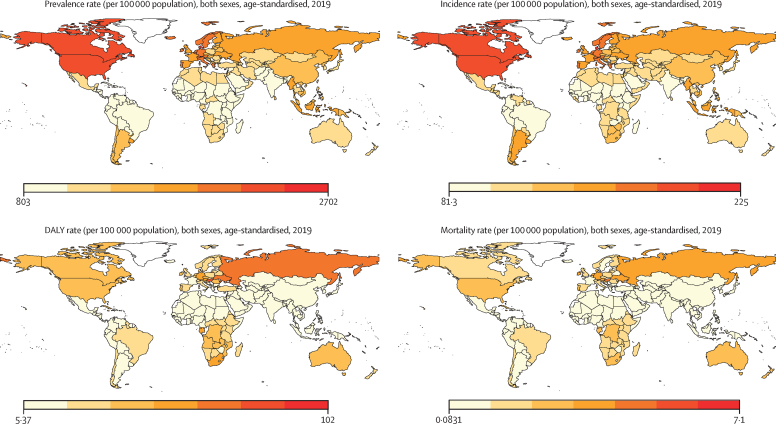
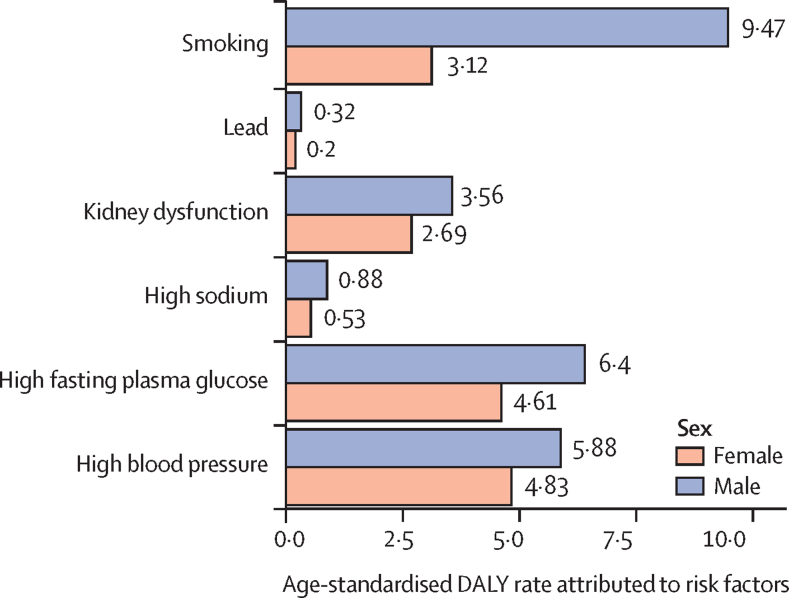
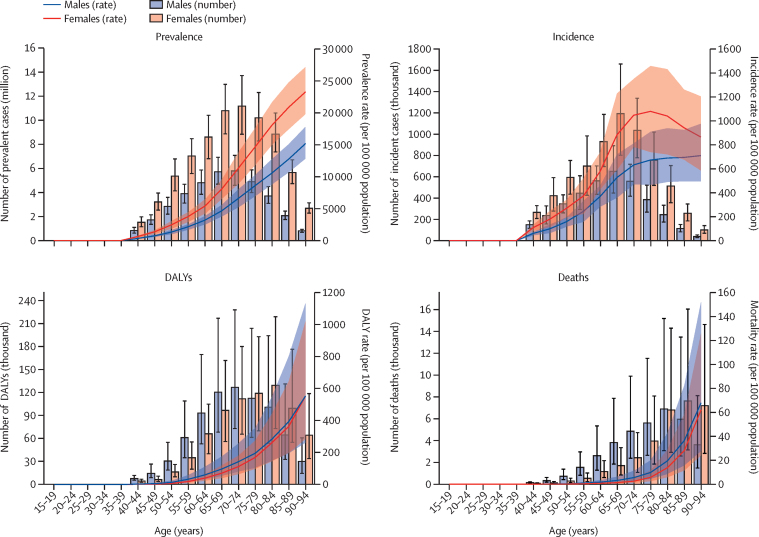
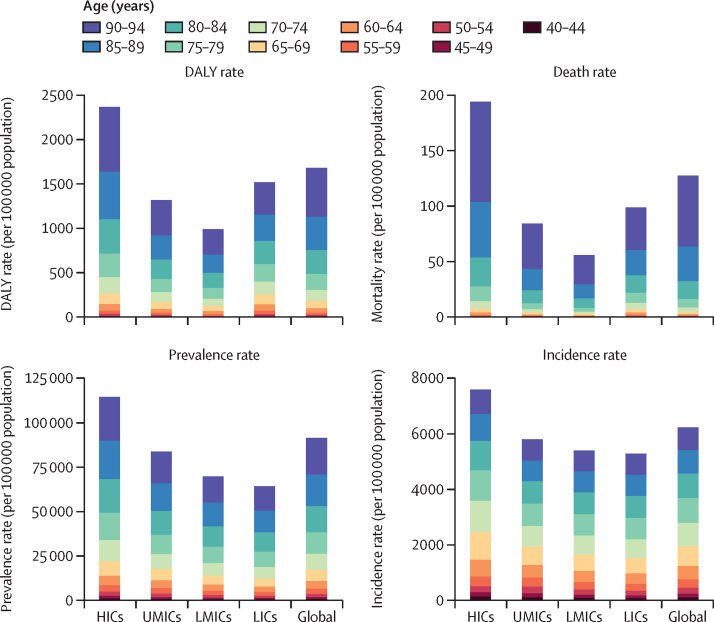
In 2019, the number of people aged 40 years and older with peripheral artery disease was 113 million (95% uncertainty interval [UI] 99·2-128·4), with a global prevalence of 1·52% (95% UI 1·33-1·72), of which 42·6% was in countries with low to middle Socio-demographic Index (SDI). The global prevalence of peripheral artery disease was higher in older people, (14·91% [12·41-17·87] in those aged 80-84 years), and was generally higher in females than in males. Globally, the total number of DALYs attributable to modifiable risk factors in 2019 accounted for 69·4% (64·2-74·3) of total peripheral artery disease DALYs. The prevalence of peripheral artery disease was highest in countries with high SDI and lowest in countries with low SDI, whereas DALY and mortality rates showed U-shaped curves, with the highest burden in the high and low SDI quintiles.
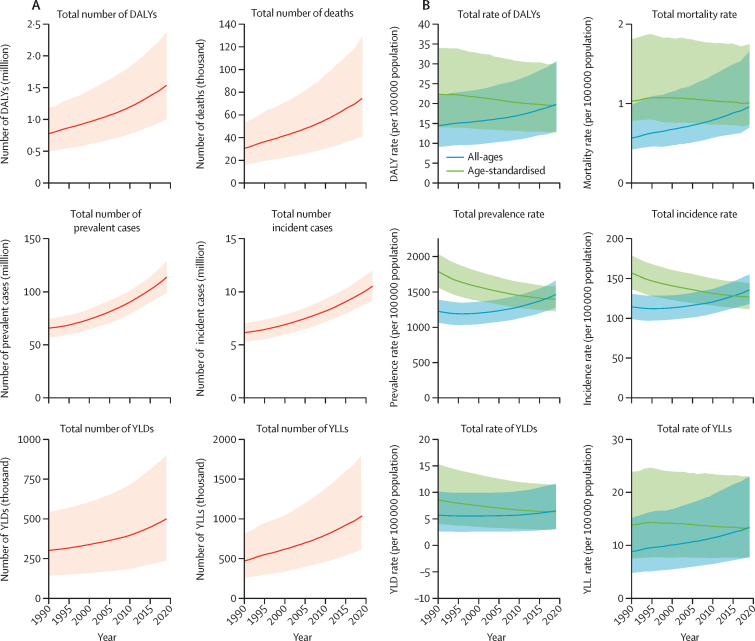
The total number of people with peripheral artery disease has increased globally from 1990 to 2019. Despite the lower prevalence of peripheral artery disease in males and low-income countries, these groups showed similar DALY rates to females and higher-income countries, highlighting disproportionate burden in these groups. Modifiable risk factors were responsible for around 70% of the global peripheral artery disease burden. Public measures could mitigate the burden of peripheral artery disease by modifying risk factors.
Bill & Melinda Gates Foundation.
外周动脉疾病是一个日益严重的公共卫生问题。我们旨在评估外周动脉疾病的全球疾病负担及其风险因素,并分析其时空趋势,以为政策和公共措施提供信息。
外周动脉疾病的数据使用全球疾病、伤害和危险因素研究(GBD)2019 数据库进行建模。从 GBD 2019 中提取外周动脉疾病的患病率、残疾调整生命年(DALY)和死亡率估计值。还评估了归因于可改变风险因素的外周动脉疾病的总 DALY 和年龄标准化 DALY 率。
2019 年,年龄在 40 岁及以上的外周动脉疾病患者为 1.13 亿(95%不确定区间[UI]99.2-128.4),全球患病率为 1.52%(95%UI 1.33-1.72),其中 42.6%来自社会人口指数(SDI)为中低水平的国家。老年人外周动脉疾病的全球患病率更高(80-84 岁人群为 14.91%[12.41-17.87]),且女性一般高于男性。全球范围内,2019 年归因于可改变风险因素的总 DALY 占外周动脉疾病总 DALY 的 69.4%(64.2-74.3)。2019 年,外周动脉疾病的患病率在高 SDI 国家最高,在低 SDI 国家最低,而 DALY 和死亡率呈 U 型曲线,在高 SDI 和低 SDI 五分位数的国家负担最高。
全球范围内,外周动脉疾病患者人数从 1990 年到 2019 年有所增加。尽管男性和低收入国家的外周动脉疾病患病率较低,但这些人群的 DALY 率与女性和高收入国家相似,这表明这些人群的负担不成比例。可改变的风险因素约占全球外周动脉疾病负担的 70%。公共措施可以通过改变风险因素来减轻外周动脉疾病的负担。
比尔和梅琳达·盖茨基金会。