Laboratory for Systems Biology of Gene Regulatory Elements, Berlin Institute for Medical Systems Biology (BIMSB), Max Delbrück Center for Molecular Medicine (MDC) in the Helmholtz Association, Berlin, Germany.
Human Technopole, Milan, Italy.
Nat Methods. 2023 Oct;20(10):1544-1552. doi: 10.1038/s41592-023-01986-w. Epub 2023 Sep 21.
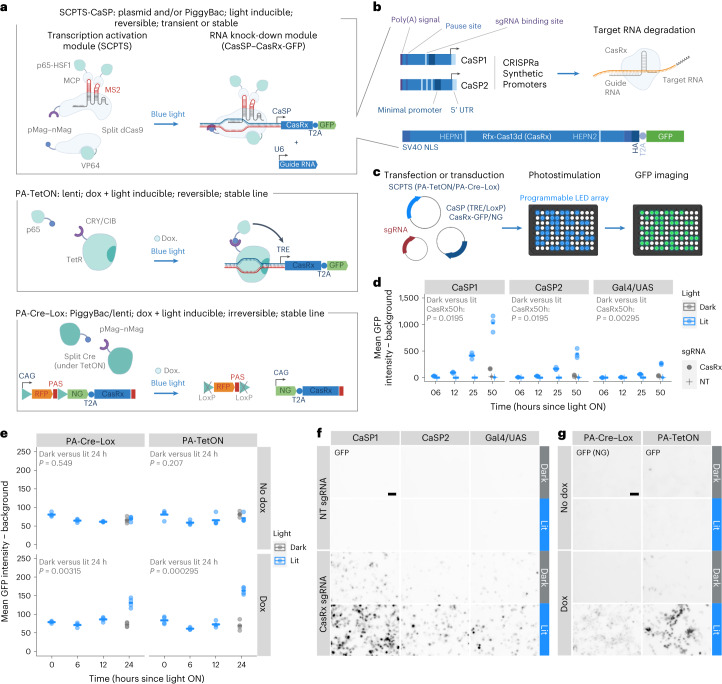
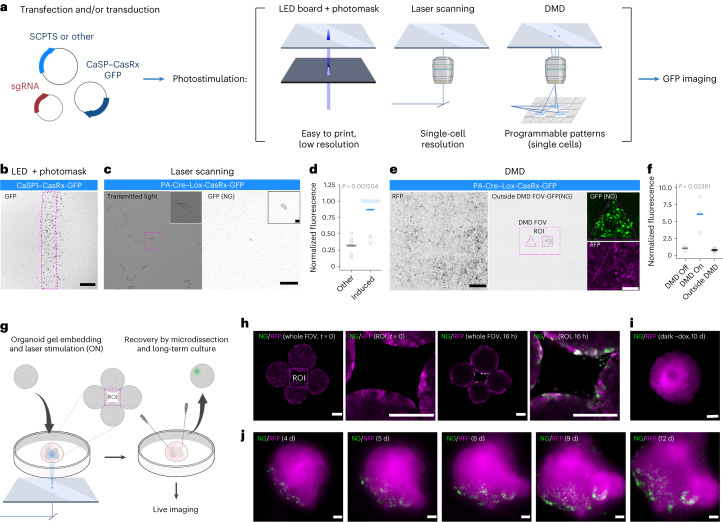
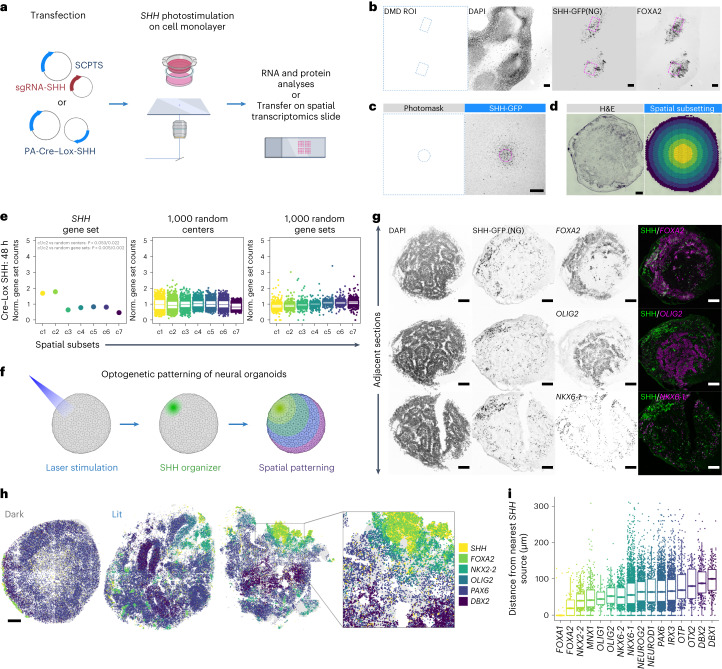
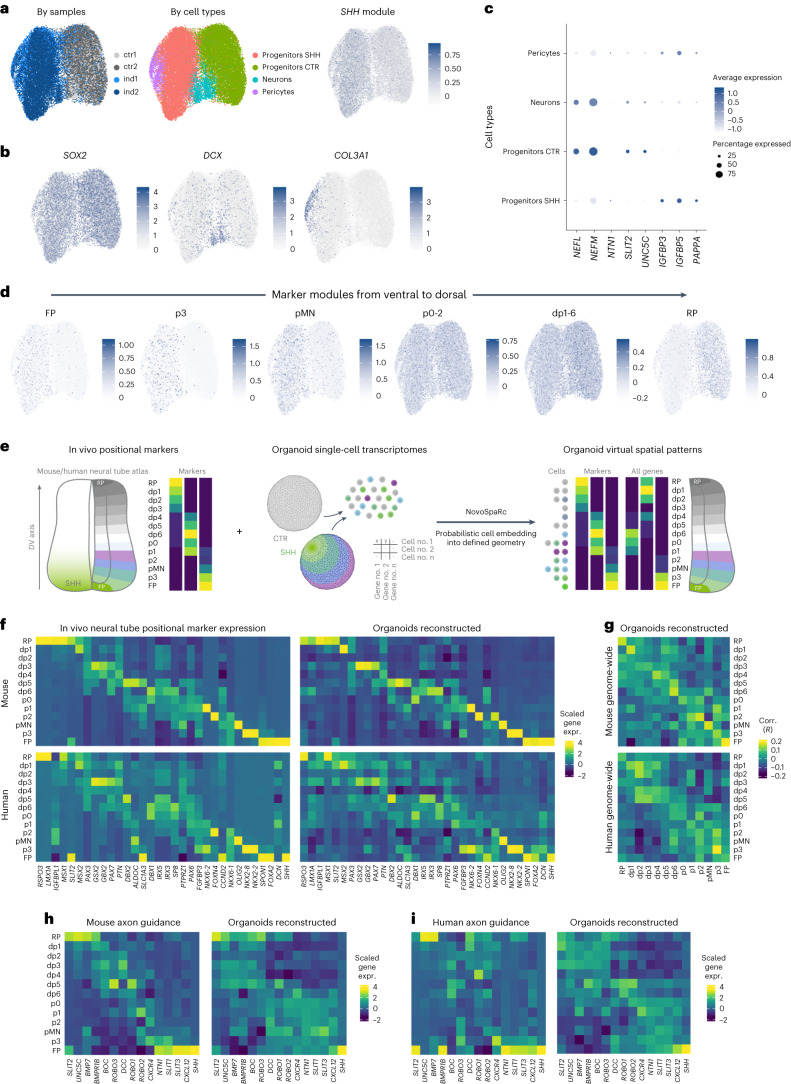
Organoids derived from stem cells have become an increasingly important tool for studying human development and modeling disease. However, methods are still needed to control and study spatiotemporal patterns of gene expression in organoids. Here we combined optogenetics and gene perturbation technologies to activate or knock-down RNA of target genes in programmable spatiotemporal patterns. To illustrate the usefulness of our approach, we locally activated Sonic Hedgehog (SHH) signaling in an organoid model for human neurodevelopment. Spatial and single-cell transcriptomic analyses showed that this local induction was sufficient to generate stereotypically patterned organoids and revealed new insights into SHH's contribution to gene regulation in neurodevelopment. With this study, we propose optogenetic perturbations in combination with spatial transcriptomics as a powerful technology to reprogram and study cell fates and tissue patterning in organoids.
从干细胞中衍生出来的类器官已成为研究人类发育和疾病模型的重要工具。然而,仍然需要控制和研究类器官中基因表达的时空模式的方法。在这里,我们将光遗传学和基因干扰技术结合起来,以可编程的时空模式激活或敲低目标基因的 RNA。为了说明我们方法的有效性,我们在人类神经发育的类器官模型中局部激活了 Sonic Hedgehog (SHH) 信号。空间和单细胞转录组分析表明,这种局部诱导足以产生具有典型模式的类器官,并揭示了 SHH 对神经发育中基因调控的贡献的新见解。通过这项研究,我们提出将光遗传学干扰与空间转录组学相结合,作为一种强大的技术,用于重新编程和研究类器官中的细胞命运和组织模式。