Department of Pharmaceutical Sciences, College of Pharmacy, Oregon State University, Corvallis, OR, USA.
School of Biological and Population Health Sciences, Nutrition Program, Linus Pauling Institute, Oregon State University, Corvallis, OR, USA.
Microbiome. 2023 Sep 21;11(1):208. doi: 10.1186/s40168-023-01637-4.
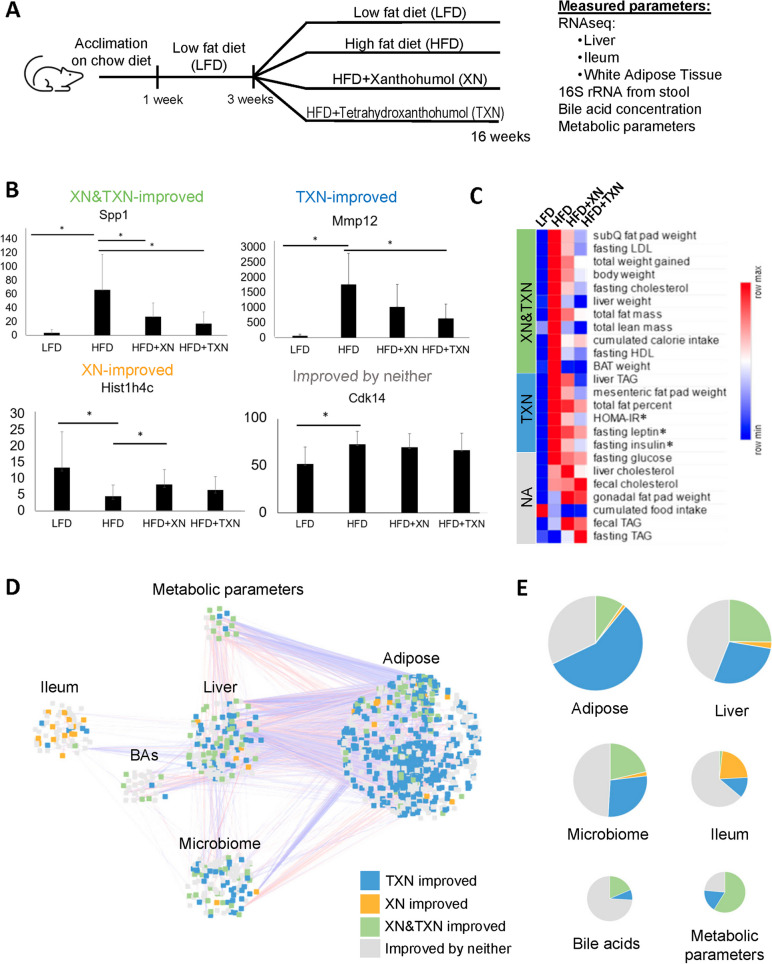
The gut microbiota contributes to macrophage-mediated inflammation in adipose tissue with consumption of an obesogenic diet, thus driving the development of metabolic syndrome. There is a need to identify and develop interventions that abrogate this condition. The hops-derived prenylated flavonoid xanthohumol (XN) and its semi-synthetic derivative tetrahydroxanthohumol (TXN) attenuate high-fat diet-induced obesity, hepatosteatosis, and metabolic syndrome in C57Bl/6J mice. This coincides with a decrease in pro-inflammatory gene expression in the gut and adipose tissue, together with alterations in the gut microbiota and bile acid composition.
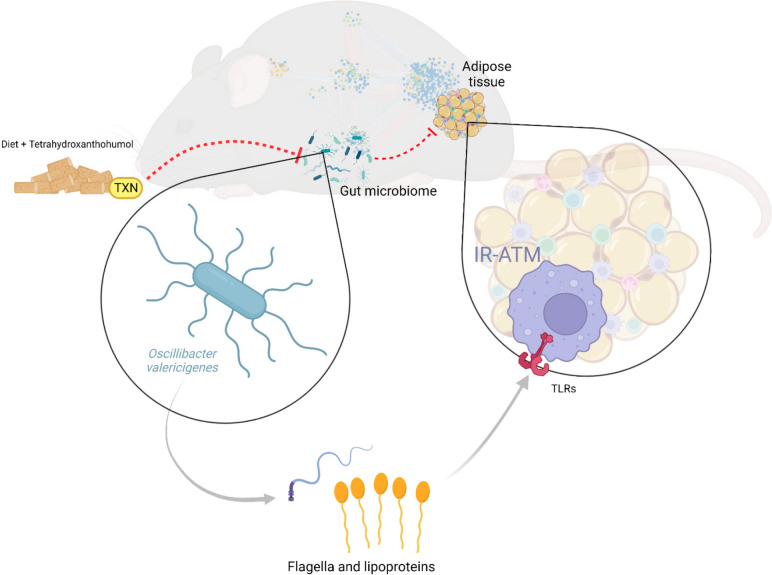
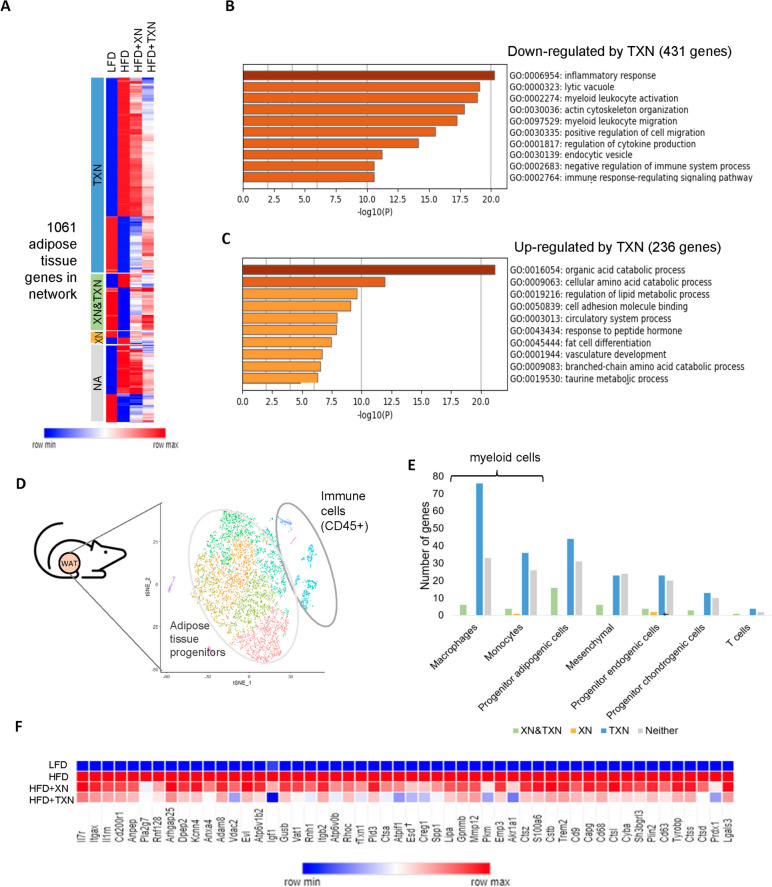
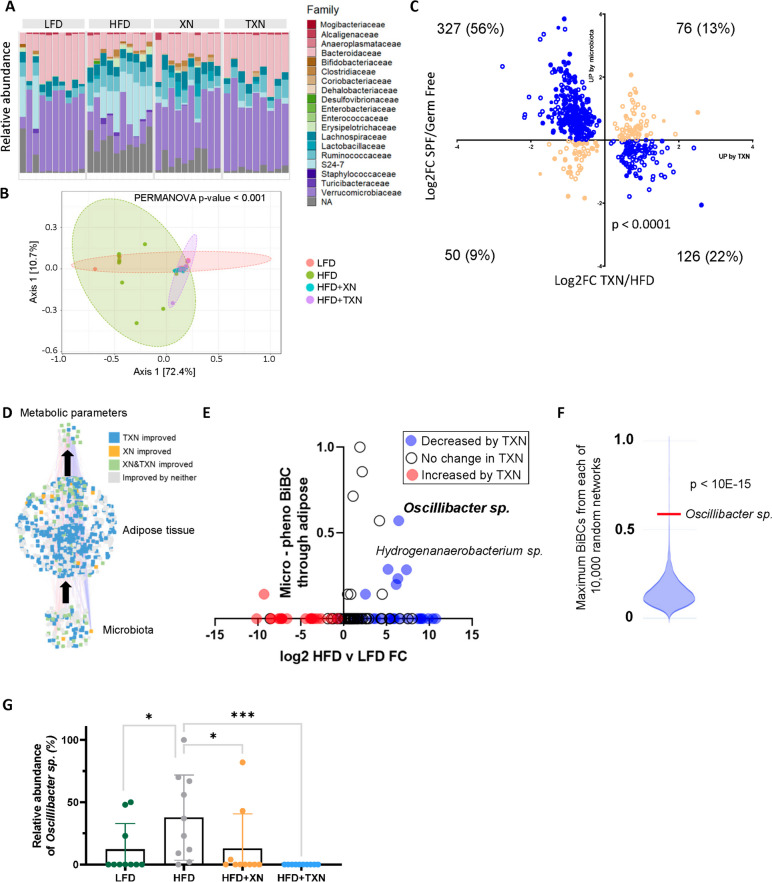
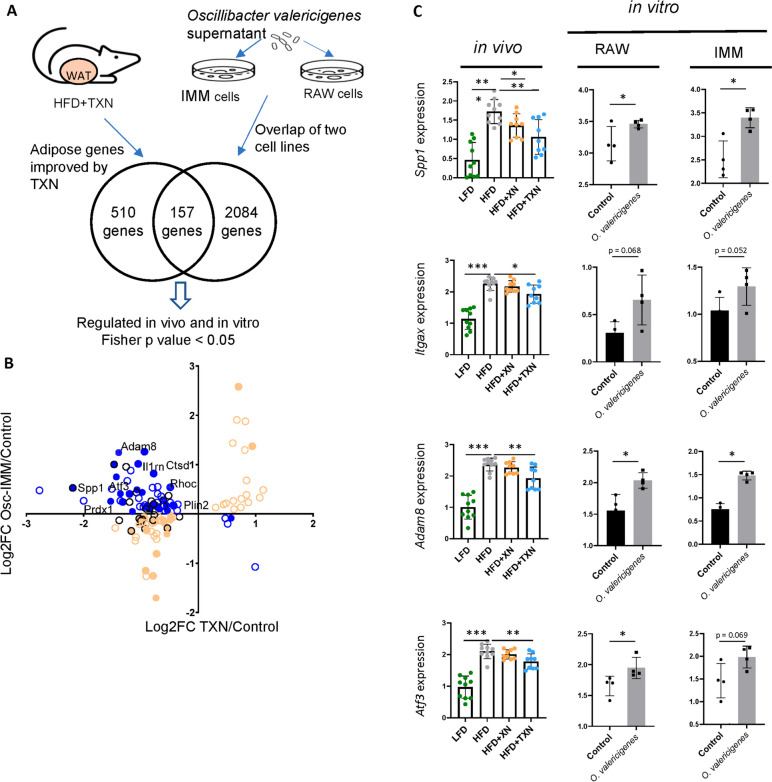
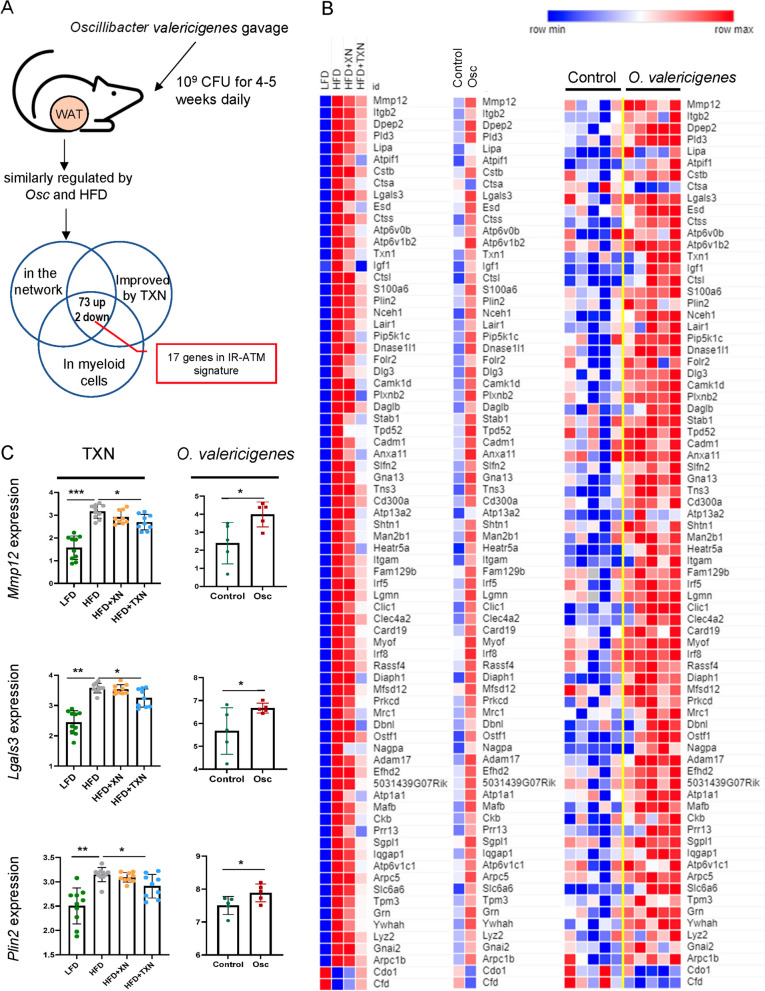
In this study, we integrated and interrogated multi-omics data from different organs with fecal 16S rRNA sequences and systemic metabolic phenotypic data using a Transkingdom Network Analysis. By incorporating cell type information from single-cell RNA-seq data, we discovered TXN attenuates macrophage inflammatory processes in adipose tissue. TXN treatment also reduced levels of inflammation-inducing microbes, such as Oscillibacter valericigenes, that lead to adverse metabolic phenotypes. Furthermore, in vitro validation in macrophage cell lines and in vivo mouse supplementation showed addition of O. valericigenes supernatant induced the expression of metabolic macrophage signature genes that are downregulated by TXN in vivo.
Our findings establish an important mechanism by which TXN mitigates adverse phenotypic outcomes of diet-induced obesity and metabolic syndrome. TXN primarily reduces the abundance of pro-inflammatory gut microbes that can otherwise promote macrophage-associated inflammation in white adipose tissue. Video Abstract.
肠道微生物群通过消耗致肥胖饮食促进脂肪组织中巨噬细胞介导的炎症,从而推动代谢综合征的发展。因此,需要识别和开发能够消除这种情况的干预措施。啤酒花衍生的类异戊二烯黄酮黄腐酚(XN)及其半合成衍生物四羟基黄腐酚(TXN)可减轻 C57Bl/6J 小鼠的高脂肪饮食诱导的肥胖、肝脂肪变性和代谢综合征。这与肠道和脂肪组织中促炎基因表达的减少以及肠道微生物群和胆汁酸组成的改变相一致。
在这项研究中,我们使用跨域网络分析整合并分析了来自不同器官的多组学数据以及粪便 16S rRNA 序列和系统代谢表型数据。通过将单细胞 RNA-seq 数据中的细胞类型信息纳入其中,我们发现 TXN 可减轻脂肪组织中巨噬细胞的炎症过程。TXN 治疗还降低了促炎微生物(如 Oscillibacter valericigenes)的水平,这些微生物会导致不良的代谢表型。此外,在巨噬细胞系中的体外验证和体内小鼠补充表明,添加 O. valericigenes 上清液可诱导代谢型巨噬细胞特征基因的表达,而 TXN 在体内可下调这些基因的表达。
我们的研究结果确立了 TXN 减轻饮食诱导肥胖和代谢综合征不良表型的重要机制。TXN 主要减少了促炎肠道微生物的丰度,否则这些微生物会促进白色脂肪组织中巨噬细胞相关的炎症。