Rockefeller University, 1230 York Avenue, New York, NY, 10065, USA.
New York University Langone Medical Center, 423 East 23rd St, New York, NY, 10016, USA.
J Transl Med. 2018 Sep 3;16(1):244. doi: 10.1186/s12967-018-1619-z.
Microbiota and bile acids in the gastrointestinal tract profoundly alter systemic metabolic processes. In obese subjects, gradual weight loss ameliorates adipose tissue inflammation and related systemic changes. We assessed how rapid weight loss due to a very low calorie diet (VLCD) affects the fecal microbiome and fecal bile acid composition, and their interactions with the plasma metabolome and subcutaneous adipose tissue inflammation in obesity.
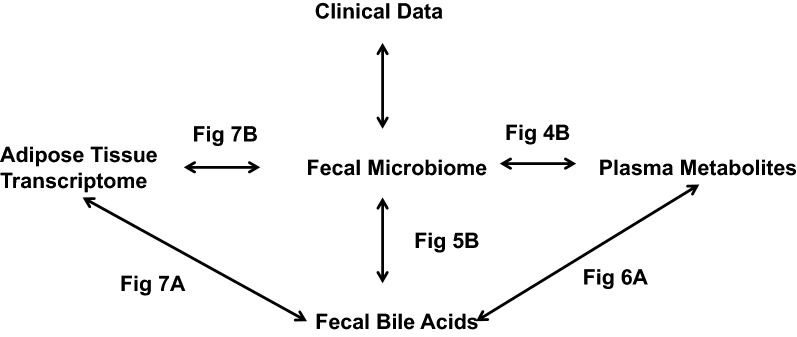
We performed a prospective cohort study of VLCD-induced weight loss of 10% in ten grades 2-3 obese postmenopausal women in a metabolic unit. Baseline and post weight loss evaluation included fasting plasma analyzed by mass spectrometry, adipose tissue transcription by RNA sequencing, stool 16S rRNA sequencing for fecal microbiota, fecal bile acids by mass spectrometry, and urinary metabolic phenotyping by H-NMR spectroscopy. Outcome measures included mixed model correlations between changes in fecal microbiota and bile acid composition with changes in plasma metabolite and adipose tissue gene expression pathways.
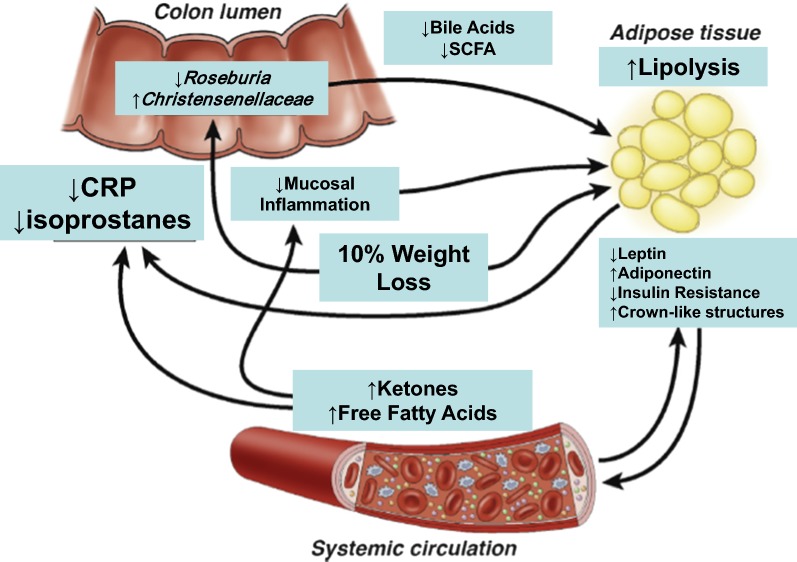
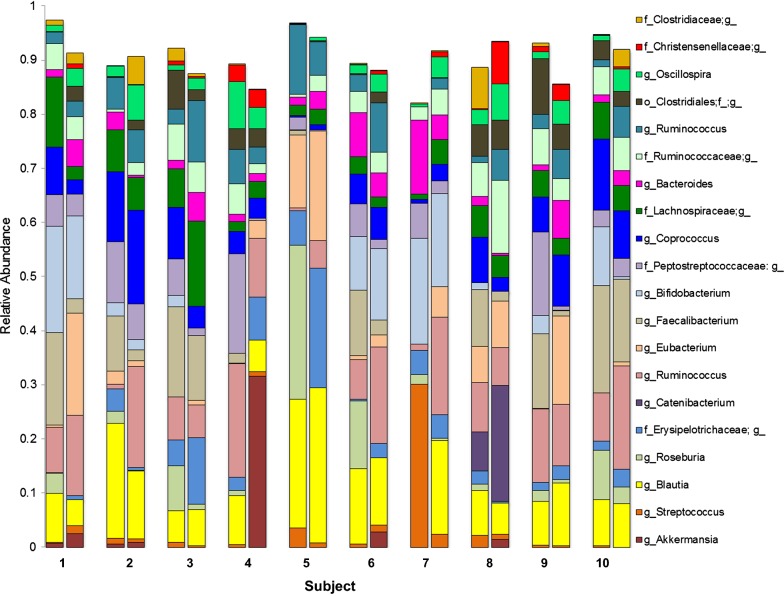
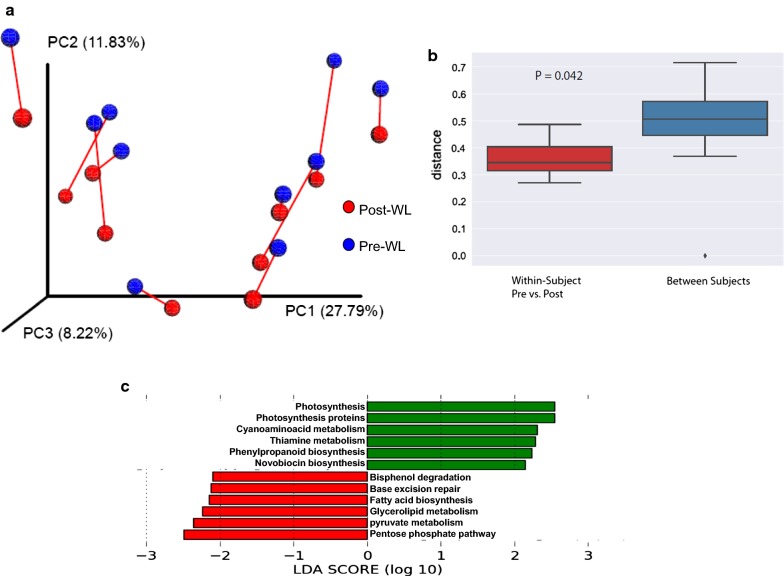
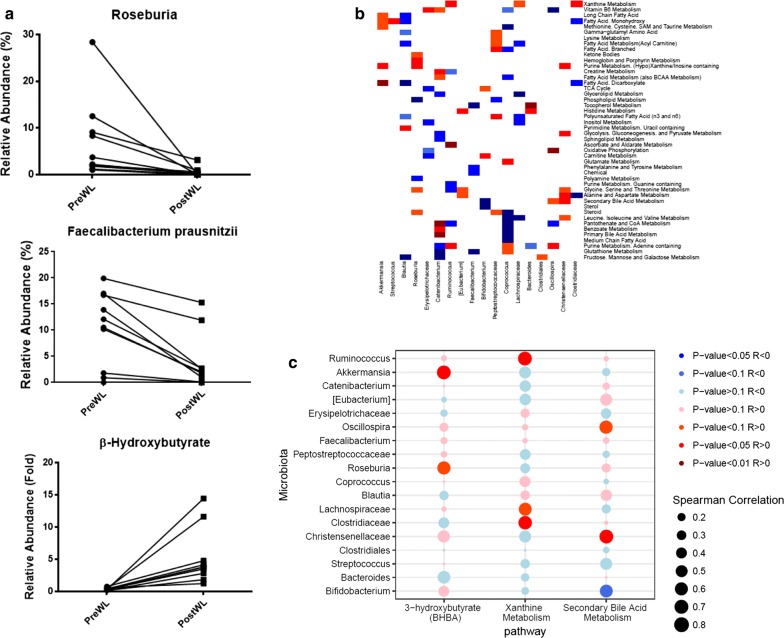
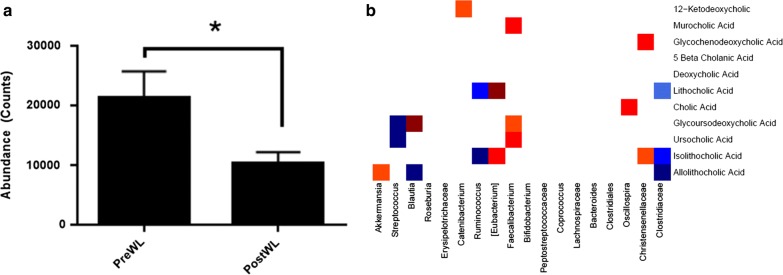
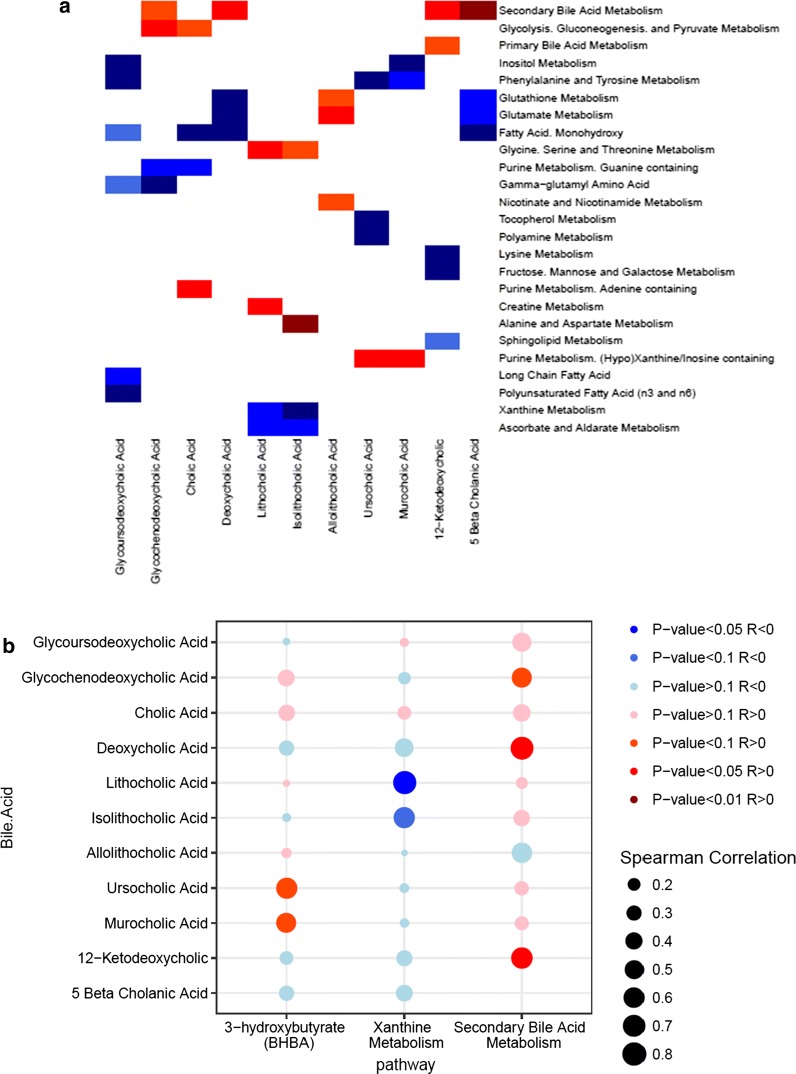
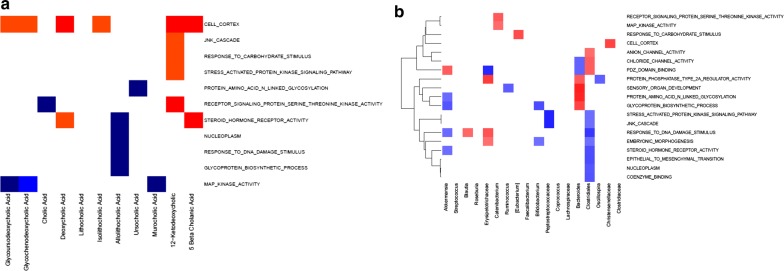
Alterations in the urinary metabolic phenotype following VLCD-induced weight loss were consistent with starvation ketosis, protein sparing, and disruptions to the functional status of the gut microbiota. We show that the core microbiome was preserved during VLCD-induced weight loss, but with changes in several groups of bacterial taxa with functional implications. UniFrac analysis showed overall parallel shifts in community structure, corresponding to reduced abundance of the genus Roseburia and increased Christensenellaceae;g__ (unknown genus). Imputed microbial functions showed changes in fat and carbohydrate metabolism. A significant fall in fecal total bile acid concentration and reduced deconjugation and 7-α-dihydroxylation were accompanied by significant changes in several bacterial taxa. Individual bile acids in feces correlated with amino acid, purine, and lipid metabolic pathways in plasma. Furthermore, several fecal bile acids and bacterial species correlated with altered gene expression pathways in adipose tissue.
VLCD dietary intervention in obese women changed the composition of several fecal microbial populations while preserving the core fecal microbiome. Changes in individual microbial taxa and their functions correlated with variations in the plasma metabolome, fecal bile acid composition, and adipose tissue transcriptome. Trial Registration ClinicalTrials.gov NCT01699906, 4-Oct-2012, Retrospectively registered. URL- https://clinicaltrials.gov/ct2/show/NCT01699906.
胃肠道中的微生物群和胆汁酸会深刻改变全身代谢过程。在肥胖患者中,逐渐减轻体重可改善脂肪组织炎症和相关的全身变化。我们评估了极低卡路里饮食(VLCD)引起的快速体重减轻如何影响粪便微生物群和粪便胆汁酸组成,以及它们与肥胖患者血浆代谢组和皮下脂肪组织炎症的相互作用。
我们对 10 名 2-3 级肥胖绝经后女性在代谢单位进行的 VLCD 诱导的 10%体重减轻进行了前瞻性队列研究。基线和减重后评估包括通过质谱法分析空腹血浆、通过 RNA 测序分析脂肪组织转录、通过质谱法分析粪便 16S rRNA 测序进行粪便微生物群、通过质谱法分析粪便胆汁酸以及通过 H-NMR 光谱法进行尿代谢表型分析。主要终点是粪便微生物群和胆汁酸组成的变化与血浆代谢物和脂肪组织基因表达途径变化之间的混合模型相关性。
VLCD 诱导的体重减轻后尿代谢表型的改变与饥饿酮症、蛋白质保护和肠道微生物群功能状态的破坏一致。我们表明,核心微生物群在 VLCD 诱导的体重减轻过程中得以保留,但具有功能意义的几个细菌分类群发生了变化。UniFrac 分析显示群落结构总体平行变化,对应于 Roseburia 属的丰度降低和 Christensenellaceae;g__(未知属)的增加。推断的微生物功能显示脂肪和碳水化合物代谢的变化。粪便总胆汁酸浓度显著下降,去结合和 7-α-羟化作用减少,同时伴随几个细菌分类群的显著变化。粪便中的个别胆汁酸与血浆中的氨基酸、嘌呤和脂质代谢途径相关。此外,一些粪便胆汁酸和细菌物种与脂肪组织中改变的基因表达途径相关。
在肥胖女性中,VLCD 饮食干预改变了几个粪便微生物群的组成,同时保留了核心粪便微生物群。个别微生物分类群及其功能的变化与血浆代谢组、粪便胆汁酸组成和脂肪组织转录组的变化相关。