Haq Ijaz Ul, Ullah Sami, Amin Fazal, Nafees Muhammad, Shah Wadood, Ali Baber, Iqbal Rashid, Kaplan Alevcan, Ali Mohammad Ajmal, Elshikh Mohamed S, Ercisli Sezai
Department of Botany, University of Peshawar, Peshawar 25120, Pakistan.
Biological Sciences Research Division, Pakistan Forest Institute, Peshawar 25120, Pakistan.
ACS Omega. 2023 Sep 7;8(37):33266-33279. doi: 10.1021/acsomega.3c01100. eCollection 2023 Sep 19.
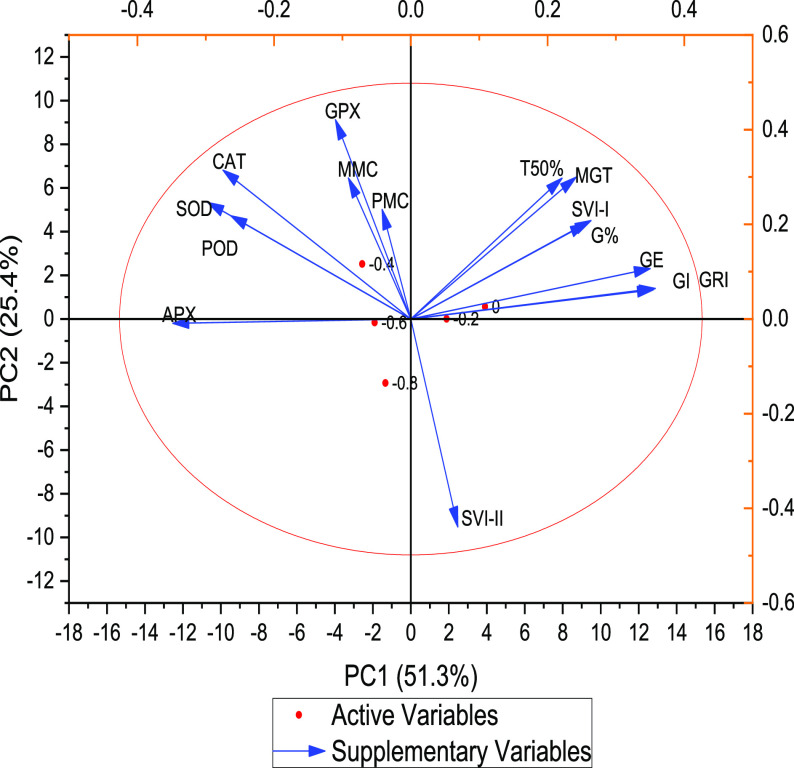
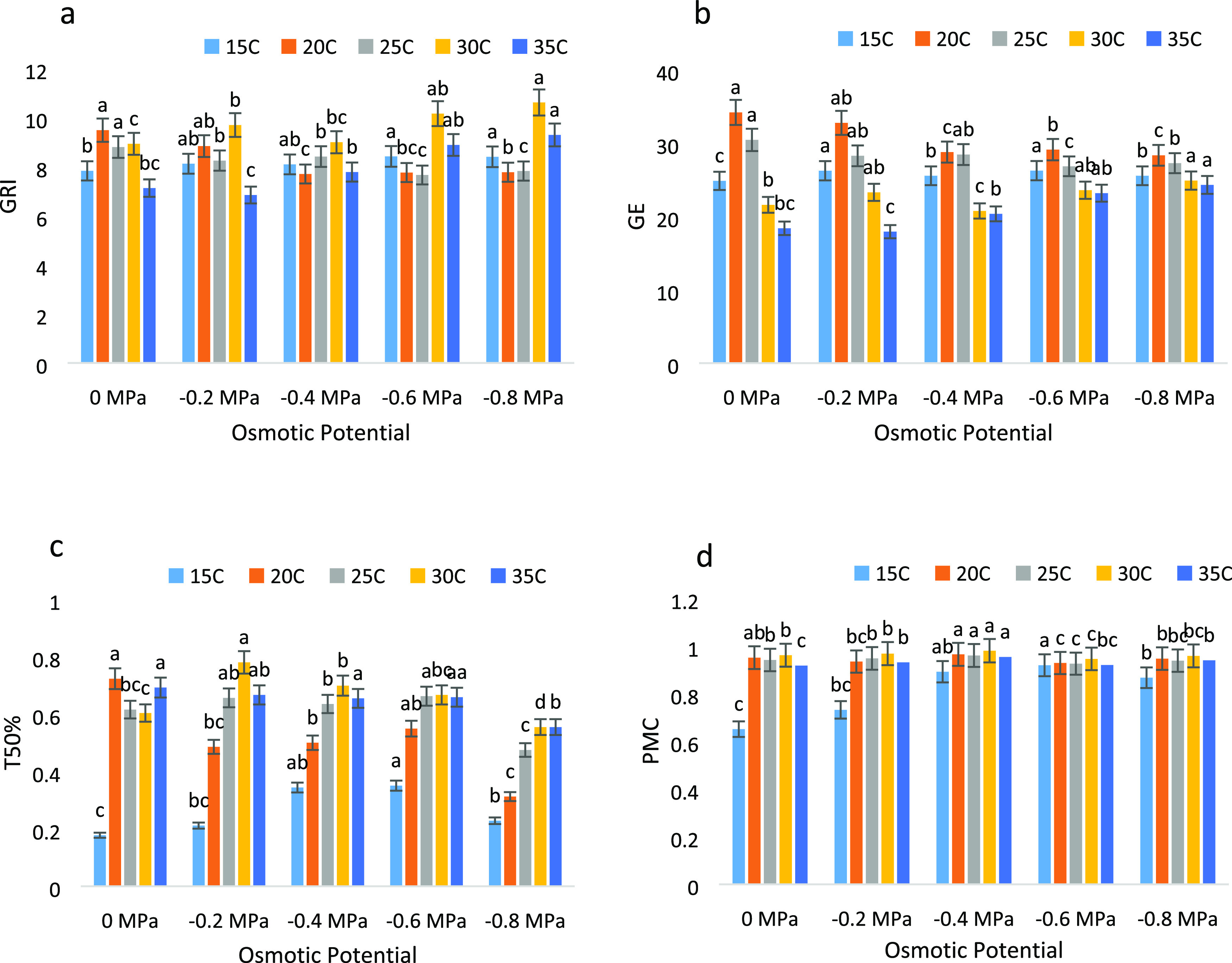
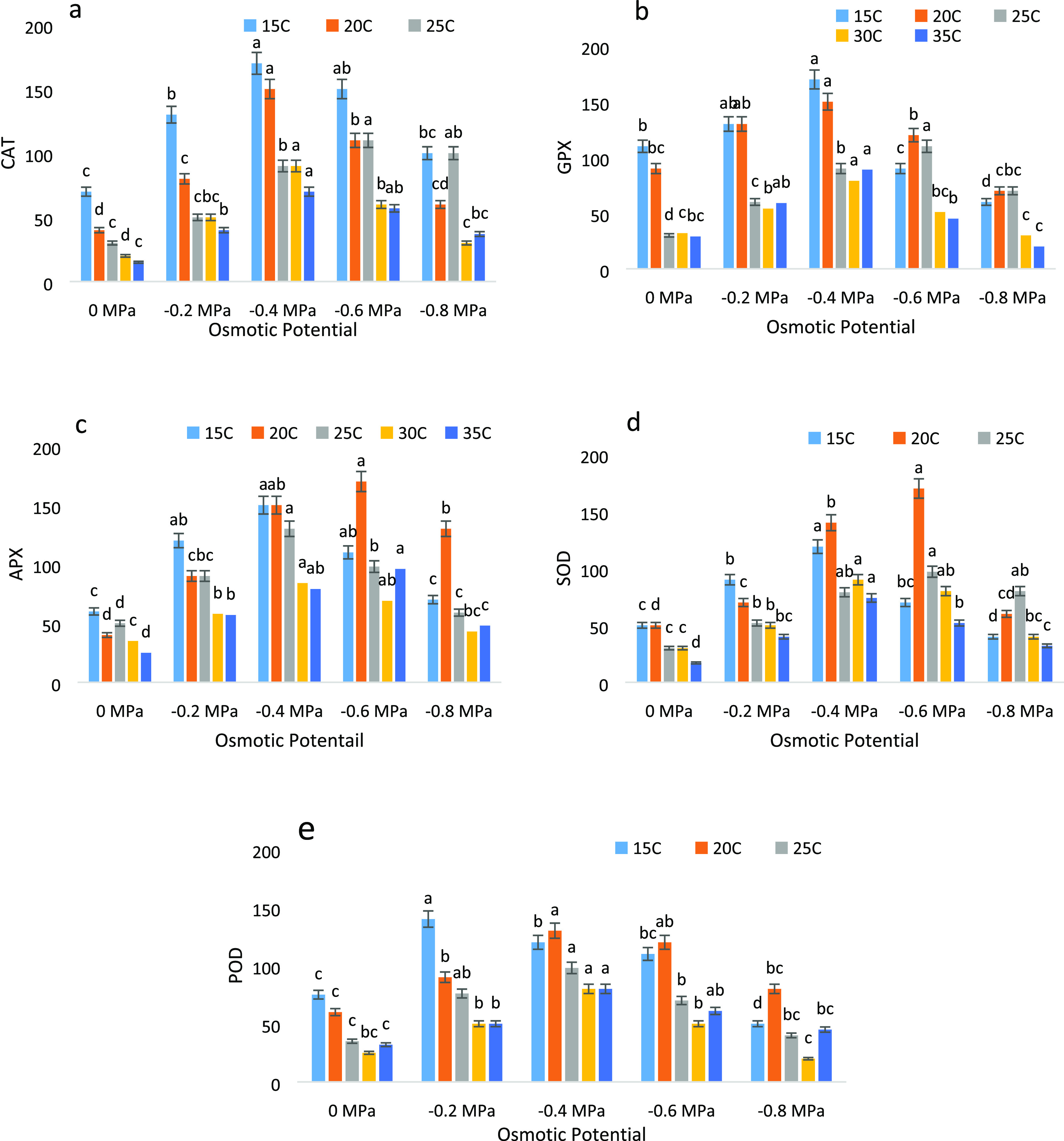
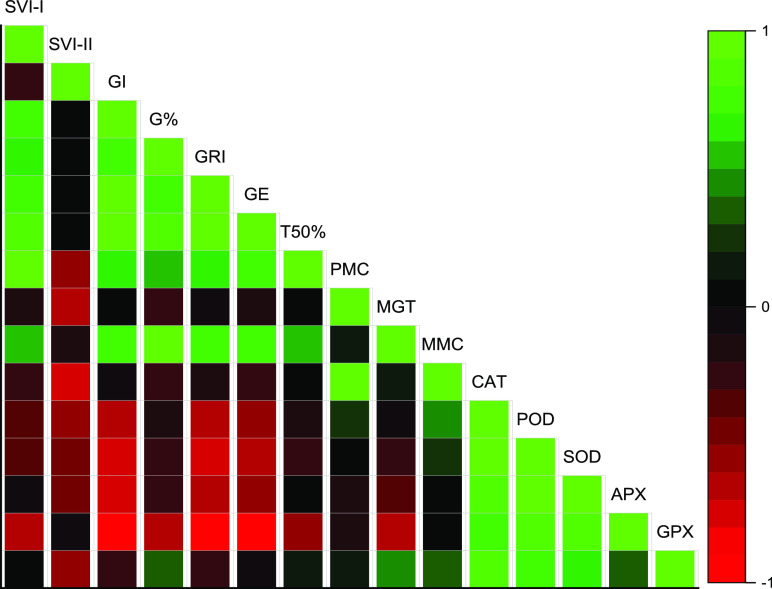
Climatic changes have a direct negative impact on the growth, development, and productivity of crops. The water potential (ψ) and temperature () are important limiting factors that influence the rate of seed germination and growth indices. To examine how the germination of seed responds to changes in water potential and temperature, the hydrotime model and hydrothermal model (HTT) have been employed. The HTT calculates the concept of germination time across temperatures, between -, with alteration, and between -, in supra-optimal ranges. The seeds of L. were germinated in the laboratory for a hydro-thermal time experiment. Seeds were sown in Petri dishes containing a double-layered filter paper at different osmotic potentials (0, -0.2, -0.4, -0.6, and -0.8 MPa) by providing PEG 6000 (drought stress enhancer) at different temperatures (15, 20, 25, 30, and 35 °C). The controlled replicate was treated with 10 mL of distilled water and the rest with 10 mL of PEG solution. Results indicated that the seed vigor index (SVI-II) was highest at 15 °C with 0 MPa and lowest at 30 °C with -0.2 MPa. However, the highest activity was shown at 15 °C by catalase (CAT) and guaiacol peroxidase (GPX) at (-0.6 MPa), while the lowest values of CAT and GPX were recorded for control at 35 °C with -0.8 MPa at 35 °C, respectively. Germination energy was positively correlated with germination index (GI), germination percentage (%), germination rate index, seed vigor index-I (SVI-I), mean moisture content (MMC), and root shoot ratio (RSR) and had a negative correlation with mean germination rate, percent moisture content of shoot and root, CAT, superoxide dismutase, peroxidase ascorbate peroxidase, and GPX. In conclusion, thermal and hydrotime models correctly predicted muskmelon germination time in response to varying water potential and temperature. The agronomic attributes were found to be maximum at 30 °C and minimum at 15 °C.
气候变化对作物的生长、发育和生产力有直接的负面影响。水势(ψ)和温度()是影响种子发芽率和生长指标的重要限制因素。为了研究种子发芽如何响应水势和温度的变化,采用了水时模型和水热模型(HTT)。HTT计算了在不同温度下、在 - 之间、在超最佳范围内随变化以及在 - 之间的发芽时间概念。对L.的种子在实验室进行了水热时间实验。通过在不同温度(15、20、25、30和35℃)下提供聚乙二醇6000(干旱胁迫增强剂),将种子播种在含有双层滤纸且具有不同渗透势(0、-0.2、-0.4、-0.6和 -0.8 MPa)的培养皿中。对照重复处理用10 mL蒸馏水,其余用10 mL聚乙二醇溶液。结果表明,种子活力指数(SVI-II)在15℃、0 MPa时最高,在30℃、-0.2 MPa时最低。然而,过氧化氢酶(CAT)和愈创木酚过氧化物酶(GPX)在15℃、(-0.6 MPa)时活性最高,而CAT和GPX的最低值分别记录在35℃、-0.8 MPa的对照中。发芽能量与发芽指数(GI)、发芽率(%)、发芽速率指数、种子活力指数-I(SVI-I)、平均含水量(MMC)和根冠比(RSR)呈正相关,与平均发芽率、地上部和根部含水量百分比、CAT、超氧化物歧化酶、过氧化物酶抗坏血酸过氧化物酶和GPX呈负相关。总之,热模型和水时模型正确预测了甜瓜在不同水势和温度下的发芽时间。农艺性状在30℃时最高,在15℃时最低。