• 文献检索
  • 文档翻译
  • 深度研究
  • 学术资讯
  • Suppr Zotero 插件Zotero 插件
  • 邀请有礼
  • 套餐&价格
  • 历史记录
应用&插件
Suppr Zotero 插件Zotero 插件浏览器插件Mac 客户端Windows 客户端微信小程序
定价
高级版会员购买积分包购买API积分包
服务
文献检索文档翻译深度研究API 文档MCP 服务
关于我们
关于 Suppr公司介绍联系我们用户协议隐私条款
关注我们

Suppr 超能文献

核心技术专利:CN118964589B侵权必究
粤ICP备2023148730 号-1Suppr @ 2026

文献检索

告别复杂PubMed语法,用中文像聊天一样搜索,搜遍4000万医学文献。AI智能推荐,让科研检索更轻松。

立即免费搜索

文件翻译

保留排版,准确专业,支持PDF/Word/PPT等文件格式,支持 12+语言互译。

免费翻译文档

深度研究

AI帮你快速写综述,25分钟生成高质量综述,智能提取关键信息,辅助科研写作。

立即免费体验

探索循环肿瘤DNA(CtDNA)及其在癌症早期检测中的作用:一项系统综述。

Exploring Circulating Tumor DNA (CtDNA) and Its Role in Early Detection of Cancer: A Systematic Review.

作者信息

Bittla Parikshit, Kaur Simran, Sojitra Vani, Zahra Anam, Hutchinson Jhenelle, Folawemi Oluwa, Khan Safeera

机构信息

Internal Medicine, California Institute of Behavioral Neurosciences and Psychology, Fairfield, USA.

Surgery, California Institute of Behavioral Neurosciences and Psychology, Fairfield, USA.

出版信息

Cureus. 2023 Sep 22;15(9):e45784. doi: 10.7759/cureus.45784. eCollection 2023 Sep.

DOI:10.7759/cureus.45784
PMID:37745752
原文链接:https://pmc.ncbi.nlm.nih.gov/articles/PMC10516512/
Abstract

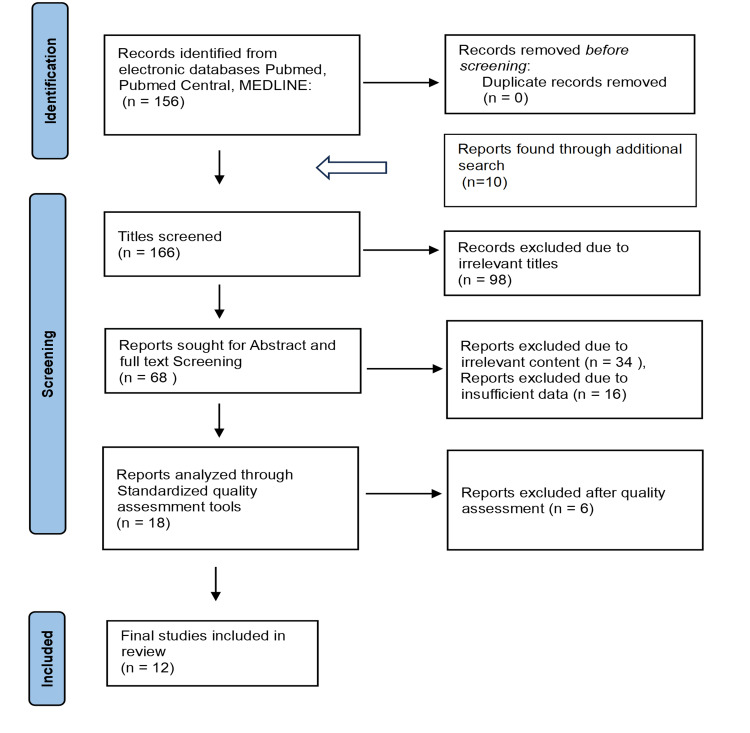
There is a significant increase in the need for an efficient screening method that might identify cancer at an early stage and could improve patients' long-term survival due to the continued rise in cancer incidence and associated mortality. One such effort involved using circulating tumor DNA (ctDNA) as a rescue agent for a non-invasive blood test that may identify many tumors. A tumor marker called ctDNA is created by cells with the same DNA alterations. Due to its shorter half-life, it may be useful for both early cancer detection and real-time monitoring of tumor development, therapeutic response, and tumor outcomes. We obtained 156 papers from PUBMED using the MeSH approach in accordance with the Preferred Reporting Items for Systematic Review and Meta-Analysis (PRISMA) criteria and ten articles from additional online resources. After removing articles with irrelevant titles and screening the abstract and full text of the articles that contained information unrelated to or not specific to the title query using inclusion and exclusion criteria, 18 out of 166 articles were chosen for the quality check. Fourteen medium to high-quality papers were chosen out of the 18 publications to be included in the study design. The reviewed literature showed no significant utility of ctDNA in detecting early-stage tumors of size less than 1 cm diameter. Still, the ideal screening test would require the assay to detect a size <5 mm tumor, which is nearly impossible with the current data. The sensitivity and specificity of the assay ranged from 69% to 98% and 99%, respectively. Furthermore, CancerSEEK achieves tumor origin localization in 83% of cases, while targeted error correction sequencing (TEC-Seq) assays demonstrate a cancer detection rate ranging from 59% to 71%, depending on the type of cancer. However, it could be of great value as a prognostic indicator, and the levels are associated with progression-free survival (PFS) and overall survival (OS) rates, wherein the positive detection of ctDNA is associated with worse OS compared to the tumors detected through standard procedures, with an odds ratio (OS) of 4.83. We conclude that ctDNA could be better applied in cancer patients for prognosis, disease progression monitoring, and treatment outcomes compared to its use in early cancer detection. Due to its specific feature of recognizing the tumor-related mutations, it could be implemented as a supplemental tool to assess the nature of the tumor, grade, and size of the tumor and for predicting the outcomes by pre-operative and post-operative evaluation of the tumor marker, ctDNA, and thereby estimating PFS and OS depending on the level of marker present. A vast amount of research is required in early detection to determine the sensitivity, specificity, false positive rates, and false negative rates in evaluating its true potential as a screening tool. Even if the test could detect the mutations, an extensive workup for the search of tumor is required as the assay could only detect but cannot localize the disease. Establishing the clinical validity and utility of ctDNA is imperative for its implementation in future clinical practice.
https://cdn.ncbi.nlm.nih.gov/pmc/blobs/e699/10516512/706cbbbfd04a/cureus-0015-00000045784-i01.jpg
摘要

由于癌症发病率和相关死亡率持续上升,对一种高效筛查方法的需求显著增加,这种方法可能在早期识别癌症并改善患者的长期生存率。其中一项工作涉及使用循环肿瘤DNA(ctDNA)作为一种用于非侵入性血液检测的辅助手段,该检测可能识别多种肿瘤。一种名为ctDNA的肿瘤标志物由具有相同DNA改变的细胞产生。由于其半衰期较短,它可能对早期癌症检测以及肿瘤发展、治疗反应和肿瘤结局的实时监测都有用。我们根据系统评价和Meta分析的首选报告项目(PRISMA)标准,使用医学主题词(MeSH)方法从PUBMED获取了156篇论文,并从其他在线资源中获取了10篇文章。在去除标题不相关的文章,并使用纳入和排除标准筛选包含与标题查询无关或不特定信息的文章的摘要和全文后,从166篇文章中选择了18篇进行质量检查。在这18篇出版物中,选择了14篇中高质量的论文纳入研究设计。综述文献表明,ctDNA在检测直径小于1厘米的早期肿瘤方面没有显著效用。然而,理想的筛查测试要求该检测能够检测到大小<5毫米的肿瘤,而根据目前的数据这几乎是不可能的。该检测的灵敏度和特异性分别为69%至98%和99%。此外,CancerSEEK在83%的病例中实现了肿瘤起源定位,而靶向纠错测序(TEC-Seq)检测显示,根据癌症类型不同,癌症检测率在59%至71%之间。然而,它作为一种预后指标可能具有很大价值,其水平与无进展生存期(PFS)和总生存期(OS)率相关,其中ctDNA的阳性检测与通过标准程序检测到的肿瘤相比,OS更差,优势比(OS)为4.83。我们得出结论,与用于早期癌症检测相比,ctDNA在癌症患者的预后、疾病进展监测和治疗结局方面可能有更好的应用。由于其识别肿瘤相关突变的特定特征,它可以作为一种补充工具来评估肿瘤的性质、等级和大小,并通过术前和术后评估肿瘤标志物ctDNA来预测结局,从而根据存在的标志物水平估计PFS和OS。在早期检测方面需要大量研究,以确定其作为筛查工具的真正潜力时的灵敏度、特异性、假阳性率和假阴性率。即使该检测能够检测到突变,由于该检测只能检测但不能定位疾病,仍需要进行广泛的肿瘤搜索检查。确定ctDNA的临床有效性和实用性对于其在未来临床实践中的应用至关重要。

相似文献

1
Exploring Circulating Tumor DNA (CtDNA) and Its Role in Early Detection of Cancer: A Systematic Review.探索循环肿瘤DNA(CtDNA)及其在癌症早期检测中的作用:一项系统综述。
Cureus. 2023 Sep 22;15(9):e45784. doi: 10.7759/cureus.45784. eCollection 2023 Sep.
2
Folic acid supplementation and malaria susceptibility and severity among people taking antifolate antimalarial drugs in endemic areas.在流行地区,服用抗叶酸抗疟药物的人群中,叶酸补充剂与疟疾易感性和严重程度的关系。
Cochrane Database Syst Rev. 2022 Feb 1;2(2022):CD014217. doi: 10.1002/14651858.CD014217.
3
Prognostic value of postoperative ctDNA detection in patients with early non-small cell lung cancer: a systematic review and meta-analysis.早期非小细胞肺癌患者术后循环肿瘤DNA检测的预后价值:一项系统评价和荟萃分析
Ther Adv Med Oncol. 2023 May 27;15:17588359231177008. doi: 10.1177/17588359231177008. eCollection 2023.
4
5
Association of Circulating Tumor DNA With Disease-Free Survival in Breast Cancer: A Systematic Review and Meta-analysis.循环肿瘤 DNA 与乳腺癌无病生存的相关性:系统评价和荟萃分析。
JAMA Netw Open. 2020 Nov 2;3(11):e2026921. doi: 10.1001/jamanetworkopen.2020.26921.
6
Circulating Tumor DNA and Survival in Metastatic Breast Cancer: A Systematic Review and Meta-Analysis.循环肿瘤 DNA 与转移性乳腺癌患者生存的相关性:系统评价和荟萃分析。
JAMA Netw Open. 2024 Sep 3;7(9):e2431722. doi: 10.1001/jamanetworkopen.2024.31722.
7
Beyond the black stump: rapid reviews of health research issues affecting regional, rural and remote Australia.超越黑木树:影响澳大利亚地区、农村和偏远地区的健康研究问题的快速综述。
Med J Aust. 2020 Dec;213 Suppl 11:S3-S32.e1. doi: 10.5694/mja2.50881.
8
Can a Liquid Biopsy Detect Circulating Tumor DNA With Low-passage Whole-genome Sequencing in Patients With a Sarcoma? A Pilot Evaluation.液体活检能否通过低深度全基因组测序检测肉瘤患者的循环肿瘤DNA?一项初步评估。
Clin Orthop Relat Res. 2025 Jan 1;483(1):39-48. doi: 10.1097/CORR.0000000000003161. Epub 2024 Jun 21.
9
Epidermal Growth Factor Receptor Mutation (EGFR) Testing for Prediction of Response to EGFR-Targeting Tyrosine Kinase Inhibitor (TKI) Drugs in Patients with Advanced Non-Small-Cell Lung Cancer: An Evidence-Based Analysis.表皮生长因子受体突变(EGFR)检测对晚期非小细胞肺癌患者使用表皮生长因子受体靶向酪氨酸激酶抑制剂(TKI)药物疗效的预测:一项循证分析
Ont Health Technol Assess Ser. 2010;10(24):1-48. Epub 2010 Dec 1.
10
Base-Position Error Rate Analysis of Next-Generation Sequencing Applied to Circulating Tumor DNA in Non-Small Cell Lung Cancer: A Prospective Study.应用于非小细胞肺癌循环肿瘤DNA的下一代测序的碱基位置错误率分析:一项前瞻性研究
PLoS Med. 2016 Dec 27;13(12):e1002199. doi: 10.1371/journal.pmed.1002199. eCollection 2016 Dec.

引用本文的文献

1
Multi-analyte liquid biopsy approaches for early detection of esophageal cancer: the expanding role of ctDNA.用于食管癌早期检测的多分析物液体活检方法:循环肿瘤DNA的作用不断扩大
Front Oncol. 2025 Aug 14;15:1622984. doi: 10.3389/fonc.2025.1622984. eCollection 2025.
2
Cell-Free DNA as a Prognostic Biomarker in Oral Carcinogenesis and Oral Squamous Cell Carcinoma: A Translational Perspective.游离DNA作为口腔癌发生和口腔鳞状细胞癌的预后生物标志物:转化医学视角
Cancers (Basel). 2025 Jul 16;17(14):2366. doi: 10.3390/cancers17142366.
3
Advancing Cholangiocarcinoma Diagnosis: The Role of Liquid Biopsy and CRISPR/Cas Systems in Biomarker Detection.

本文引用的文献

1
mHealth Interventions to Improve Cancer Screening and Early Detection: Scoping Review of Reviews.移动医疗干预措施改善癌症筛查和早期检测:系统评价综述。
J Med Internet Res. 2022 Aug 15;24(8):e36316. doi: 10.2196/36316.
2
Circulating tumor DNA: current challenges for clinical utility.循环肿瘤 DNA:临床应用的当前挑战。
J Clin Invest. 2022 Jun 15;132(12). doi: 10.1172/JCI154941.
3
Patient-reported outcomes associated with cancer screening: a systematic review.与癌症筛查相关的患者报告结局:系统评价。
胆管癌诊断进展:液体活检和CRISPR/Cas系统在生物标志物检测中的作用
Cancers (Basel). 2025 Jun 26;17(13):2155. doi: 10.3390/cancers17132155.
4
Clinical Utility of ctDNA Analysis in Lung Cancer-A Review.循环肿瘤DNA分析在肺癌中的临床应用——综述
Adv Respir Med. 2025 Jun 12;93(3):17. doi: 10.3390/arm93030017.
5
Liquid biopsies for early detection and monitoring of cancer: advances, challenges, and future directions.用于癌症早期检测和监测的液体活检:进展、挑战及未来方向
Ann Med Surg (Lond). 2025 May 21;87(6):3244-3253. doi: 10.1097/MS9.0000000000002776. eCollection 2025 Jun.
6
Hepatocellular Carcinoma: The Search for an Optimal Screening Test.肝细胞癌:寻找最佳筛查检测方法
Middle East J Dig Dis. 2025 Jan;17(1):31-39. doi: 10.34172/mejdd.2025.407. Epub 2025 Jan 31.
7
Liquid Biopsy for Medical Imaging Analysis in Cancer Diagnosis.用于癌症诊断中医学影像分析的液体活检
Curr Pharm Des. 2025;31(33):2635-2650. doi: 10.2174/0113816128371883250310174153.
8
Development of a miRNA-Based Model for Lung Cancer Detection.用于肺癌检测的基于微小RNA的模型的开发。
Cancers (Basel). 2025 Mar 10;17(6):942. doi: 10.3390/cancers17060942.
9
Circulating tumor DNA to monitor treatment response in solid tumors and advance precision oncology.循环肿瘤DNA用于监测实体瘤的治疗反应并推动精准肿瘤学发展。
NPJ Precis Oncol. 2025 Mar 24;9(1):84. doi: 10.1038/s41698-025-00876-y.
10
The promises and perils of circulating tumor DNA for monitoring immunotherapy response in non-small cell lung cancer.循环肿瘤DNA在监测非小细胞肺癌免疫治疗反应中的前景与风险
Explor Target Antitumor Ther. 2024 Nov 26;5(6):1365-1372. doi: 10.37349/etat.2024.00280. eCollection 2024.
BMC Cancer. 2022 Mar 1;22(1):223. doi: 10.1186/s12885-022-09261-5.
4
Cancer Incidence, Mortality, Years of Life Lost, Years Lived With Disability, and Disability-Adjusted Life Years for 29 Cancer Groups From 2010 to 2019: A Systematic Analysis for the Global Burden of Disease Study 2019.2010 年至 2019 年 29 种癌症的发病率、死亡率、生命损失年数、失能生存年数和伤残调整生命年:2019 年全球疾病负担研究的系统分析。
JAMA Oncol. 2022 Mar 1;8(3):420-444. doi: 10.1001/jamaoncol.2021.6987.
5
An Update on the Use of Exhaled Breath Analysis for the Early Detection of Lung Cancer.呼气分析用于肺癌早期检测的最新进展
Lung Cancer (Auckl). 2021 Aug 16;12:81-92. doi: 10.2147/LCTT.S320493. eCollection 2021.
6
Prognostic Significance of Blood-Based Multi-cancer Detection in Plasma Cell-Free DNA.基于游离血浆 DNA 的多癌种血液检测的预后意义。
Clin Cancer Res. 2021 Aug 1;27(15):4221-4229. doi: 10.1158/1078-0432.CCR-21-0417. Epub 2021 Jun 4.
7
The PRISMA 2020 statement: an updated guideline for reporting systematic reviews.《PRISMA 2020声明:报告系统评价的更新指南》
Syst Rev. 2021 Mar 29;10(1):89. doi: 10.1186/s13643-021-01626-4.
8
Breath biopsy of breast cancer using sensor array signals and machine learning analysis.使用传感器阵列信号和机器学习分析进行乳腺癌呼吸活检。
Sci Rep. 2021 Jan 8;11(1):103. doi: 10.1038/s41598-020-80570-0.
9
Response to the letter commenting on 'Effect of organised cervical cancer screening on cervical cancer mortality in Europe: a systematic review'.对评论《欧洲有组织的宫颈癌筛查对宫颈癌死亡率的影响:一项系统评价》的信件的回复。
Eur J Cancer. 2020 Oct;138:232-233. doi: 10.1016/j.ejca.2020.07.012. Epub 2020 Aug 15.
10
Use of Cytosponge as a triaging tool to upper gastrointestinal endoscopy during the COVID-19 pandemic.在新冠疫情期间,使用细胞海绵作为上消化道内镜检查的分诊工具。
Lancet Gastroenterol Hepatol. 2020 Sep;5(9):805-806. doi: 10.1016/S2468-1253(20)30242-9. Epub 2020 Jul 30.