Moyer Jonathan D
University of Denver, Denver, USA.
Sci Rep. 2023 Sep 25;13(1):15996. doi: 10.1038/s41598-023-42782-y.
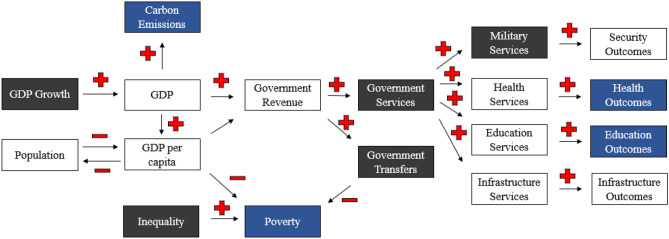
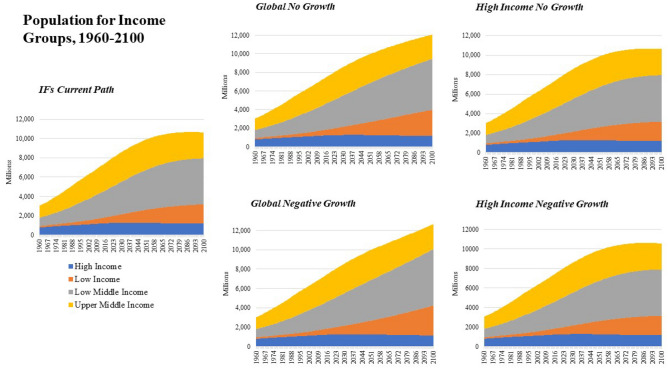
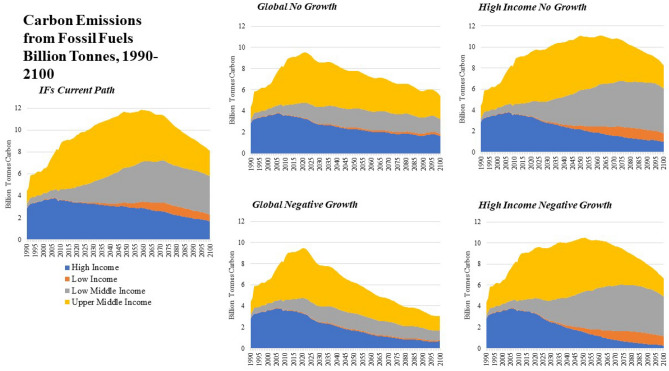
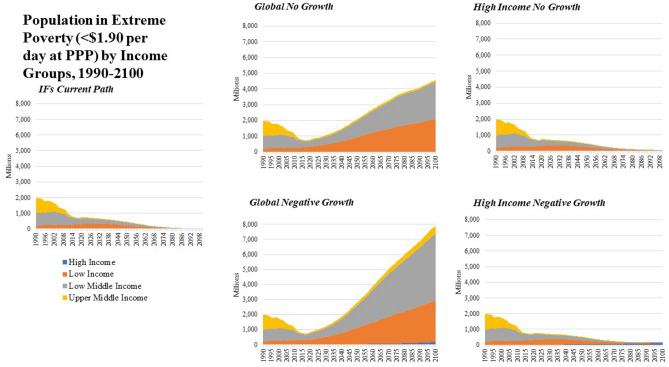
Degrowth advocates argue for structural transformations in how economies and societies prioritize material wealth accumulation to reduce the negative effects of future anthropogenic climate change. Degrowth proponents argue that human economic activity could be lessened, and societies transformed to prioritize improved wellbeing, reducing the threat of climate change. This paper explores implications of alternative patterns of economic growth with transformational policy pathways (i.e., redistribution) to assess what effects economic growth and broader policies have on changing patterns of human development across both the Global North and South. Using the International Futures model, this article shows that negative growth and societal transformations in the Global North are possible without dramatically damaging long-term global socioeconomic development, though these interventions do not solve the global climate crisis, reducing future cumulative carbon emissions by 10.5% through 2100. On the other hand, a global negative growth scenario will significantly reduce future cumulative carbon emissions (45%) but also dramatically undermines the pursuit of global development goals, like the elimination of poverty. Even with global policies that significantly increase cash transfers to the poor and retired, dramatically improve income inequality, and eliminate military spending, the Global Negative Growth Big Push scenario leads to an increase of 15 percentage points in global extreme poverty by 2100.
去增长倡导者主张对经济和社会如何优先考虑物质财富积累进行结构性变革,以减少未来人为气候变化的负面影响。去增长支持者认为,可以减少人类经济活动,并对社会进行转型,以优先考虑改善福祉,从而降低气候变化的威胁。本文探讨了具有变革性政策路径(即再分配)的替代性经济增长模式的影响,以评估经济增长和更广泛的政策对全球北方和南方人类发展模式变化的影响。利用国际期货模型,本文表明,全球北方的负增长和社会转型在不严重损害全球长期社会经济发展的情况下是可能的,尽管这些干预措施并不能解决全球气候危机,到2100年将未来累计碳排放量减少10.5%。另一方面,全球负增长情景将显著减少未来累计碳排放量(45%),但也会极大地破坏对全球发展目标的追求,比如消除贫困。即使实施大幅增加对穷人和退休人员的现金转移、显著改善收入不平等并消除军事开支的全球政策,全球负增长大推动情景到2100年也会使全球极端贫困人口增加15个百分点。